RAINFOREST ALLIANCE
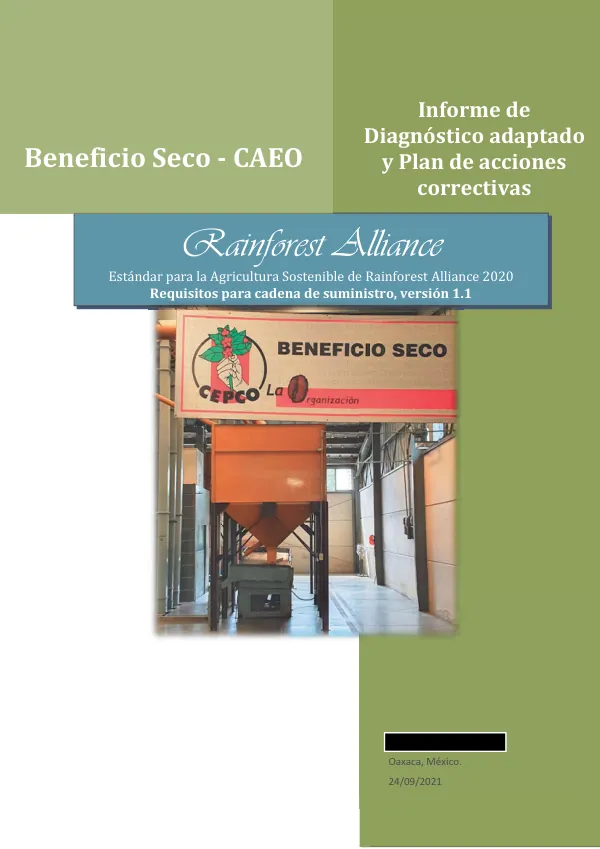
Informe de Diagnóstico adaptado y Plan de acciones correctivas Rainforest Alliance
Beneficio Seco - CAEO, a organization dedicated to the purchase of parchment coffee from Oaxacan producer groups, under certification standards such as organic and fair trade, is located in the municipality of Etla de Soledad, Oaxaca.
2021 · 81 pages
Sign in to readA free account is required to download.
Abstract
As part of the continuous improvement program, it has focused efforts on participating in certification in the Supply Chain, under the Sustainable Agriculture Standard of Rainforest Alliance. As a precedent, it developed a diagnostic exercise for the Rainforest Alliance Supply Chain in December 2020. The organization has undergone a new diagnostic evaluation, based on the current requirements of the Rainforest Alliance Supply Chain, adapting the evaluation to the new standard. This diagnostic evaluation has identified areas of opportunity in the majority of the standard's chapters, with the chapters related to management, responsibility sharing, product tracing, and social conditions showing the lowest performance. The evaluation has identified 47 applicable requirements, of which 16 have been met, resulting in a 34% compliance rate. The organization must significantly reinforce the implemented system based on the guidelines of the standard. The evaluation has identified non-compliance in several requirements, which are detailed in the description of findings section. The organization's management system has been evaluated, and it has been found that it does not meet the requirements of the standard. Specifically, the organization has not established a system for managing and monitoring the implementation of the sustainability systems of the certified product. Additionally, the organization has not established a system for sharing responsibility with suppliers for the implementation of the sustainability systems of the certified product. The organization's environmental conditions have been evaluated, and it has been found that they meet the requirements of the standard. Specifically, the organization has established a system for monitoring and verifying the implementation of the sustainability systems of the certified product. Based on the evaluation, the organization must take corrective actions to address the non-compliance identified. The plan of corrective actions includes the description of the findings identified with non-compliance and the actions suggested to manage their compliance, in accordance with the scope of the evaluated requirement and the observed conditions in the organization. The organization must establish a system for managing and monitoring the implementation of the sustainability systems of the certified product. Additionally, the organization must establish a system for sharing responsibility with suppliers for the implementation of the sustainability systems of the certified product. The organization must also establish a system for tracking and tracing the movement of products throughout the supply chain. Furthermore, the organization must establish a system for monitoring and verifying the implementation of the sustainability systems of the certified product. The organization must also take corrective actions to address the non-compliance identified in the social conditions. Specifically, the organization must establish a system for monitoring and verifying the implementation of the sustainability systems of the certified product. Additionally, the organization must establish a system for sharing responsibility with suppliers for the implementation of the sustainability systems of the certified product. The organization must also take corrective actions to address the non-compliance identified in the product tracing system. Specifically, the organization must establish a system for tracking and tracing the movement of products throughout the supply chain. Additionally, the organization must establish a system for monitoring and verifying the implementation of the sustainability systems of the certified product.
Related documents