USAID DEC
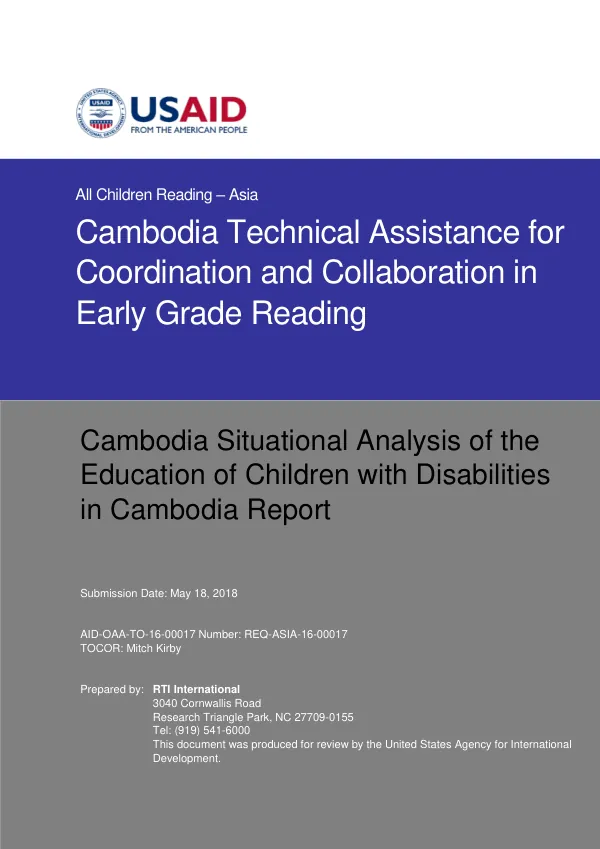
Cambodia Situational Analysis of the Education of Children with Disabilities in Cambodia Report
Sign inRTI INTERNATIONAL
Cambodia Situational Analysis of the Education of Children with Disabilities in Cambodia Report
The education of children with disabilities in Cambodia is a significant concern, with a lack of access to inclusive education and limited opportunities for children with disabilities to participate in mainstream education.
2018 · 88 pages
Sign in to readA free account is required to download.
Abstract
The country's education system is not equipped to meet the needs of children with disabilities, with limited resources and inadequate resources for special education. The Cambodian government has implemented various policies and laws to promote the education of children with disabilities, including the Law on the Protection and Promotion of the Rights of Persons with Disabilities and the National Strategic Plan for the Development of Persons with Disabilities. However, these policies and laws have not been effectively implemented, and children with disabilities continue to face significant barriers to accessing education. According to the report, the prevalence rate of children with disabilities in Cambodia is estimated to be around 10.6%, with the majority of children with disabilities being out of school. The report also highlights the lack of access to assistive devices, Braille, and sign language, which are essential for children with disabilities to participate in education. The report emphasizes the need for inclusive education, which involves integrating children with disabilities into mainstream education. However, the report also notes that the current education system in Cambodia is not equipped to provide inclusive education, with limited resources and inadequate resources for special education. The report highlights the importance of teacher training, which is essential for providing inclusive education. However, the report notes that teacher training programs in Cambodia is limited, and teachers lack the necessary skills and knowledge to provide inclusive education. The report also emphasizes the need for parent and community engagement, which is essential for promoting the education of children with disabilities. However, the report notes that parents and communities are not adequately engaged in the education of children with disabilities, and there is a lack of awareness about the rights of children with disabilities. The report provides several recommendations to address the challenges faced by children with disabilities in accessing education in Cambodia. These recommendations include increasing access to inclusive education, improving teacher training programs, and promoting parent and community engagement. The report also highlights the need for the Cambodian government to take a more proactive role in promoting the education of children with disabilities. This includes increasing funding for special education, improving the education system, and implementing policies and laws that promote the rights of children with disabilities. Overall, the report emphasizes the need for a more inclusive education system in Cambodia, which involves integrating children with disabilities into mainstream education. The report also highlights the importance of teacher training, parent and community engagement, and government support in promoting the education of children with disabilities in Cambodia. The report provides several key findings, including: * The prevalence rate of children with disabilities in Cambodia is estimated to be around 10.6%. * The majority of children with disabilities are out of school. * The education system in Cambodia is not equipped to provide inclusive education. * Teacher training programs in Cambodia is limited, and teachers lack the necessary skills and knowledge to provide inclusive education. * Parents and communities are not adequately engaged in the education of children with disabilities. * The Cambodian government has implemented various policies and laws to promote the education of children with disabilities, but these policies and laws have not been effectively implemented. The report also provides several recommendations, including: * Increase access to inclusive education. * Improve teacher training programs. * Promote parent and community engagement. * Increase funding for special education. * Improve the education system. * Implement policies and laws that promote the rights of children with disabilities.
Related documents
Documents in this collection
 2017
2017USAID DEC
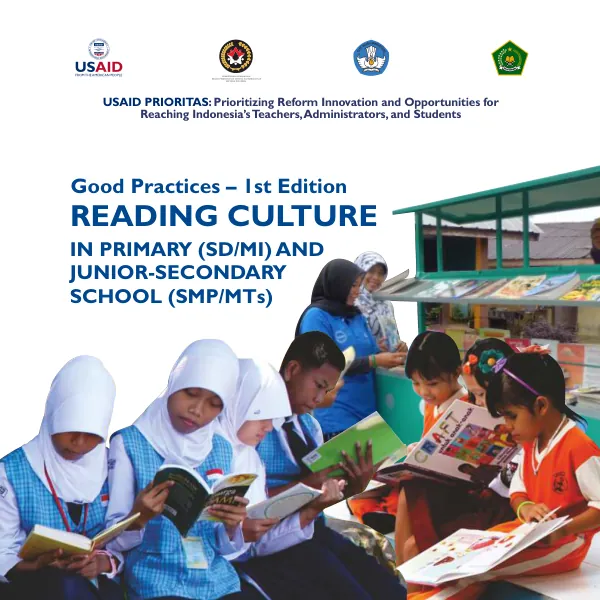
Good Practices – 1st Edition: Developing a Reading Culture in Primary and Junior Secondary Schools in Indonesia
Open record 2016
2016USAID DEC