USAID. BUR. FOR LATIN AMERICA AND THE CARIBBEAN. REGIONAL DEVELOPMENT OFC. CARIBBEAN
Caribbean environmental network
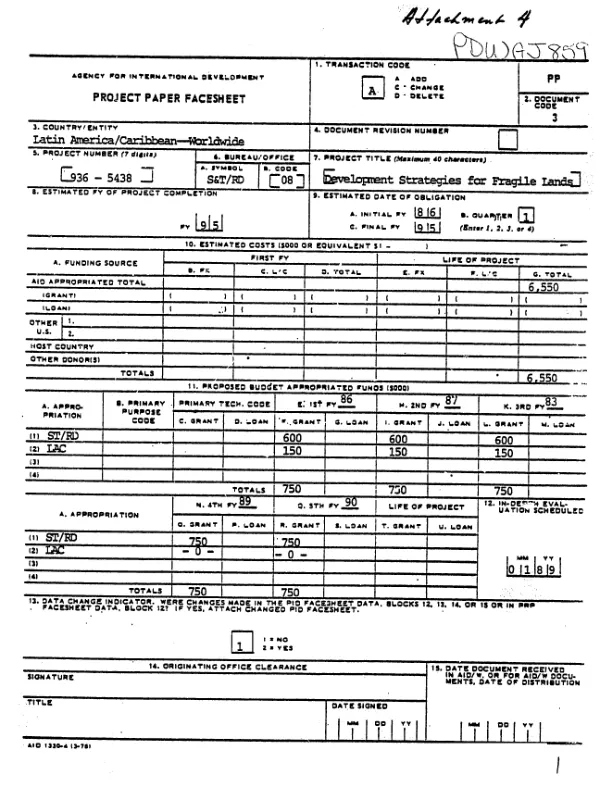
Project to reduce the negative environmental impacts of tourism on coastal and marine resources in the Caribbean by supporting establishment of a tourism industry environmental network -- the Caribbean Ecotourism Support Network (CESN) of the Caribbean Tourism Organization (CTO).
1995
Sign in to readA free account is required to download.
Abstract
The project, to be implemented by the UN Environment Program (UNEP) under the framework of its Caribbean Environmental Program (CEP), will include pilot projects, studies, training, and public awareness/information exchange. The project will finance about four pilot projects aimed at mobilizing the tourist industry, governments, and NGOs to reduce pollution and degradation of coastal and marine resources from tourism. These projects may include: a program to improve waste disposal practices by the tourist industry (only 25% of the packaged sewage treatment plants operated by hotels and resorts are currently in good operating condition); a public education program to help citizen watchdog groups identify pollution problems affecting coral reefs in tourist areas; and an environmental council to develop a local action plan to maintain coral reefs in tourist areas. The pilots will be implemented in Haiti, Jamaica, the Dominican Republic, and Guyana, and it is expected that follow-on financing will be provided by other donors, such as the UNEP and the UNDP Global Environmental Facility. Project studies will use existing case studies and data to assess the extent of coastal resource degradation, review information on best practices to reduce tourism"s impact on the environment, and analyze public awareness activities to determine methods to stimulate positive behavioral changes by the tourist industry. Findings will be presented at workshops and disseminated by the CESN, and they will be used in developing a Regional Plan of Action which will be presented to national governments at fora such as the CTO annual conference in 1997. Project training will aim to develop a cadre of planners, engineers, and tourism industry and government representatives able to undertake coastal and marine resource management. This component, to be implemented through workshops, short courses, and observational tours, will provide the technical tools needed to analyze resource degradation and loss, develop local environmental plans, and share successful programs. TA in developing the training packages will be provided by experienced training institutions such as the Coastal Resources Center of the University of Rhode Island and UNITAR. Workshops will be carried out by regional environmental and tourism groups such as the Caribbean Natural Resources Institute, the Caribbean Environmental Health Institute, and the Caribbean Hotel Training Institute, while the short courses will be conducted by regional institutions such as the Consortium of Caribbean University in Natural Resource Management. A public awareness program will sensitize key stakeholders on the long-term effects of negative environmental impacts of the improperly managed waste disposal practiced by many in the tourism industry. It will also facilitate information sharing on best practices for the reduction of land-based sources of pollution generated by tourism-related activities. Target groups include: hoteliers, senior government officials, regional tourism organizations, technical professionals, environmental NGOs, community organizations, and the general public. The program will be implemented through, inter alia, how-to" booklets on waste disposal, seminars, videos, radio and TV features, and fact sheets and newsletters produced by the CESN and other environmental networks.
Related documents