ARIZONA STATE UNIVERSITY
CARISCA BRANDING STRATEGY & MARKING PLAN
The CARISCA project is a collaborative effort between Arizona State University (ASU) and Kwame Nkrumah University of Science and Technology (KNUST) to advance research, translation, and training in supply chain management in Ghana and across Africa.
2021 · 15 pages
Sign in to readA free account is required to download.
Abstract
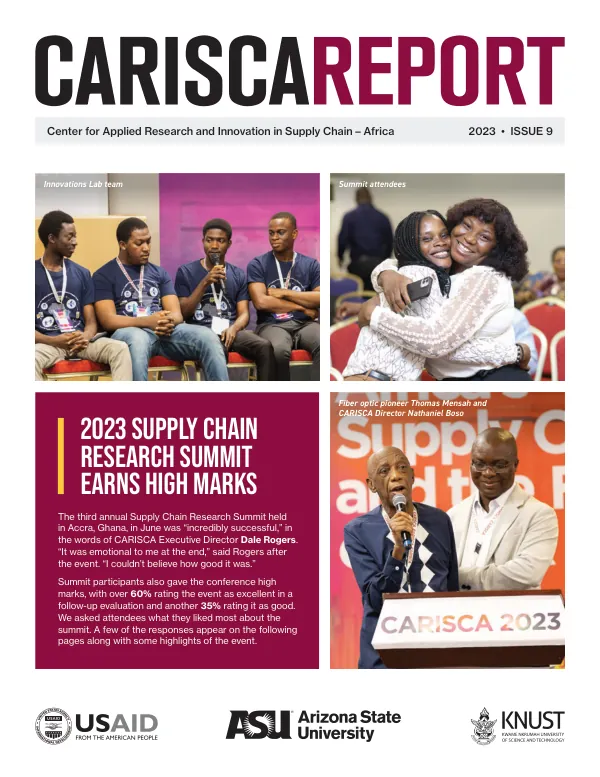
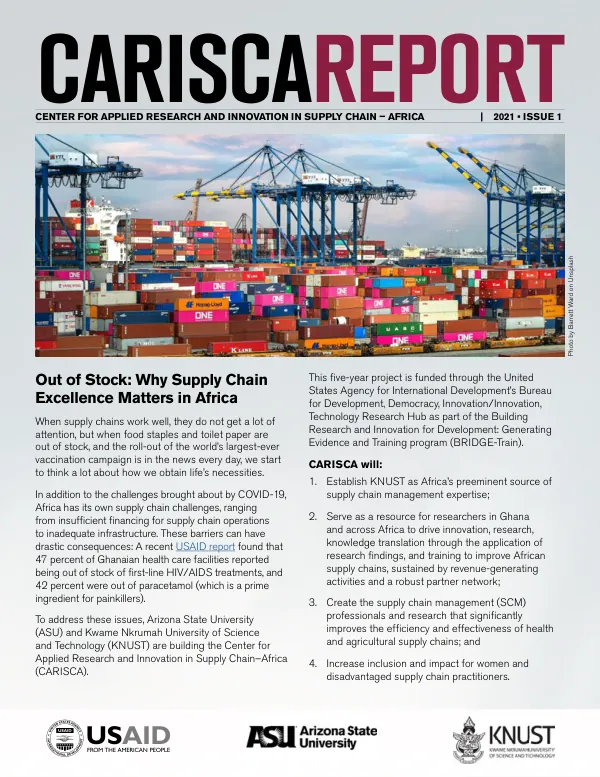
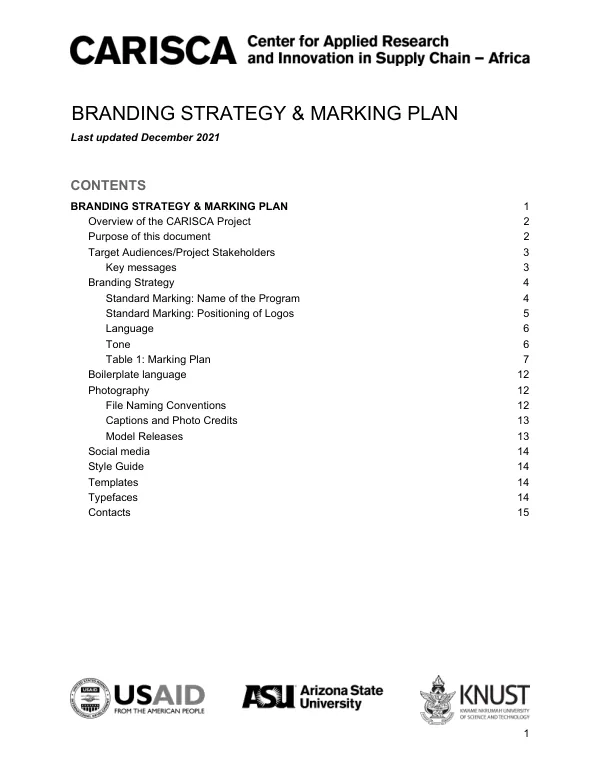
The project aims to strengthen supply chains in the region, improve economic and personal well-being, and increase inclusion and impact for women and disadvantaged groups. The CARISCA project will promote education, training, innovation, research, and research translation in supply chain management to strengthen supply chains in Ghana and Africa. All materials will promote the inclusion of women and disadvantaged groups. Clear identification with USAID will promote the positive impact and value of U.S. foreign aid and that the source of this aid is the American people. Clear identification with ASU and KNUST communicates the value of the project's university-driven knowledge creation and training capabilities. The CARISCA project will use a standard marking plan, which includes the full program name and acronym as a text treatment in black or reversed out of a background in white. The project name will appear at the top of all documents. When the item originates in the U.S. for a U.S. or international audience, the "center" spelling will be used. When the communication originates in Ghana or is primarily for a Ghanaian audience, the "centre" spelling will be used. The CARISCA project will use the horizontal logo and wordmarks for USAID, ASU, and KNUST in this order from left to right. Because of the wide range of color palettes used in the USAID, ASU, and KNUST logos, black or grayscale versions of all three logos will be used in most applications. In most cases, the logos will appear at the bottom of the documents. This approach highlights the existing strength of the three organizational brands and positions each as a partner. The CARISCA project will follow ASU's tone guidelines, which captures the spirit and intent of all three partners: "The tone for our brand is: ambitious, bold, visionary, inspiring, aspirational, optimistic, determined, future-focused, authoritative, leading the way, strong, active, capable, committed, purposeful, and honest." The project will strive to avoid acronyms or jargon in all communications that might interfere with stakeholder understanding. The CARISCA project will use a variety of materials, including brochures, business cards, letterhead, clothing, email signatures, equipment, handouts, learning management systems, mobile apps, news stories, newsletters, online classes, webinars, online registration forms, presentations, press releases, and more. Each of these materials will be marked according to the standard marking plan, which includes the use of logos, text treatments, and other visual elements to promote the project's brand and messaging. The CARISCA project will also use a variety of digital platforms, including learning management systems, mobile apps, and online registration forms. These platforms will be designed to promote the project's brand and messaging, and to provide a consistent and clear message to stakeholders. The project will also use social media to promote its brand and messaging, and to engage with stakeholders. Overall, the CARISCA project is a collaborative effort to advance research, translation, and training in supply chain management in Ghana and across Africa. The project aims to strengthen supply chains in the region, improve economic and personal well-being, and increase inclusion and impact for women and disadvantaged groups. The project will use a standard marking plan, follow ASU's tone guidelines, and use a variety of materials and digital platforms to promote its brand and messaging.