DEVIDA
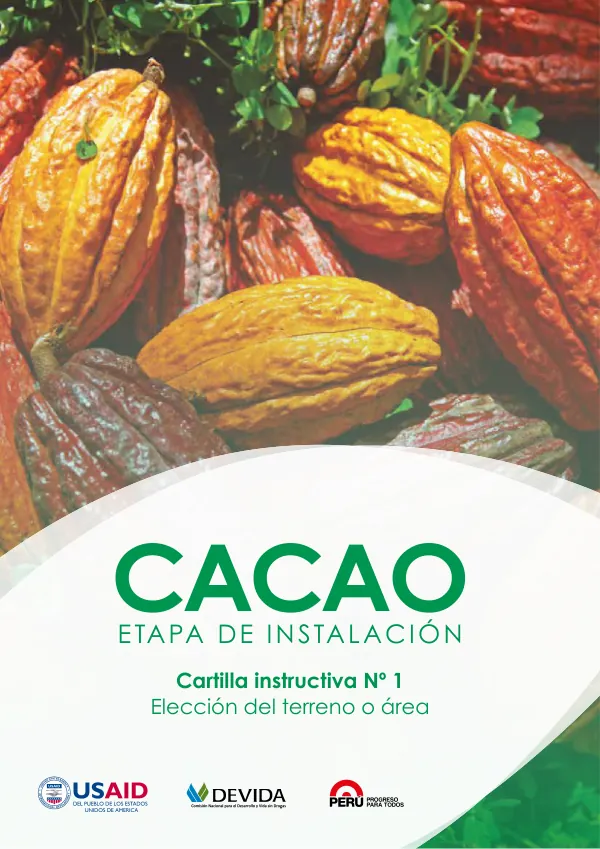
Cartilla Instructiva Nº 1: Elección del Terreno o Área para el Cultivo de Cacao
Cacao cultivation under agroforestry systems requires careful selection of the land or area.
2014 · 20 pages
Sign in to readA free account is required to download.
Abstract
The ideal conditions for cacao cultivation include a terrain with a maximum of 25% incline. This allows for proper drainage and reduces the risk of soil erosion. The presence of certain plant species, such as yarina and shapaja, indicates fertile and suitable soil for cacao cultivation. Additionally, parcels previously used for crops like maize, beans, rice, cotton, or yuca can be utilized for cacao cultivation. These crops can provide temporary shade for the cacao trees. Residues from previous crops, including leaves, weeds, and branches, should not be burned. Instead, they should be used as natural fertilizer and to maintain soil moisture. These residues also help prevent the growth of weeds and protect the soil from erosion. When selecting a site for cacao cultivation, it is essential to consider the terrain's characteristics, including its incline, soil type, and drainage. A suitable terrain should have a dark-colored soil, be loose, and not prone to waterlogging or being too rocky. The root of the cacao tree should be able to penetrate at least one meter into the soil. While a terrain with a maximum of 25% incline is recommended, it is possible to cultivate cacao on steeper slopes if proper soil conservation techniques are applied. These techniques include the use of barriers, living covers, and contour farming. By implementing these methods, farmers can ensure the sustainability of their cacao cultivation and maintain soil health.