DEVIDA
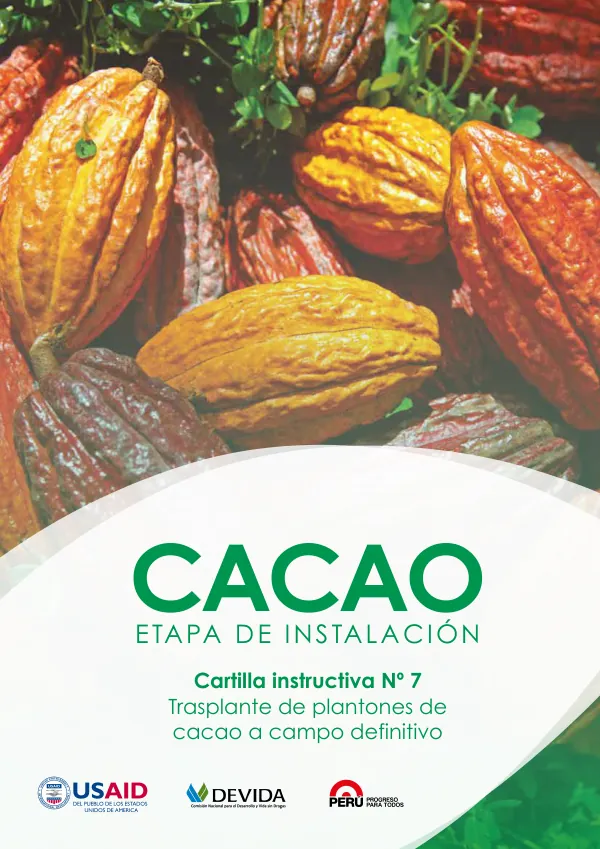
Cartilla Instructiva Nº 7: Trasplante de Plantones de Cacao a Campo Definitivo
The agricultural development initiative for cacao cultivation under agroforestry systems is a transfer of technology effort by DEVIDA and local and regional governments for farmers in areas where coca cultivation was previously illicit.
2014 · 24 pages
Sign in to readA free account is required to download.
Abstract
The initiative involves the use of cartillas instructivas, or instructional guides, to support the cultivation of cacao. The cacao plant is a key crop in the initiative, and its cultivation requires careful planning and execution. The first step in the process is the identification of the system of planting to be used. The recommended system is the Tresbolillos 3 m x 3 m design, which allows for 1,283 plants per hectare. This design is a combination of cacao, frijol de palo, plátano, capirona, and bolaina, with the frijol de palo and plátano providing temporary shade and the guaba providing permanent shade. The next step is the demarcation of the land, which involves marking the boundaries of the planting area. This is done using a system of triangulation, which involves measuring the distance between three points to determine the shape and size of the planting area. The demarcation of the land is critical to ensure that the planting area is properly aligned and that the plants are spaced correctly. The alineado, or alignment, of the land is a critical step in the process. This involves using a wincha, jalones, and cordeles to mark the boundaries of the planting area. The alignment of the land is variable depending on the characteristics of the terrain, and it is essential to take into account the slope and curvature of the land to prevent erosion and loss of soil. The trasplante, or transplanting, of the cacao plants is the next step in the process. This involves carefully removing the plants from their pots and transplanting them into the prepared soil. The plants are then watered and fertilized to promote healthy growth. The instalación de microrrelleno, or installation of micro-irrigation, is the final step in the process. This involves installing a system of pipes and sprinklers to provide the plants with a consistent supply of water. The micro-irrigation system is designed to conserve water and reduce the risk of erosion. Overall, the cultivation of cacao under agroforestry systems requires careful planning and execution. The use of cartillas instructivas and the careful demarcation, alineado, and trasplante of the plants are critical to ensuring the success of the crop.