USAID DEC
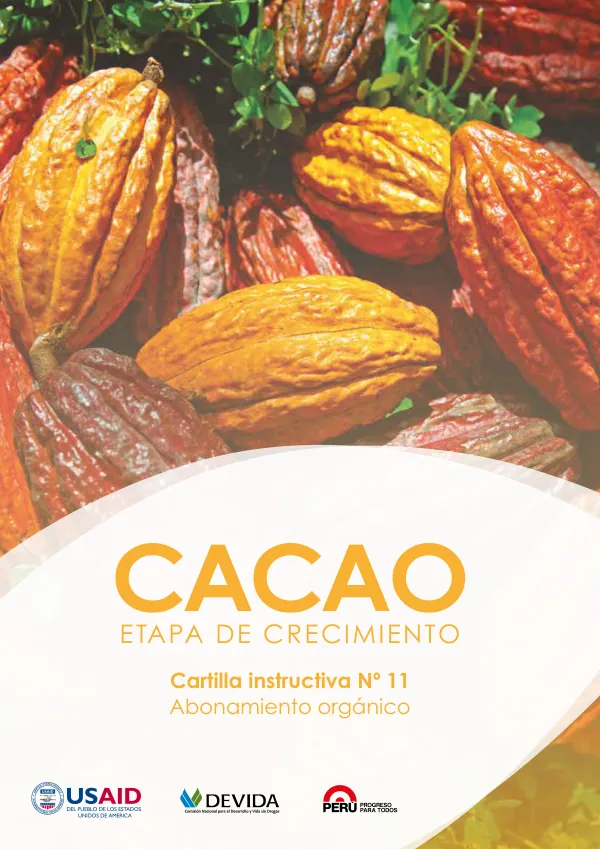
Cartilla Instructiva Nº 11: Abonamiento Orgánico en la Etapa de Crecimiento del Cacao
Sign inDEVIDA
Cartilla Instructiva Nº 11: Abonamiento Orgánico en la Etapa de Crecimiento del Cacao
The agricultural development initiative for cacao cultivation in regions with a history of illicit coca production involves the use of organic fertilizers.
2014 · 24 pages
Sign in to readA free account is required to download.
Abstract
Cartilla instructiva Nº 11, Abonamiento orgánico, focuses on the application of organic fertilizers during the growth stage of cacao plants. The growth stage of cacao plants requires a balanced nutrient supply, including nitrogen, phosphorus, and potassium. Organic fertilizers provide these essential nutrients, which are crucial for the development of roots, branches, and floral organs. The application of potassium is particularly important during the flowering, fruiting, and fructification stages. In regions with low phosphorus content in the soil, such as the Amazonian valleys, the use of high-phosphorus fertilizers is essential. Cacao plants require 2.3 kilograms of humus per year, which should be applied around the plant, taking into account the location of the roots. The application of caldo sulfocálcico every 4 months is also recommended, as cacao plants require a significant amount of sulfur, particularly during the production stage. There are various types of organic fertilizers, including humus, compost, biol, and purin. These fertilizers are rich in nutrients and are recommended for cacao cultivation. Other types of organic fertilizers, such as guano and rock phosphate, can also be purchased in the market. The application of organic fertilizers should be programmed according to the farmer's calendar of activities. It is recommended to apply the fertilizers during the transplanting and maintenance pruning stages. Before transplanting, the soil should be analyzed to determine its nutrient content. The farmer should also observe the plant's external changes and signs of nutrient deficiency, applying foliar fertilizers if necessary. Compost is a solid fertilizer prepared from the decomposition of various plant materials. It is a rich source of organic nutrients that can be applied to the soil where cacao is cultivated. The preparation of compost is simple and can be done in the same plantations, using cacao husks, kitchen waste, animal manure, and other plant residues. To prepare compost, a series of layers of approximately 30 cm in thickness should be created, alternating between different materials such as animal manure, cacao husks, kitchen waste, and plant residues. Cal should be added to each layer to regulate the pH and facilitate decomposition. Biol is a foliar fertilizer obtained from the decomposition of organic waste, such as tree leaves or animal guano and urine. It is a rich source of organic nutrients that stimulates plant growth, increases root development, and improves flower and fruit production. The application of biol can lead to a significant increase in crop yields.