CREATIVE ASSOCIATES INTERNATIONAL INC.
CCI-IEAOM Election Audit Observation Final Report, July 15-September 20, 2014
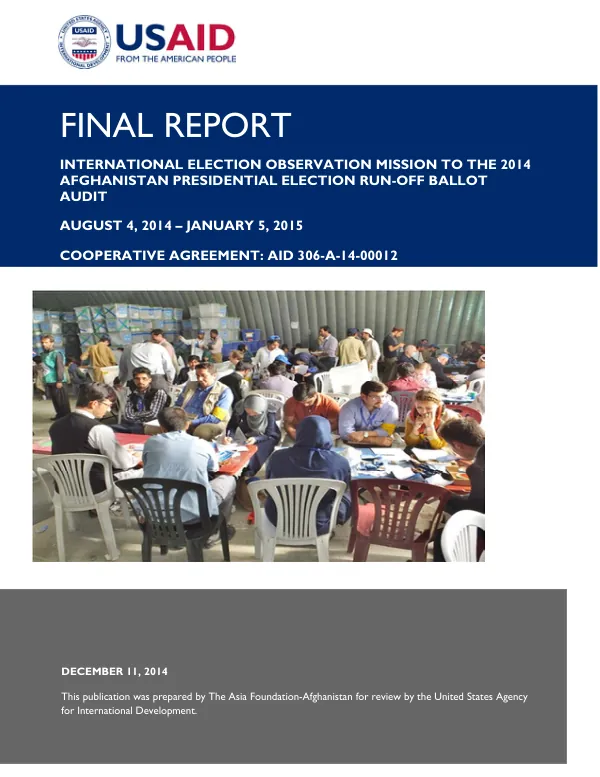
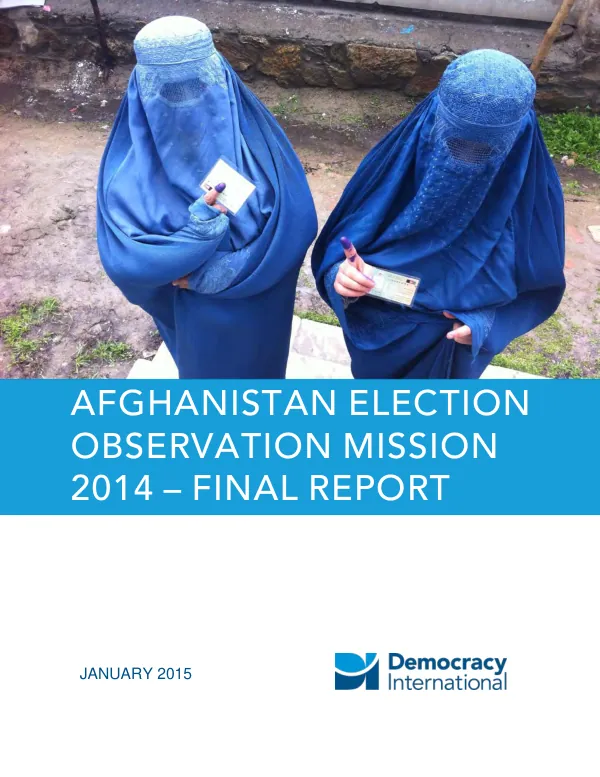
The Independent Election Commission (IEC) of Afghanistan managed and implemented a credible but imperfect audit of 100% of the approximately eight million ballots from the second round of the 2014 presidential elections.
2014 · 56 pages
Sign in to readA free account is required to download.
Abstract
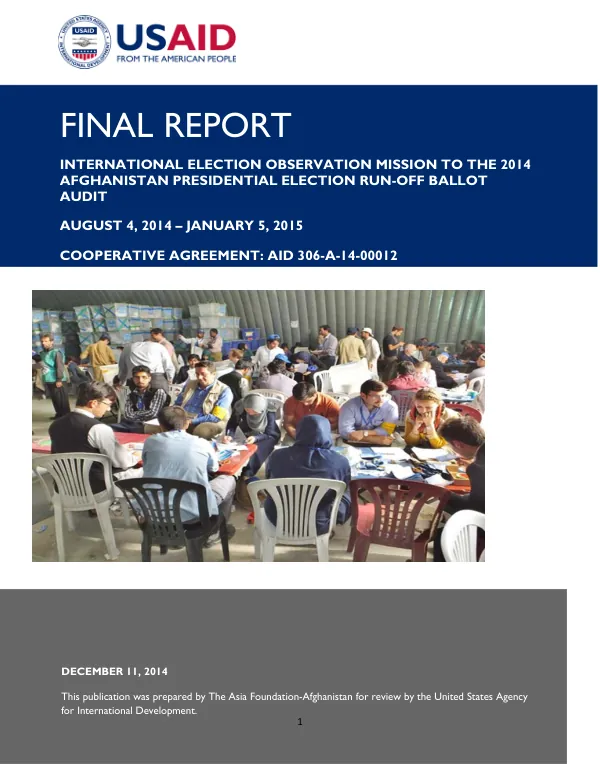
The audit was conducted by the IEC in Kabul with technical assistance from the United Nations Development Programme (UNDP) ELECT project. Creative Associates International, Inc. (Creative) observed the IEC ballot box audit, which consisted of recounting of ballots, audit checklist data analysis, and audit results decision making. The IEC developed policies and procedures to conduct the audit with substantial technical assistance and guidance from the UNDP ELECT project. Implementing these policies and procedures adequately identified minor balloting irregularities, such as missing official IEC stamps and invalid ballot markings, though failed to conclusively identify all forms of fraud. Procedural implementation was adhered to throughout the audit, but the lack of clarity in procedures and absence of comprehensive training led to varied interpretations of procedure. The key obstacle to the audit was the significant presence of similarly marked ballots (SMBs). The IEC and UNDP designed specific SMB identification and adjudication procedures, but the reliance on a subjective interpretation of what constituted 'similar/not similar' ballot tick marks proved problematic. IEC auditors and UNDP advisors tended to adjudicate on the side of caution and voter franchise protection when confronted with doubt during results auditing and recounting. Creative observed numerous cases in favor of both candidates where potentially invalid votes were validated, and vice versa, even though those ruled as valid ballots far outnumbered the invalid ones. The SMB issue plagued the audit process throughout operations, generating frustration, tension, and even violence among the opposing candidate agents as well as occasional contention between auditors and advisors. The IEC issued nine official audit results decisions that verified 11,945 (49%), recounted 9677 (46%), and nullified 1,206 (5%) polling stations on September 21, hours after Ghani and Abdullah signed an agreement to form a national unity government. The IEC and IECC conducted the audit and complaints review in accordance with Election Law 2013 and corresponding policies and procedures. Creative's quantitative analysis revealed that the most suspect provinces from macro-level data correlated with the most problematic provinces at a box-by-box level. Ballot boxes from Baghlan, Faryab, Ghor, Paktika, Paktia, Khost, and Wardak were all the most likely to go to a recount, most likely to have SMBs, take the longest to complete, have suspect voter lists, and contain any number of criteria that triggered a recount under IEC guidelines. The IEC with the support of UNDP technical assistance implemented credible policies and procedures during the results auditing and recounting and audit checklist data analysis operations. IEC auditors and their UNDP advisors performed their job in a professional and consistent manner despite the technical limitations and operational constraints. The overall quality of audit checklist data collection improved, which benefited IEC evaluations on whether to include/exclude polling station results. The Independent Electoral Complaints Commission (IECC) also observed the audit and implemented its legal complaints review mandate. The IEC and IECC conducted the audit and complaints review in accordance with Election Law 2013 and corresponding policies and procedures. Managerial, technical, operational, logistical, and procedural improvements were possible throughout the audit and would have benefitted the audit's overall quality. Creative identified lessons for electoral stakeholder consideration and application during future electoral events. Specific recommendations for the IEC, UNDP, IECC, candidate agents, national and international observers, and the media are included in the final report's conclusion to further develop democratic governance institutions in Afghanistan.
Related documents