USAID
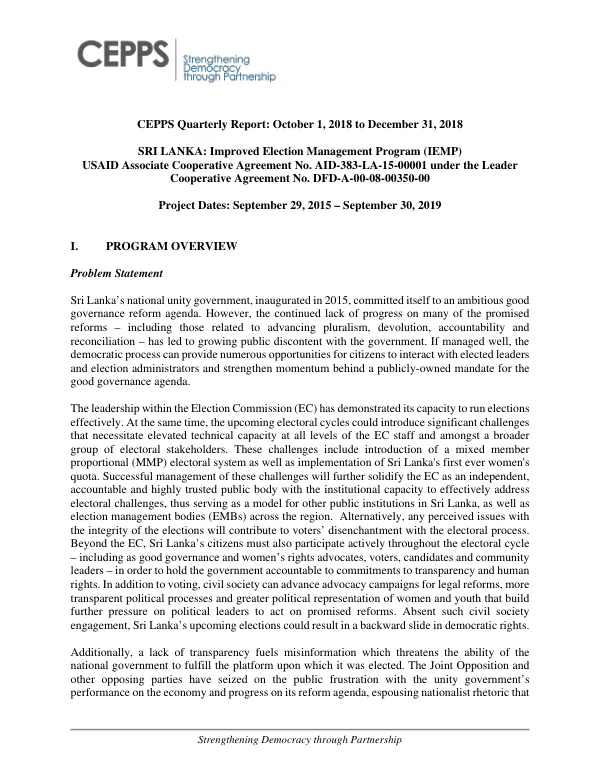
CEPPS/IFES Strengthening Democracy through Partnership: CEPPS/IFES Year 2 Report
The Improved Election Management Program (IEMP) in Sri Lanka aimed to strengthen the country's democratic institutions and improve the electoral process.
2017 · 26 pages
Sign in to readA free account is required to download.
Abstract
The program, implemented by CEPPS/IFES, began in September 2015 and concluded in September 2017. The program received a total budget of $2,273,067, with expenses totaling $2,014,460. The IEMP focused on building the capacity of the Election Commission (EC) to administer credible and inclusive elections in Sri Lanka. The program's objectives included assisting the EC in developing a multi-year strategic plan, transitioning to an independent election commission, and improving the efficacy of voter education programs. CEPPS/IFES worked with the EC to enhance its knowledge of best practices in institutional capacity building, election administration, strategic planning, voter education, and ensuring electoral and political rights of marginalized groups. The program's activities were contingent upon the willingness of national partners to receive technical assistance and support from IFES. Key assumptions underlying the program included the EC's willingness to engage with CEPPS/IFES, the acceptance of international experts, and the receptivity of civil society and other electoral stakeholders. During the reporting period, the EC Chairman expressed frustration with the delays in the approval process for the local government elections. The Chairman noted that the EC will announce the provincial council election dates within a week following the expiration of each provincial council's respective term. The constitutional reform process also remained under discussion, with ongoing deliberations over the abolishment of the executive presidency and the selection of the Prime Minister. The reporting period also included a worrying spike in incidents of violence against the Muslim community, causing MPs and community leaders to express concerns about hate-motivated incidents and localized violence. In response, the government announced plans to adopt new laws to stop religious and ethnic violence. Despite delays in broader constitutional reforms, other reform efforts, such as the Registration of Electors (Special Provisions) Bill, were moving forward. The IEMP's activities focused on building the capacity of the EC to administer credible and inclusive elections in Sri Lanka. The program's implementation was contingent upon the willingness of national partners to receive technical assistance and support from IFES. Key assumptions underlying the program included the EC's willingness to engage with CEPPS/IFES, the acceptance of international experts, and the receptivity of civil society and other electoral stakeholders. The IEMP's activities included providing technical assistance to the EC, conducting training programs for EC officials, and supporting the development of strategic and voter education plans. The program also focused on building the capacity of civil society and other electoral stakeholders to participate in the electoral process. The program's impact was evident in the EC's increased capacity to administer credible and inclusive elections in Sri Lanka. The program's activities helped to build the capacity of the EC to develop a multi-year strategic plan, transition to an independent election commission, and improve the efficacy of voter education programs. The program's impact was also evident in the increased participation of civil society and other electoral stakeholders in the electoral process.