USAID DEC
Feed the Future - Bangladesh Agricultural Infrastructure Development Activity – STRATEGIC COMMUNICATION PLAN
Sign inUSAID
Feed the Future - Bangladesh Agricultural Infrastructure Development Activity – STRATEGIC COMMUNICATION PLAN
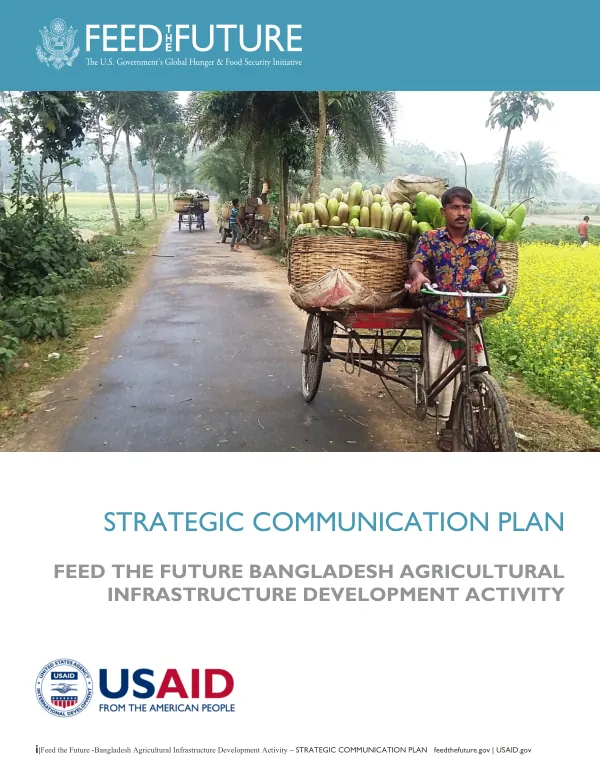
The Feed the Future Bangladesh Agricultural Infrastructure Development Activity is a strategic communications plan aimed at increasing access to markets for agricultural produce, inputs, and services, enhancing post-harvest handling and storage of agricultural produce, and increasing the productivity and production of farmlands.
2021 · 14 pages
Sign in to readA free account is required to download.
Abstract
The activity focuses on providing infrastructure services in selected areas of southwest and southeast Bangladesh, with a key partner being the Local Government Engineering Department (LGED). The activity has three objectives: increasing access to markets for agricultural produce and inputs, enhancing post-harvest handling and storage of agricultural produce, and increasing the productivity and production of farmlands. To achieve these objectives, the activity will invest in rural roads, collection centers, cold storage facilities, and drainage/irrigation systems. The activity will also engage private sector entities to create public-private partnerships that leverage private sector investments and expertise to ensure the sustainable operation and maintenance of infrastructure facilities. The activity contributes to USAID/Bangladesh's Country Development and Cooperation Strategy (CDCS), specifically enhancing opportunities for a more robust economy and strengthening Bangladesh's resilience to shocks and stressors. Improved rural infrastructure will enable better post-harvest processing and storage, thereby strengthening the ability of rural Bangladeshis to adapt and recover from shocks. The activity's strategic communications plan aims to communicate effectively with a range of stakeholders, including smallholder farmers, government officials, investors, companies, international donors, media organizations, research organizations, Non-Governmental Organizations (NGOs), and Civil Society Organizations (CSOs). The primary purpose of the activity's strategic communications is to communicate effectively with each of these audiences about the work undertaken by the activity, with the three core objectives of raising awareness of the USAID brand, raising awareness of the work undertaken by the activity, and highlighting the benefits of collaborating with the activity. The activity will engage with smallholder farmers to raise awareness of new infrastructure in targeted communities and the availability of resources to assist smallholder farmers. Companies will be targeted to highlight the benefits of collaborating with the activity, including increased access to markets and improved post-harvest handling and storage of agricultural produce. The activity will also engage with government officials, investors, and international donors to raise awareness of the work undertaken by the activity and highlight the benefits of collaborating with the activity. The activity's communications objectives are to raise awareness of the USAID brand, raise awareness of the work undertaken by the activity, and highlight the benefits of collaborating with the activity. The activity will use a range of communications tools, including photographs and videos, to report, publicize, and document the activity's efforts. A professional photographer and/or videographer will be retained/contracted to cover the activity's events, projects, ceremonies, and conferences. The activity's staffing plan includes the Chief of Party, who is ultimately responsible for the implementation of the strategic communications plan, with primary execution undertaken by the MEL Manager. All team members will be trained on the requirements of the Branding and Implementation Plan and Marking Plan and the objectives of the strategic communications plan.