USAID
Climate Change Adaptation in Western Tanzania
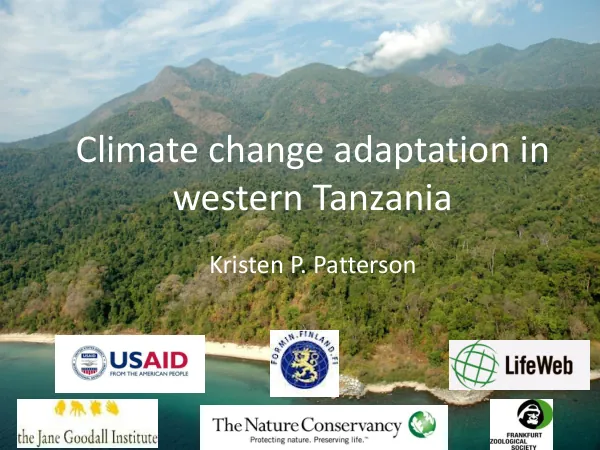
Climate change adaptation in western Tanzania is a critical concern due to projected temperature increases and changes in rainfall patterns.
9 pages
Sign in to readA free account is required to download.
Abstract
Temperatures are expected to rise across all seasons, while annual rainfall may not vary in terms of total amount, but will exhibit changes in frequency, intensity, and predictability. As a result, wet seasons will become wetter, and dry seasons will become drier. Despite increased rainfall, the region will become more arid due to higher temperatures. Future climate projections for western Tanzania indicate a shift towards more extreme weather events. This will have significant implications for the region's ecosystems, including the Evergreen Forest, Miombo woodland, and Bamboo forest. These ecosystems are already vulnerable to climate change, and the projected changes will likely exacerbate existing challenges. However, the development of effective climate adaptation strategies can help mitigate these impacts. One key lesson learned from climate change adaptation efforts in western Tanzania is the importance of empowering local communities. By demystifying climate change and involving people in the adaptation process, communities are more likely to develop effective responses to climate impacts. This approach also highlights the need to build on existing knowledge and practices, rather than introducing new and unfamiliar strategies. Many good climate adaptation strategies are modifications of what teams are already doing, and implementation often does not require a major overhaul of activities on the ground. Another critical lesson learned is the need to monitor, evaluate, and adjust climate adaptation strategies over time. Developing hypotheses and testing them through monitoring and evaluation is essential for identifying effective approaches and making adjustments as needed. This iterative process allows for the refinement of adaptation strategies and ensures that they remain relevant and effective in the face of changing climate conditions. By taking a flexible and adaptive approach to climate change, communities in western Tanzania can develop effective responses to the projected changes and build resilience in the face of uncertainty.