DEUTSCHE GESELLSCHAFT FÜR INTERNATIONALE ZUSAMMENARBEIT GMBH
Climate Risk Assessment for the South-West Khatlon Region
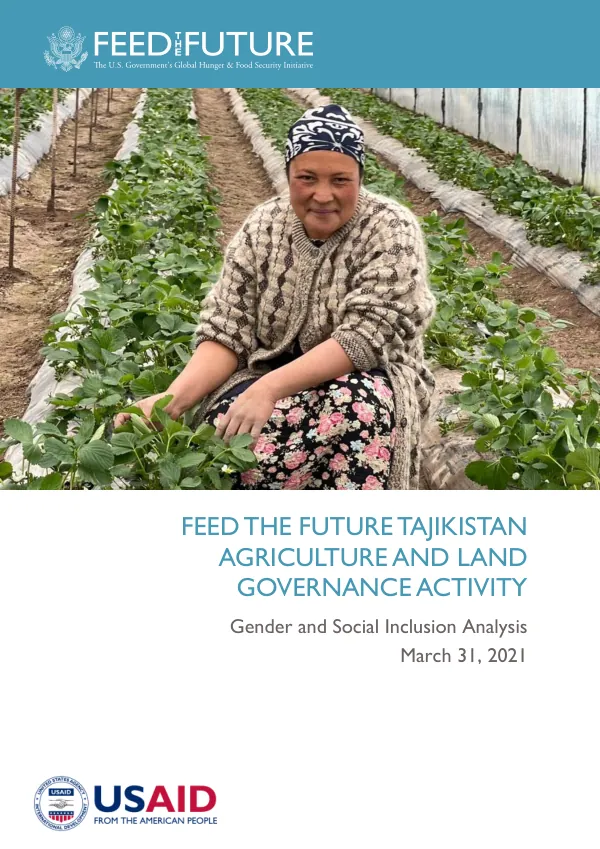
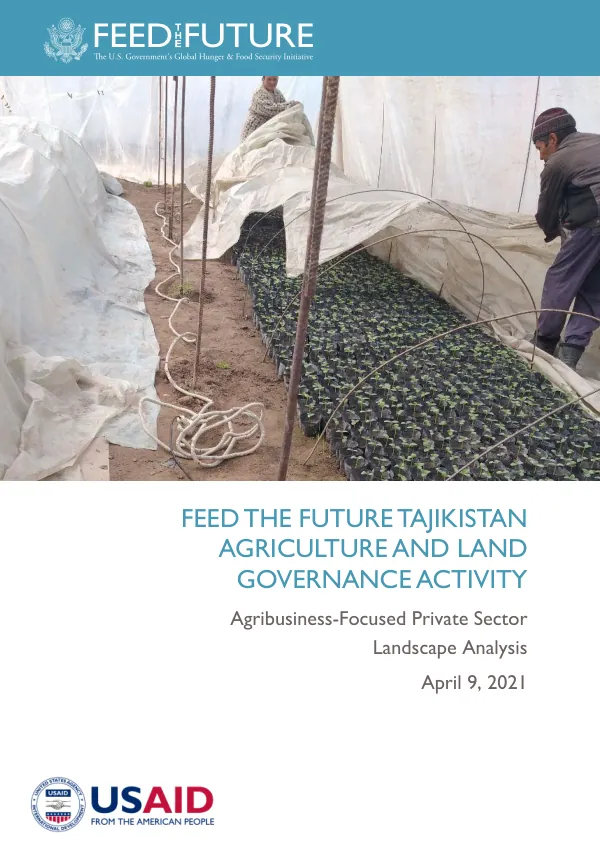
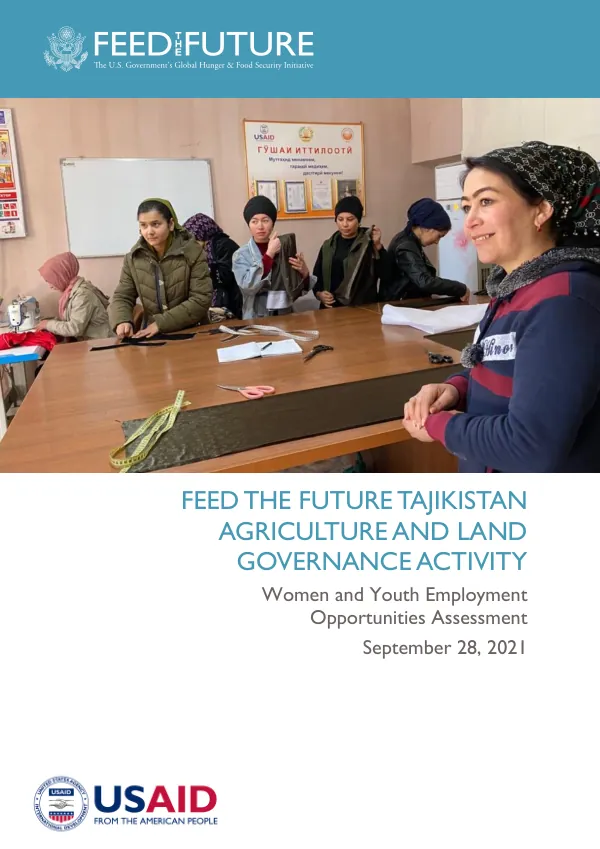
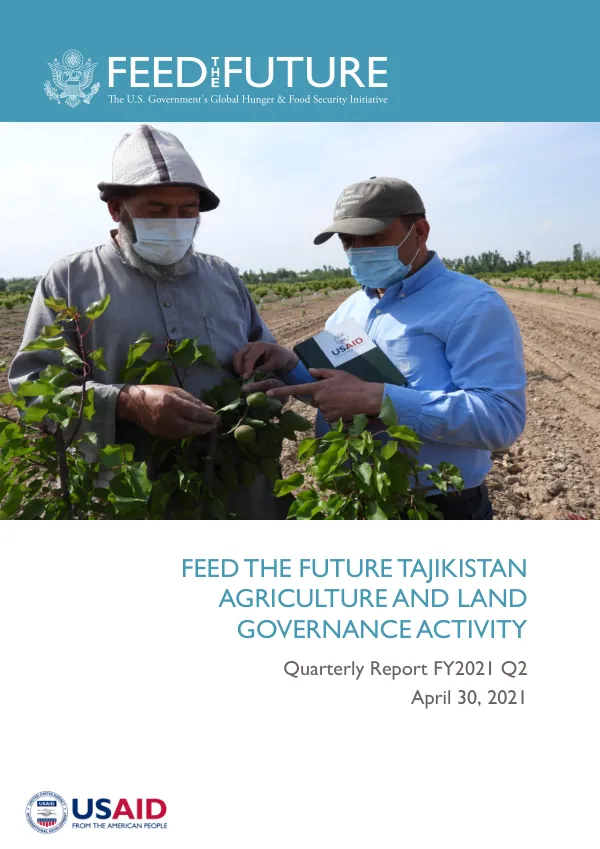
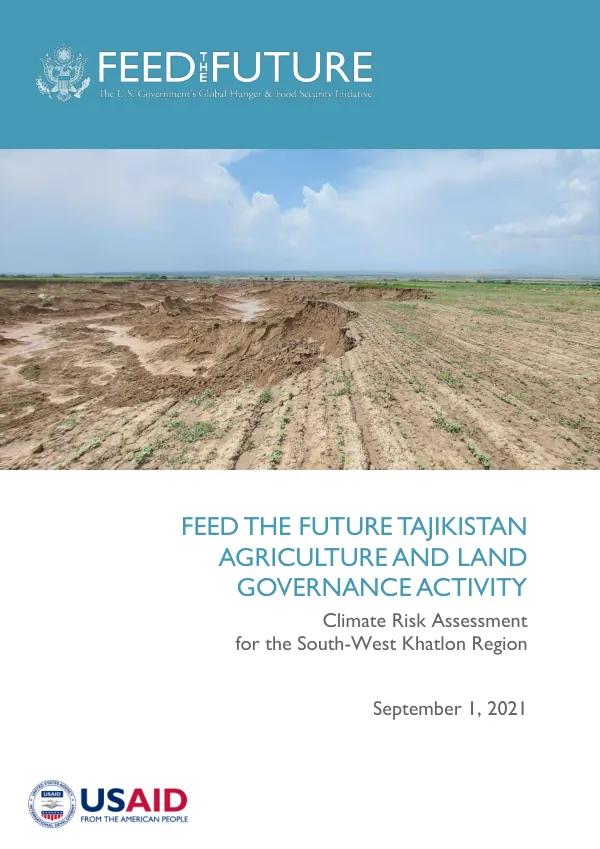
The Feed the Future Tajikistan Agriculture and Land Governance Activity is a 5-year USAID-funded initiative aimed at reducing hunger, undernutrition, and poverty among smallholder farmers in Tajikistan.
2021 · 77 pages
Sign in to readA free account is required to download.
Abstract
The Activity focuses on developing more productive and efficient agriculture systems, building the resilience of smallholder farmers, and improving the enabling environment to facilitate sustainable and long-term agriculture-led growth. The project is implemented in 12 districts of the Khatlon region in the south-west of Tajikistan, an area heavily impacted by climate change and prone to natural disasters. Tajikistan is one of the poorest countries in the Eastern Europe, Caucasus, and Central Asia region, with agriculture accounting for 20% of the country's GDP and 70% of domestic employment. The country is highly dependent on remittances from migrants working in Russia, which account for approximately 43% of Tajikistan's GDP. However, remittance levels dropped to 27% due to travel restrictions and limited employment opportunities during the COVID-19 pandemic. This highlights the country's vulnerability to global market fluctuations. Climate change is affecting the economy, society, and ecosystems in Tajikistan, with extreme weather events such as floods, droughts, avalanches, and landslides recurrently destroying land, crops, and infrastructure. Between 1992 and 2016, natural and climate-related disasters led to GDP losses of roughly US$1.8 billion, affecting almost 7 million people. The most common impacts are those of land degradation and erosion of fertile topsoil, as well as on infrastructure due to mudflows. Climate-induced losses are likely to increase with rising temperature and shifting precipitation patterns. The Activity aims to strengthen the resilience of local communities to climate change and increase adaptive capacity now and in the future. To achieve this, the assessment provides an overview of the current climatic conditions in the Activity's 12 districts of implementation and highlights future predicted climatic changes. The assessment is based on primary and secondary data collection, including a literature review, data on past and projected natural hazards, weather information from 2011 to 2020, and a qualitative survey among 124 farmers in the Feed the Future Zone of Influence. The Khatlon region is one of the four regions of Tajikistan, situated in the south of the country, bordering Uzbekistan to the west and Afghanistan to the south. Nearly 3.4 million people, about 35% of Tajikistan's total population, live in the Khatlon region, out of which 82% live in a rural setting. The poverty rate in the Khatlon region is approximately 37%, resulting in poor food and nutrition security, where over 60% of household income is spent on food. Food security and nutrition security are major challenges for Tajikistan, with stunting among children aged between 6 months and 5 years of age being nearly 20%. The Activity is active in the 12 districts of the South-Western part of Khatlon province, known as the Feed the Future Zone of Influence (ZOI). The ZOI includes the districts of Jomi, Jaloliddini Balhi, Yovon, Khuroson, Kushoniyon, Jayhun, Nosiri Khisrav, Shahritus, Qubodiyon, Dusti, Vakhsh, and Levakant. In the ZOI, agriculture is the main source of income, with most people engaged in agriculture and operating on a registered dehkan farm. Dehkan farms replaced the soviet collective farms and in many cases are family-owned and operated. The assessment highlights the importance of strengthening the resilience of societal and farming systems in southern Khatlon region to climate change. The Activity aims to achieve this by developing more productive and efficient agriculture systems, building the resilience of smallholder farmers, and improving the enabling environment to facilitate sustainable and long-term agriculture-led growth. The assessment provides recommendations for the current Activity to strengthen the resilience of local communities to climate change and increase adaptive capacity now and in the future.