USAID DEC
Coaching Notes for WEOs, Teachers
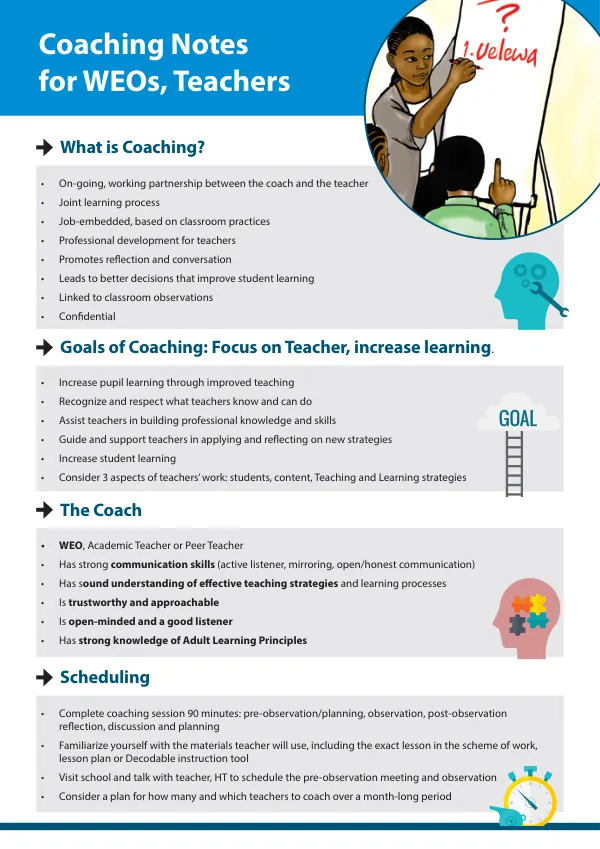
Coaching is an on-going, working partnership between the coach and the teacher, a joint learning process that is job-embedded and based on classroom practices.
2 pages
Sign in to readA free account is required to download.
Abstract
This professional development for teachers promotes reflection and conversation, leading to better decisions that improve student learning. Coaching is linked to classroom observations and is a confidential process. The primary goal of coaching is to focus on the teacher, increasing their learning and, in turn, pupil learning. This is achieved by increasing pupil learning through improved teaching, recognizing and respecting what teachers know and can do, assisting teachers in building professional knowledge and skills, guiding and supporting teachers in applying and reflecting on new strategies, and increasing student learning. Coaching considers three aspects of teachers' work: students, content, and teaching and learning strategies. A coach is typically a WEO, Academic Teacher, or Peer Teacher who possesses strong communication skills, including active listening, mirroring, and open/honest communication. They have a sound understanding of effective teaching strategies and learning processes, are trustworthy and approachable, open-minded, and a good listener. Coaches also have strong knowledge of Adult Learning Principles. Coaching sessions are typically 90 minutes long and consist of a pre-observation/planning, observation, post-observation reflection, discussion, and planning. Coaches familiarize themselves with the materials the teacher will use, including the exact lesson in the scheme of work, lesson plan, or Decodable instruction tool. They visit the school and talk with the teacher and head teacher to schedule the pre-observation meeting and observation. The coaching process involves creating a quiet, private space for discussion, away from others. The coach sits in a comfortable, non-intrusive place in the room during the observation. The teacher is asked questions such as what lesson they would like the coach to observe, what day and time the coach should come to the class, and what teaching strategies they will be using during the lesson. During the post-observation reflection, the coach asks the teacher questions such as how they think the lesson went, what they did to ensure children were learning, and what they found challenging in the lesson. The coach also asks the teacher to reflect on their teaching strategies and what they would like to work on for next time. Follow-up coaching sessions involve revisiting previous discussions and questions, with the coach asking the teacher to tell more about their thoughts, why they made certain decisions, and what they could have done differently. The coach also asks the teacher what they will try next time they teach the lesson or one like it.