USAID DEC
Combination Prevention with the Fishermen of La Pirraya: Reaching the most inaccessible areas of El Salvador
Sign inUSAID
Combination Prevention with the Fishermen of La Pirraya: Reaching the most inaccessible areas of El Salvador
The Combination Prevention Program for HIV in El Salvador targets at-risk populations, including fishermen, through a strategy known as "sweeping the zone."
2013 · 1 pages
Sign in to readA free account is required to download.
Abstract
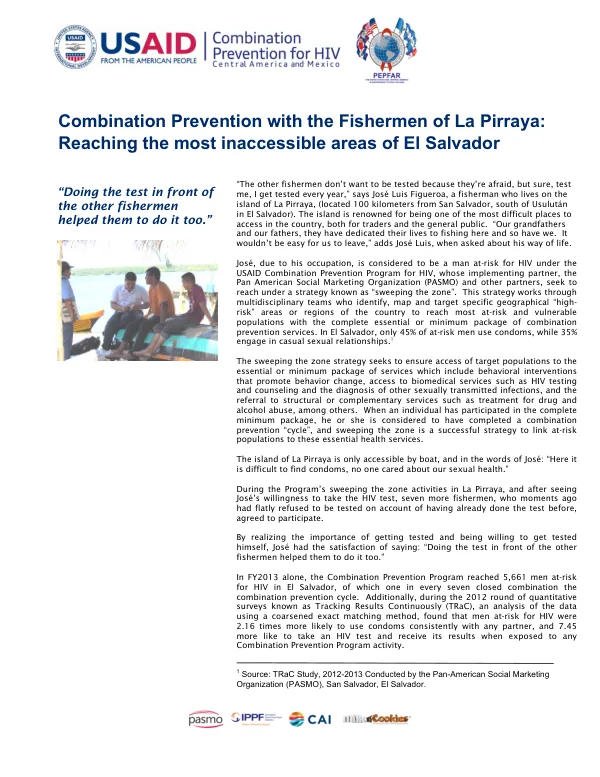
This approach involves multidisciplinary teams identifying, mapping, and targeting high-risk areas to provide a comprehensive package of combination prevention services. The program aims to promote behavior change, increase access to biomedical services, and refer individuals to structural or complementary services. In El Salvador, only 45% of at-risk men use condoms, and 35% engage in casual sexual relationships. The island of La Pirraya, accessible only by boat, presents a unique challenge due to limited access to condoms and a lack of concern for sexual health. The Combination Prevention Program's sweeping the zone activities in La Pirraya involved outreach and engagement with the local fishing community. José Luis Figueroa, a fisherman from La Pirraya, participated in the program and demonstrated a willingness to take an HIV test. His actions served as a catalyst for others, with seven fishermen initially hesitant to be tested agreeing to participate after witnessing José's willingness to undergo the test. This phenomenon highlights the importance of peer influence and community engagement in promoting health behaviors. The Combination Prevention Program has achieved significant results in El Salvador. In FY2013, the program reached 5,661 men at-risk for HIV, with one in every seven individuals completing the combination prevention cycle. Analysis of data from the Tracking Results Continuously (TRaC) study revealed that men at-risk for HIV who were exposed to Combination Prevention Program activities were 2.16 times more likely to use condoms consistently and 7.45 times more likely to take an HIV test and receive their results. The program's success in reaching at-risk populations in El Salvador, including those in remote areas like La Pirraya, underscores the effectiveness of the sweeping the zone strategy. By providing a comprehensive package of services and engaging with local communities, the Combination Prevention Program has made significant strides in promoting HIV prevention and reducing the risk of transmission among at-risk populations.