INTEGRA GOVERNMENT SERVICES INTERNATIONAL, LLC
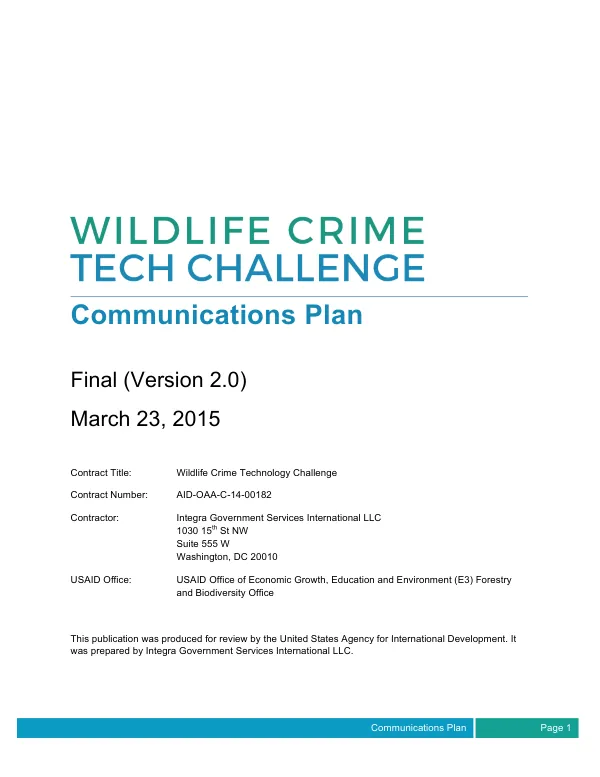
Communications Plan for Wildlife Crime Technology Challenge
The Wildlife Crime Technology Challenge was a program initiated to combat wildlife crime and poaching.
2015 · 30 pages
Sign in to readA free account is required to download.
Abstract
The program was launched in response to the surge in demand for wildlife products, which has led to a significant increase in poaching levels. The estimated annual value of the wildlife market is $19 billion, threatening the survival of iconic species such as elephant, rhino, great white sharks, and African grey parrot. The program aimed to address the issue of wildlife crime through the use of technology. The Challenge was designed to encourage the development and implementation of innovative solutions to combat wildlife trafficking. The program was implemented by Integra Government Services International LLC, under contract with the USAID Office of Economic Growth, Education and Environment (E3) Forestry and Biodiversity Office. The program's key audiences included advocates, applicants, and scalers. Advocates were individuals or organizations that supported the program's goals and objectives. Applicants were organizations or individuals that submitted proposals for funding to support their projects. Scalers were organizations or individuals that had the potential to scale up successful projects to a larger audience. The program was divided into four phases: awareness, competition, selection, and award notification and event. During the awareness phase, the program aimed to educate potential applicants about the Challenge and its goals. The competition phase focused on informing applicants about the Challenge rules and eligibility criteria, as well as educating them on how to submit an application. The selection phase involved communicating transparency about the Challenge evaluation process and encouraging audiences to stay engaged following the close of the competition. The award notification and event phase focused on promoting winning solutions. The program utilized various communications channels, including owned media, earned media, and paid media. Owned media included the Challenge website, blog, email newsletter, Twitter, Facebook, LinkedIn, events, press releases, and print materials. Earned media referred to media coverage obtained through media outreach and engagement. Paid media included advertising and promotional activities. The program's evaluation focused on measuring the effectiveness of its communications strategy. The evaluation aimed to assess the program's reach, engagement, and impact on its target audiences. The program's budget for communications was allocated to support the development and implementation of its communications strategy. The program's communications matrix outlined the key messages and themes to be communicated to each audience group. The social media content calendar provided a schedule for posting content on social media platforms. The event calendar listed upcoming events and activities. The audience database contained information about the program's target audiences. The social media policy outlined the program's guidelines for social media use. The WCTC Style Guide provided guidance on the program's branding and visual identity. The program's implementation audience groups and segments were identified as advocates, applicants, and scalers. These groups were further segmented based on their level of engagement and interest in the program. The program's communications phases were designed to address the needs and interests of each audience group. The program's evaluation revealed that the surge in demand for wildlife products has led to a significant increase in poaching levels. The trend threatens the survival of iconic species and requires a concerted effort to combat wildlife crime. The program's communications strategy aimed to raise awareness about the issue, educate potential applicants, and promote winning solutions.