PLAN INTERNATIONAL USA
Community HIV Prevention Dialogue Guide, USAID Z-CHPP
The USAID Zambia Community HIV Prevention Project (USAID Z-CHPP) is a collaborative effort between Private Agencies Cooperating Together (PACT), Plan International, and 10 sub-partners.
2018 · 32 pages
Sign in to readA free account is required to download.
Abstract
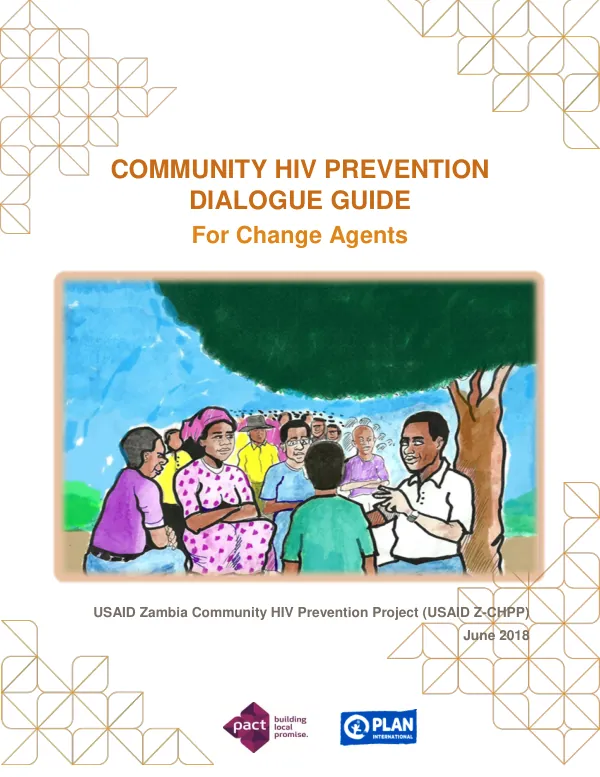
The project aims to accelerate progress toward Zambia's goal of reducing new HIV infections by increasing adoption of high-impact HIV services and health behaviors. Key objectives include mitigating determinants of risky behavior among priority populations, increasing referrals to high-impact services, and reducing young women's vulnerability to HIV, unintended pregnancy, and sexual and gender-based violence. Community-based formative research conducted across 10 districts in Zambia identified adolescent girls and young women (AGYW) as a high-risk group, engaging in activities such as unprotected sex, unsafe sexual practices, and sex work. Factors contributing to these high-risk activities include gender inequity, traditional and cultural norms, and poverty. The research revealed that gender inequity reduced women's bargaining power in insisting on condom use, led to an increase in harmful sexual practices, and resulted in a lack of power in sexual decision making. Human Immunodeficiency Virus (HIV) prevalence in Zambia is higher among women overall, with 15.1% of women and 11.3% of men living with the virus. Women experience a disproportionate burden of both HIV and sexual violence, with 17% of women surveyed reporting ever experiencing sexual violence and 10% experiencing it in the past 12 months. The USAID Z-CHPP project recognizes the critical role that cultural and traditional norms and practices play in influencing HIV outcomes and prioritizes cultural communication interventions as an important component of the project. The project's key objectives are to mitigate determinants of risky behavior among priority populations, increase referrals to high-impact services, and reduce young women's vulnerability to HIV, unintended pregnancy, and sexual and gender-based violence. To achieve these objectives, the project facilitates effective and guided community discussion on the issues of cultural and traditional practices that contribute to the spread of HIV in the community. The Community HIV Prevention Dialogue Guide is a tool designed to support community dialogue and discussion on these issues. The guide provides recommendations for planning and conducting community dialogues, including identifying the people involved, selecting participants, and creating an environment conducive to discussion. It also outlines methodologies for conducting community dialogue, including gender considerations and tools for facilitating discussion. The guide emphasizes the importance of community engagement and participation in addressing HIV-related issues. It recognizes that efforts to change harmful traditions are most effective when they originate within the culture that practices them and requires the cooperation and understanding of community leaders, policy makers, and individuals who have experienced or witnessed hardships caused by these practices. The USAID Z-CHPP project prioritizes cultural communication interventions as an important component of the project, recognizing the critical role that cultural and traditional norms and practices play in influencing HIV outcomes. The project's objectives and the Community HIV Prevention Dialogue Guide are designed to support the development of local community and district-level solutions to address the complex issues surrounding HIV in Zambia.