USAID DEC
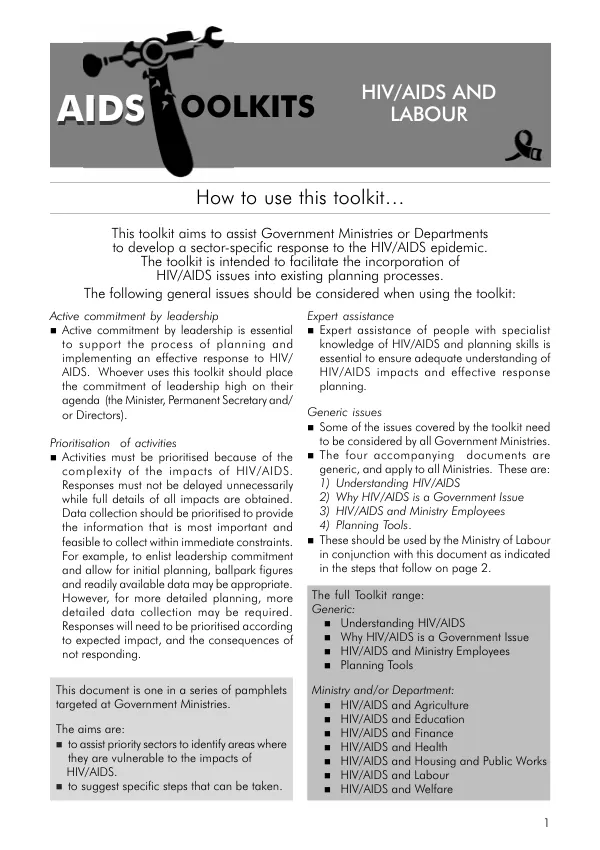
HIV/AIDS Toolkit for Government Ministries
Active commitment by leadership is essential to support the process of planning and implementing an effective response to HIV/AIDS.
8 pages
Sign in to readA free account is required to download.
Abstract
Leadership commitment should be prioritized, as it is crucial for the success of any response to the epidemic. This commitment should be demonstrated by the Minister, Permanent Secretary, and/or Directors, who should place it high on their agenda. Activities must be prioritized due to the complexity of the impacts of HIV/AIDS. Responses must not be delayed unnecessarily while full details of all impacts are obtained. Data collection should be prioritized to provide the information that is most important and feasible to collect within immediate constraints. For example, to enlist leadership commitment and allow for initial planning, ballpark figures and readily available data may be appropriate. However, for more detailed planning, more detailed data collection may be required. Expert assistance of people with specialist knowledge of HIV/AIDS and planning skills is essential to ensure adequate understanding of HIV/AIDS impacts and effective response planning. This expertise is necessary to address the social and economic factors that predispose to high-risk situations and to mitigate the impacts of the disease. The HIV/AIDS epidemic presents a major challenge to developing countries. A first step in formulating a response to the epidemic is to understand the basic facts about HIV/AIDS and the role of Government Ministries. The epidemic is more than just a health issue; social and economic impacts within Government Ministries and in wider society necessitate government involvement both internally and externally. Typical HIV/AIDS impacts on organizations that will affect the functioning of Government Ministries include increased absenteeism, lower productivity, higher costs of labor, and skills shortages. The Ministry of Labour is uniquely placed to impact profoundly on the HIV/AIDS epidemic, as it has the responsibility of programs, policies, and legislation that target productive age adults who are at high risk of contracting HIV and who are most affected by HIV/AIDS illness and death. Clear understanding of potential external impacts will influence whether the Ministry's response is appropriate and effective in meeting the needs of society and individuals. Some external impacts may already be experienced, but many will only be felt fully in the medium- to long-term. Defining the core functions and priorities of the Ministry will be essential to prioritizing areas of concern. These are the issues that are expressed in strategic plans and senior management discussions. The challenge of HIV/AIDS should be assessed, guided by the following key questions for each Ministry function and priority: How does this function or service impact on the spread of HIV? How will HIV/AIDS in wider society impact on this function or service? Experience and research show that a Ministry's vulnerability to employee infections depends on several key areas. These areas include numbers of HIV-infected employees, absenteeism and productivity, recruitment and training, morale, benefits, gender, and capacity to respond. Some of these areas of vulnerability may be the ultimate responsibility of a central body, such as the Ministry of Public Service Administration, and individual sectors should liaise with this Ministry.