USAID DEC
Communications Support for Health: Zambia and Americans in Partnership to Fight HIV/AIDS
Sign inPEPFAR
Communications Support for Health: Zambia and Americans in Partnership to Fight HIV/AIDS
HIV/AIDS Prevention and Education in Zambia and the United States is a critical issue that requires awareness and understanding of the risks associated with the disease.
6 pages
Sign in to readA free account is required to download.
Abstract
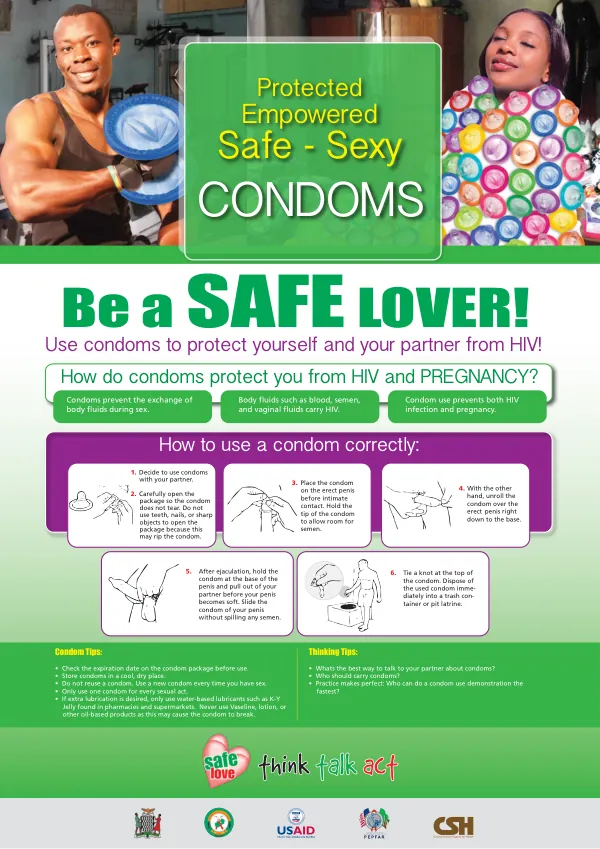
The use of condoms is a crucial aspect of HIV prevention, as they prevent the exchange of body fluids during sex, which can carry HIV. Condoms are effective in preventing both HIV infection and pregnancy. They work by creating a barrier between the penis and the vagina, preventing the transmission of HIV and other sexually transmitted infections. To use a condom correctly, one must decide to use condoms with their partner, carefully open the package, and place the condom on the erect penis before intimate contact. Implementation of condom use requires careful consideration of several factors, including the expiration date on the condom package, storage in a cool, dry place, and the use of a new condom every time sex is engaged in. Additionally, only water-based lubricants such as K-Y Jelly should be used, as oil-based products can cause the condom to break. The concept of a sexual network is also crucial in understanding the risks associated with HIV. A sexual network is a chain or web of people who are having sex with each other, and whenever one person in the network gets HIV, it spreads quickly to everyone in the network who is having unprotected sex. The more people one has sex with, the larger their sexual network and the higher their risk of getting HIV. To avoid HIV infection in a sexual network, it is essential to use condoms with every sexual partner, know one's HIV status and that of their partners, and be aware of the risks associated with having multiple sexual partners. Trusting one's partner is not enough to protect oneself from HIV, and even having one extra partner who is unfaithful can put one at high risk of HIV. HIV testing is a critical aspect of HIV prevention and education. Getting tested for HIV involves talking to one's partner about going for testing, selecting a health center to go to, and undergoing counseling and testing. The testing process involves pricking one's finger with a small needle to collect a blood sample, which will be ready within a few minutes. After testing, one should plan how to maintain their HIV-negative status and go back for another test after three months to confirm their status. In conclusion, HIV/AIDS prevention and education in Zambia and the United States require a comprehensive approach that includes awareness of the risks associated with the disease, the use of condoms, and HIV testing. By understanding the importance of condom use, sexual networks, and HIV testing, individuals can take control of their health and reduce their risk of getting HIV.