USAID DEC
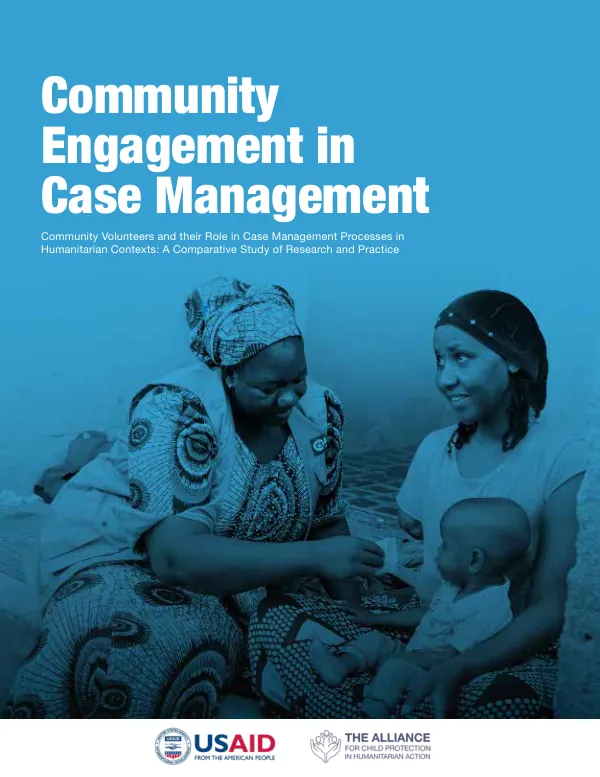
Community volunteers and their role in case management processes in humanitarian contexts: A comparative study of research and practice
Sign inPLAN INTERNATIONAL USA
Community volunteers and their role in case management processes in humanitarian contexts: A comparative study of research and practice
Community volunteers play a crucial role in case management processes in humanitarian contexts.
2021 · 107 pages
Sign in to readA free account is required to download.
Abstract
They are often the first entry points into communities and help to identify individuals at risk of violence, neglect, or exploitation. However, there is a lack of understanding about their capacities and limitations, which can put children, families, and volunteers at risk or cause harm. The Alliance for Child Protection in Humanitarian Action (the Alliance) has prioritized research on community volunteers in case management. A project led by Plan International, with the support of an interagency review committee, aims to document, analyze, and disseminate best practices for engaging community volunteers in case management. This research study focuses on volunteers' experiences, roles, and motivations, as well as good practices, challenges, risks, and benefits of working with volunteers. The study aims to provide a better understanding of community volunteers who have responsibilities within the case management process. This includes looking at volunteers' experiences, roles, and motivations, as well as good practices, challenges, risks, and benefits of working with volunteers. The research will also identify capacities and limitations of community volunteers and best practices for engaging them in case management. Community volunteers are essential in preventing and responding to cases of violence, neglect, and exploitation in humanitarian settings. They are often the first point of contact for individuals at risk and help to mobilize communities to prevent violence. However, there is a lack of understanding about their capacities and limitations, which can put children, families, and volunteers at risk or cause harm. The research study will focus on the following key findings: 1. Evidence that community volunteers bring benefits to children, families, and the broader community. This includes their ability to identify individuals at risk and mobilize communities to prevent violence. 2. The need for critical reflection on the incorporation of community volunteers into case management programs in humanitarian contexts. This includes recognizing the limitations of community volunteers and the need for clear guidelines and training. 3. The need to recognize the lived reality of community volunteers. This includes understanding their experiences, roles, and motivations, as well as the challenges and risks they face. 4. The importance of being context-aware and building on what exists. This includes recognizing the importance of community volunteers in different contexts and adapting case management programs to meet their needs. 5. The need to apply evidence on how to build effectiveness, quality, and quality into work with community volunteers. This includes recognizing the importance of clear guidelines, training, and training of community volunteers. The research study will provide recommendations for each of these key findings. These recommendations will aim to inform conversations at program, management, and field levels about the work of volunteers. They will also provide suggestions for actions that can be taken to reflect on and improve the work done with community volunteers. The study will use a comparative approach, combining evidence from the literature and interviews with technical experts with data from program documents, trainings, and interviews with case management managers working in the field. This will provide a comprehensive understanding of the role of community volunteers in case management in humanitarian contexts. The research study is led by Plan International, with the support of an interagency review committee. The study aims to provide a better understanding of community volunteers who have responsibilities within the case management process. This includes looking at volunteers' experiences, roles, and motivations, as well as good practices, challenges, risks, and benefits of working with volunteers. The research study is funded by the United States Agency for International Development's (USAID) Bureau of Humanitarian Affairs (BHA). The contents of the report do not necessarily reflect the views of USAID or the United States Government.