ENGENDERHEALTH
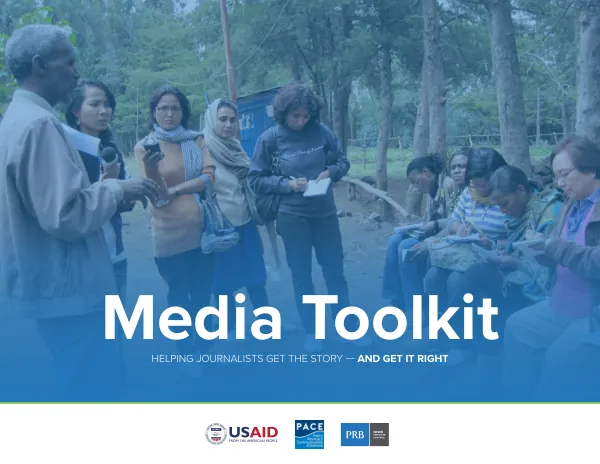
Media Toolkit: Helping Journalists Get the Story — and Get It Right
The U.S.
2016 · 21 pages
Sign in to readA free account is required to download.
Abstract
Agency for International Development (USAID) has partnered with the Population Reference Bureau (PRB) to develop a media training program for journalists from developing countries. The program, known as Women's Edition, aims to strengthen and increase coverage of population, reproductive health, and gender issues. The selection process for the program involves an application process, where interested journalists submit essays and samples of their work. The PRB media team reviews the applications to gauge the candidate's ability to participate fully in the seminars and add value to the program. The team considers factors such as the candidate's interest in population and reproductive health issues, their ability to write or broadcast in-depth news reports, and their commitment to achieving the program's objectives. A total of 12 to 15 women journalists are selected for the program each year. The journalists are chosen from a pool of over 300 applicants and are required to have a working knowledge of English. The program is designed to be interactive, with the journalists sharing their experiences and challenges with each other. The first seminar of the program is designed to provide facts and evidence on population, reproductive health, and gender issues. The journalists are told that to continue to participate in the program, they must write or broadcast in-depth news reports based on the topics of the seminars and study tours. The seminar activities are designed to provide the journalists with the information and skills they need to produce news coverage that will resonate with the public and policymakers. The program has several objectives, including informing decisionmakers on policies affecting women through factual, accurate, and up-to-date media coverage, helping shape public discussion of issues that affect women's reproductive health, and providing women with information that gives them better control of their lives. The program also aims to strengthen coverage of women's health, development, and population by increasing the frequency and prominence of coverage, the correct use of data, and the emphasis on women's perspectives. The program has been successful in achieving its objectives, with over 86 women journalists from 35 countries participating in the program since its inception in 1994. The journalists who have participated in the program have reported on a range of issues, including reproductive health, population trends, and women's rights. Their work has reached millions of readers, listeners, and viewers, and has helped to shape public discourse on these issues. The program has also been successful in providing journalists with the skills and knowledge they need to produce high-quality news coverage on population, reproductive health, and gender issues. The journalists who have participated in the program have reported an increase in their knowledge and understanding of these issues, as well as an increase in their ability to write and broadcast in-depth news reports. Overall, the Women's Edition program is a successful example of a media training program that aims to strengthen and increase coverage of population, reproductive health, and gender issues. The program has been successful in achieving its objectives and has provided journalists with the skills and knowledge they need to produce high-quality news coverage on these issues.
Related documents