CORE GROUP
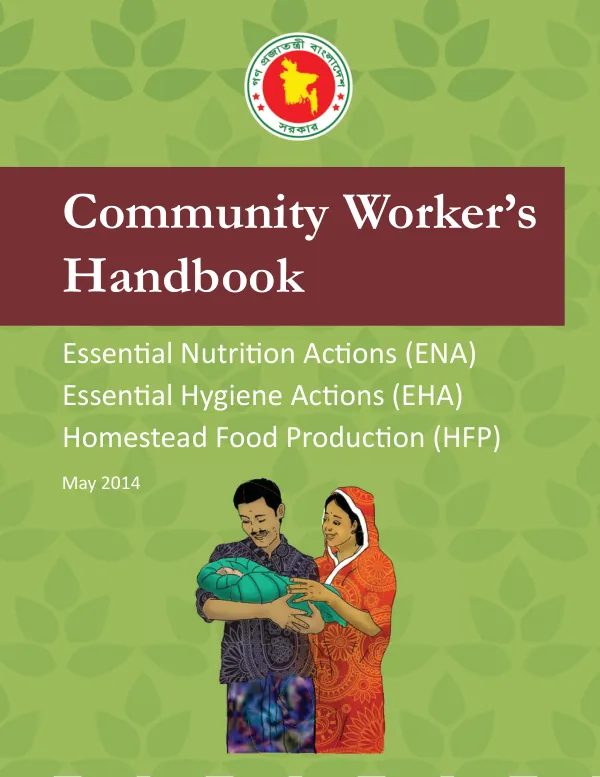
Community Worker's Handbook - SPRING / Bangladesh
The Strengthening Partnerships, Results, and Innovations in Nutrition Globally (SPRING) project is a five-year USAID-funded Cooperative Agreement to strengthen global and country efforts to scale up high-impact nutrition practices and policies and improve maternal and child nutrition outcomes.
2014 · 34 pages
Sign in to readA free account is required to download.
Abstract
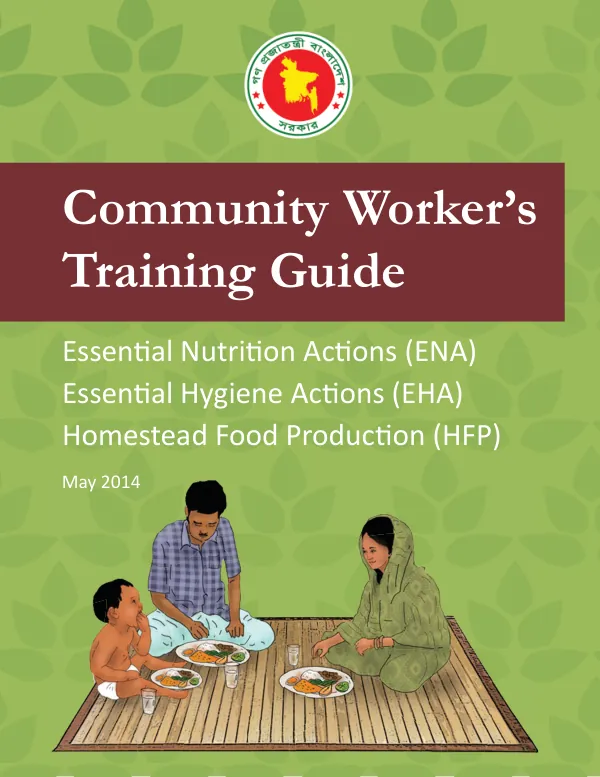
The project is managed by the JSI Research & Training Institute, Inc., with partners Helen Keller International, The Manoff Group, Save the Children, and the International Food Policy Research Institute. SPRING provides state-of-the-art technical support and focuses on the prevention of stunting and maternal and child anemia in the first 1,000 days. The Community Workers Handbook on Essential Nutrition Actions, Essential Hygiene Actions, and Homestead Food Production is a reference tool for community workers to promote and support improved nutrition practices. The handbook includes a set of evidence-based interventions to improve nutritional status during the critical 1,000 days between conception and two years of age, targeting pregnant and lactating women and their young children. The Essential Nutrition Actions (ENA) framework promotes a "nutrition through the life cycle" approach, addressing women's nutrition during pregnancy and lactation, optimal breastfeeding and complementary feeding practices, nutritional care of sick and malnourished children, and the control of anemia, vitamin A, and iodine deficiencies. The Essential Hygiene Actions (EHA) framework delivers a complementary set of evidence-based practices around food hygiene, hand washing, and access to a simple water-source (tippy taps) around toilet and cooking areas. Implementing ENA/EHA through the agricultural sector represents two different opportunities for individuals to advocate with families – particularly mothers and fathers with children under two years – for specific, relevant nutrition and hygiene actions. The Homestead Food Production (HFP) model is another complementary community intervention that promotes the production and consumption of vegetables and animal source foods (fish, poultry, and eggs) at the household level. The handbook is designed to be a primary reference during the training of community workers and provides key information on the actions and benefits of the recommended practices to be adopted by mothers, fathers, households, and communities to improve the nutrition and health of women and children. The actions in the handbook are classified into three themes: Key Essential Nutrition Actions, Key Essential Hygiene Actions, and Key Homestead Food Production Actions. Community workers are expected to target counseling to individual needs and negotiate improved practices that are feasible and realistic in each individual context. The handbook includes 18 practices, divided into three sections: Key Essential Nutrition Actions, Key Essential Hygiene Actions, and Key Homestead Food Production Actions. Each practice includes a key message, additional information, and discussion topics for use in counseling sessions and group meetings. The practices cover a range of topics, including diet for pregnant women, iron supplementation during pregnancy, early initiation of breastfeeding, exclusive breastfeeding to six months of age, and homestead food production. For example, Practice 1: Diet for Pregnant Women recommends that pregnant women eat one extra handful of all different food types in each meal every day to ensure they get the nutrients they need for a healthy baby. The practice also emphasizes the importance of eating fish, chicken, eggs, or meat at least once a day and using iodized salt while cooking family meals. Community workers are encouraged to share these messages with family members, including husbands and in-laws, to ensure that pregnant women receive the support they need to maintain a healthy diet. Similarly, Practice 2: Iron Supplementation during Pregnancy recommends that pregnant women take daily iron-folic acid (IFA) tablets to maintain their strength and health during pregnancy and prevent anemia. The practice also emphasizes the importance of eating fish, meat, eggs, liver, and green leafy vegetables, which are good sources of iron for pregnant women. Community workers are encouraged to share these messages with family members, including husbands, to ensure that pregnant women receive the support they need to maintain a healthy diet and prevent anemia.