HELLEN KELLER INTERNATIONAL
Speaking Up for Better Nutrition: Bangladeshi Mothers Learn to Share Best Practices
In Bangladesh, a similar initiative was implemented by the SPRING project, funded by the U.S.
2016 · 2 pages
Sign in to readA free account is required to download.
Abstract
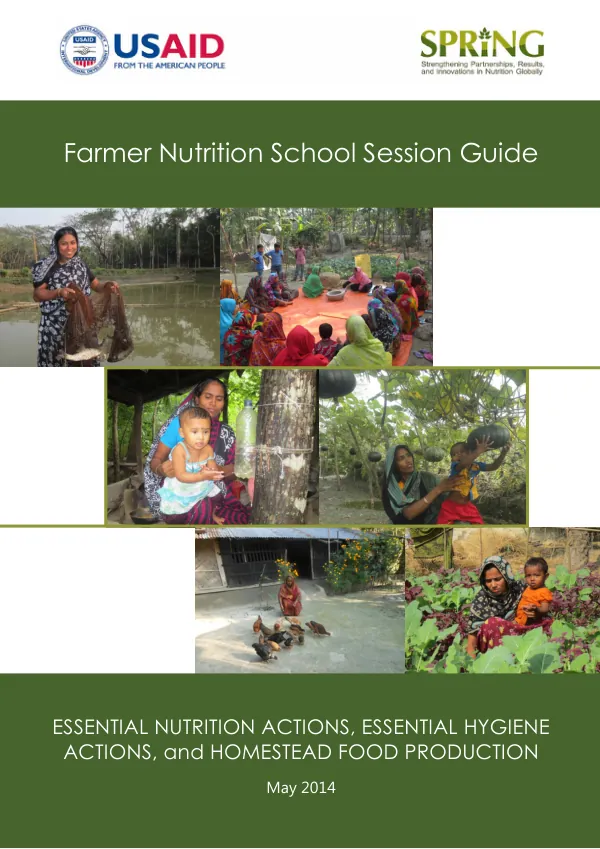
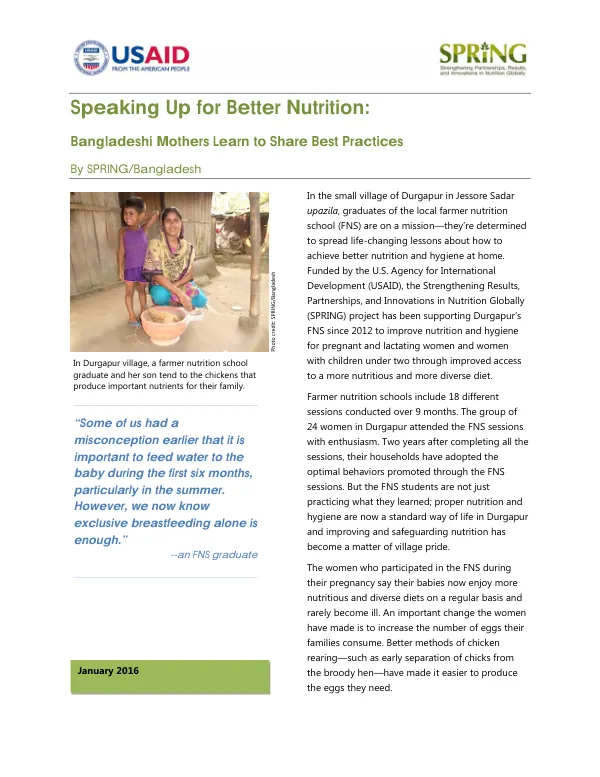
Agency for International Development (USAID). The project aimed to improve nutrition and hygiene for pregnant and lactating women and women with children under two through improved access to a more nutritious and diverse diet. Farmer nutrition schools, which included 18 different sessions conducted over 9 months, were established in various villages, including Durgapur in Jessore Sadar upazila. The women who participated in the farmer nutrition school sessions in Durgapur reported significant improvements in their households' nutrition and hygiene practices. They learned about the importance of exclusive breastfeeding for the first six months, and the benefits of their first milk (colostrum) for their babies. The women also learned about better methods of chicken rearing, which enabled them to produce more eggs and improve their families' nutrition. The farmer nutrition school graduates in Durgapur played a crucial role in spreading better nutrition and hygiene practices throughout the village. They shared their knowledge with friends and neighbors, and encouraged others to adopt similar practices. As a result, improved hatching pots, or hajols, and poultry sheds became common sights in the village. The women's participation in the farmer nutrition school also strengthened their bond and their voices, enabling them to motivate the community and bring attention to nutrition, handwashing, and hygiene. The SPRING project's farmer nutrition schools have had a significant impact on the communities where they were implemented. Since May 2012, more than 125,000 women have benefited from 6,421 farmer nutrition schools across 40 upazilas in Barisal and Khulna. The project's 1,000 days approach has facilitated social and behavior change aimed at preventing stunting in young children. The initiative has demonstrated the potential for community-led approaches to improve nutrition and hygiene practices, and has contributed to the development of more resilient and healthier communities.
Related documents