HELLEN KELLER INTERNATIONAL
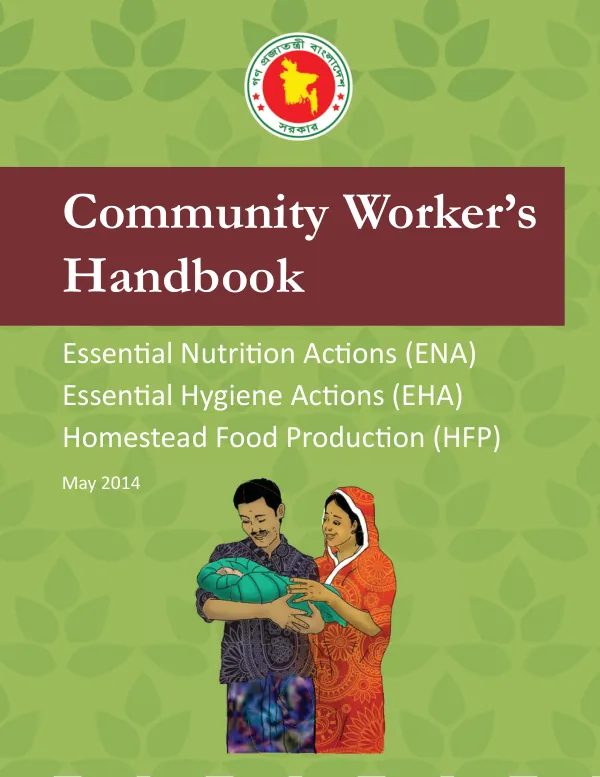
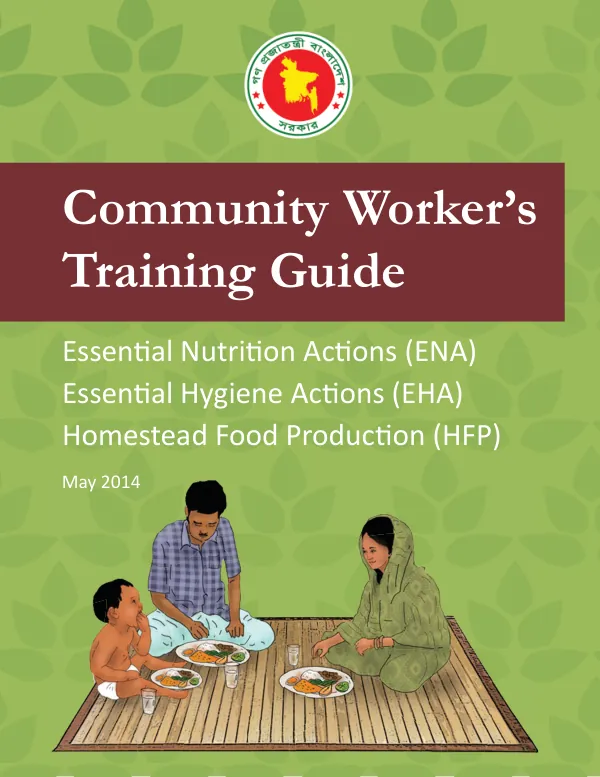
Community Worker's Training Guide - SPRING / Bangladesh
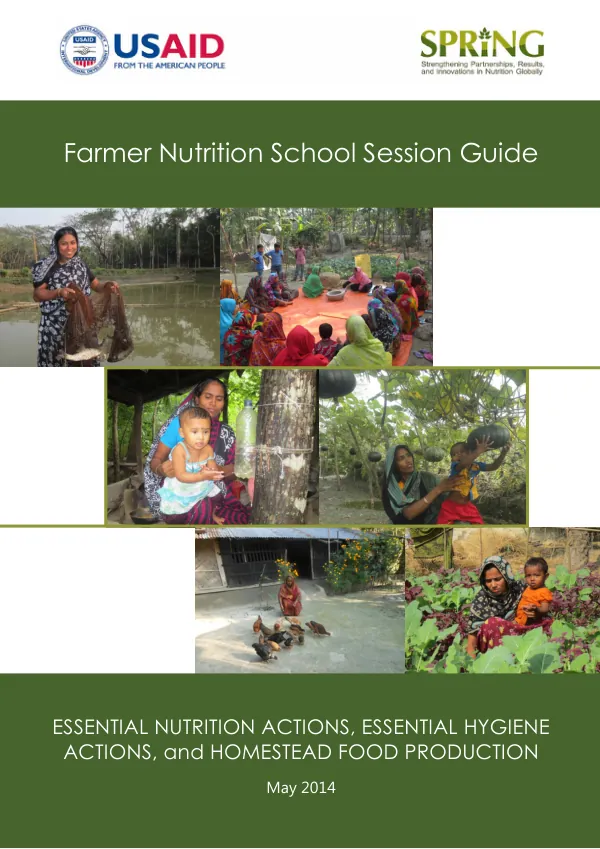
The Strengthening Partnerships, Results, and Innovations in Nutrition Globally (SPRING) project is a five-year USAID-funded Cooperative Agreement to strengthen global and country efforts to scale up high-impact nutrition practices and policies and improve maternal and child nutrition outcomes.
2014 · 39 pages
Sign in to readA free account is required to download.
Abstract
The project is managed by the JSI Research & Training Institute, Inc., with partners Helen Keller International, The Manoff Group, Save the Children, and the International Food Policy Research Institute. SPRING provides state-of-the-art technical support and focuses on the prevention of stunting and maternal and child anemia in the first 1,000 days. The Essential Nutrition Actions (ENA) framework delivers a set of evidence-based interventions to improve nutritional status during the critical 1,000 days between conception and two years of age. This framework targets pregnant and lactating women and their young children. The ENA framework promotes a "nutrition through the life cycle" approach, addressing women's nutrition during pregnancy and lactation, optimal breastfeeding and complementary feeding practices, nutritional care of sick and malnourished children, and control of anemia, vitamin A, and iodine deficiencies. The Essential Hygiene Actions (EHA) framework delivers a complementary set of evidence-based practices around food hygiene, hand washing, and access to a simple water source (tippy taps) around cooking areas. Implementing ENA/EHA through the agricultural sector represents two different opportunities for individuals to advocate with families—particularly mothers and fathers with children under two years—for specific, relevant nutrition and hygiene actions. Community workers are trained to promote recommended health, nutrition, hygiene, and homestead food production practices when meeting with their community members. The training is intended to improve the capacity of community workers in the areas of facilitation and negotiation, to help them introduce nutrition themes and encourage families to adopt improved practices in health, nutrition, and homestead food production for pregnant and lactating women and families with children under the age of two. The training methodology promotes small, doable actions, based on the widely acknowledged theory that adults learn best by practice and reflection on their experiences. The course employs a variety of training methods, including demonstrations, practice, discussions, case studies, group discussions, and role-plays. Participants will learn to act as resource persons for breastfeeding mothers, pregnant women, and mothers/caregivers of young children. By the end of this training, participants will be able to explain counseling and negotiation techniques and the materials that they will use to encourage adoption of improved practices. They will also be able to identify and describe recommended health, nutrition, hygiene, and homestead food production practices to be adopted by community members, and describe how to provide support to and follow up with community members on these practices. The training schedule includes 11 sessions, covering topics such as welcome and introductions, identifying linkages between nutrition, hygiene, and homestead food production, principles of adult learning and facilitation skills, key practices to promote and support ENA and EHA, and effective communication skills. The training also includes a practicum, where participants will practice negotiation with mothers/caregivers on do-able infant and young child feeding practices. Materials needed for the training include stationery, teaching aids, and equipment such as dolls, breast models, and foods for display. The training is intended for all types of community workers already working at the community level, including agriculture extension workers, facilitators of Farmer Nutrition Schools, and staff from NGOs working with resource-poor homesteads.