USAID DEC
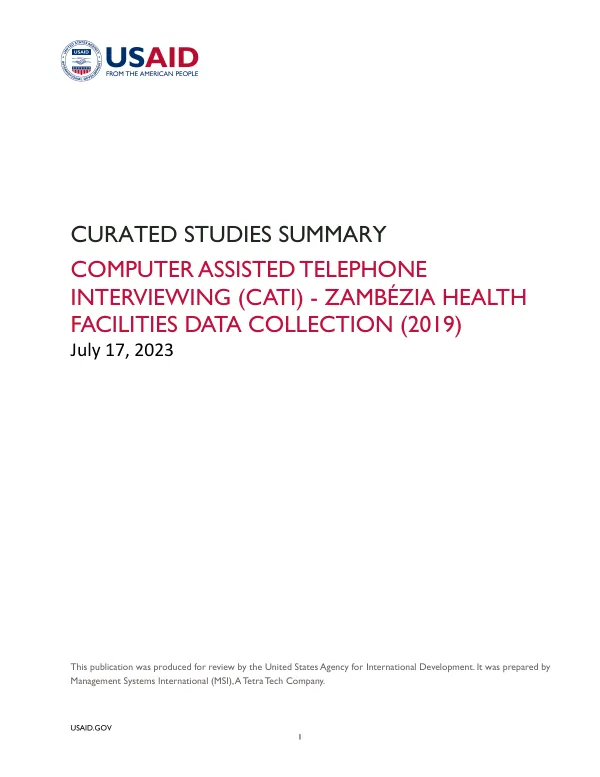
Computer Assisted Telephone Interviewing (CATI) - Zambézia Health Facilities Data Collection (2019)
Sign inMANAGEMENT SYSTEMS INTERNATIONAL
Computer Assisted Telephone Interviewing (CATI) - Zambézia Health Facilities Data Collection (2019)
The Computer Assisted Telephone Interviewing (CATI) platform was implemented in Zambézia to measure its viability and sustainability for data collection in health facilities and their target communities.
2023 · 5 pages
Sign in to readA free account is required to download.
Abstract
The goal of this intervention was to improve the quickness and quality of data collection, make data available in real time for decision making, and provide technical assistance on participative decision processes. The methodology involved initial contact with senior officials from the Provincial Health Directorate, followed by visits to all 22 districts in the province by a team consisting of the CATI-Zambézia representative from MMEMS and the Provincial Cooperation Officer of the Provincial Health Directorate. These visits ensured the full commitment and involvement of those responsible for health programs, who subsequently communicated the data collection efforts to all health facilities within their respective districts. Enumerators then used the CATI approach to collect both qualitative and quantitative data. Health facility directors were identified as the primary respondents for obtaining data on the general health profile, while individuals responsible for Maternal and Child Health were the respondents for collecting child and maternal health data. The data collection process was successful, with MMEMS managing to contact 98% of 255 health facilities in Zambézia. Health facilities managers showed high collaboration and engagement in the study process, and key elements of the health facilities profile were identified, including physical status of infrastructure, limitations in service delivery, availability of medications, and major public health issues. The data collected included information on the general health profile, child and maternal health, and other relevant health indicators. The CATI data collection method showed to have lower costs and brought rapid results. It is recommended that the use of CATI could be a viable alternative to data collection for future activities in various sectors. However, some limitations include the need for good network coverage and finding the right telephone numbers. These challenges can be overcome using a "snowball" approach, where the first person on the call gives the CATI enumerators other telephone or cell numbers, and so forth. The implementation of the CATI platform in Zambézia has demonstrated its potential as a cost-effective and efficient method for data collection in health facilities and their target communities. The success of this intervention highlights the importance of using innovative technologies to improve data collection and decision making in the health sector.