INTERNATIONAL ALERT
The Role of Imagery in Conflict Dynamics in Kabare Territory
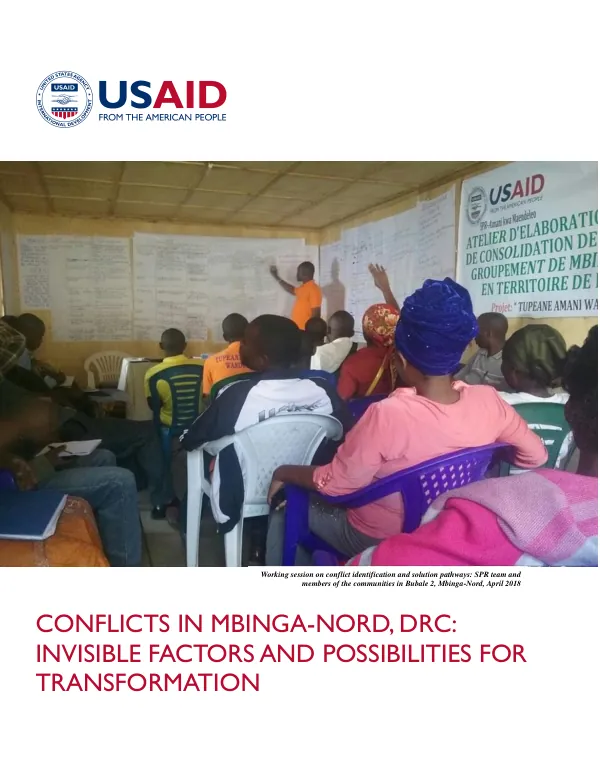
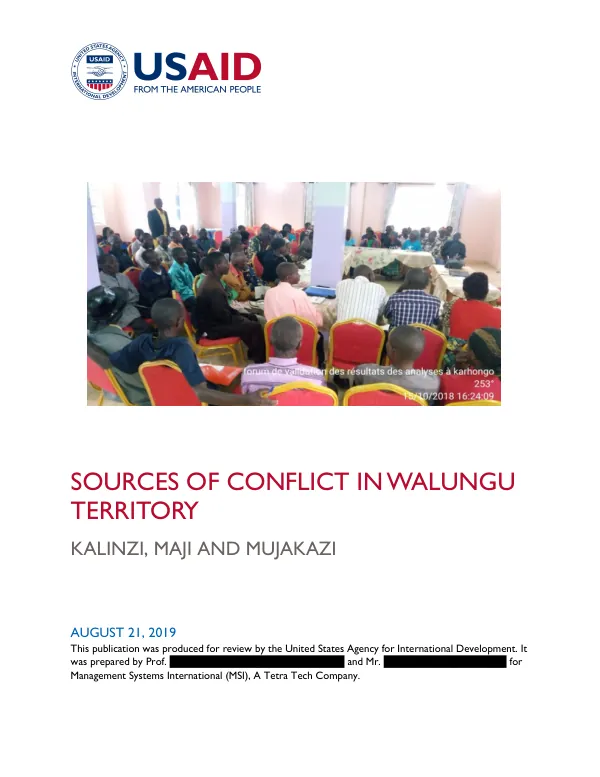
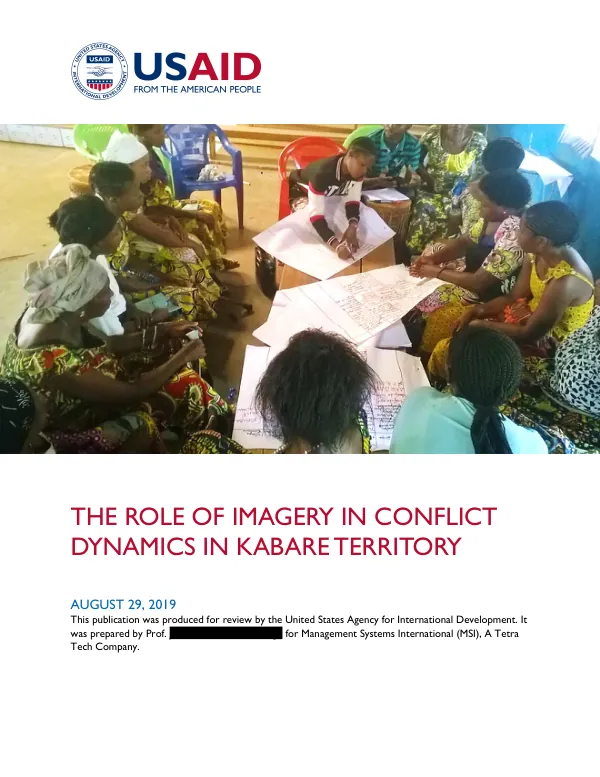
The research focuses on the role of imagery in conflict dynamics in Kabare territory, specifically in the Lugendo and Ishungu groupements.
2019 · 52 pages
Sign in to readA free account is required to download.
Abstract
The study area is located in South Kivu province, Democratic Republic of the Congo. The research aims to identify and analyze conflicts in the two groupements, with a focus on the factors and/or causes, as well as the actors and consequences of conflict dynamics. The research context is characterized by persistent instability in the DRC, recurrent local conflicts, patrimonial governance, and the exclusion of women and marginalized groups. The study draws on comprehensive scientific analysis to produce a concise piece of work, which stems from an analysis of various reports on the identification, prioritization, and systemic analysis of conflicts in the Ishungu and Lugendo groupements. The theory of change underlying this research posits that communities in the eastern part of the DRC may be able to better resist organic and external conflicts if there was greater social cohesion in these communities. The research aims to test three hypotheses: (1) if communities in eastern DRC were able to analyze conflicts, they would be able to develop impactful strategies; (2) if Congolese women and other marginalized groups received the knowledge and opportunities that would enable them to participate in decision-making, their participation would have a tangible impact on results and sustainable solutions; and (3) if community decision-making were inclusive and participatory, the result would be better solutions and greater social cohesion. The research methodology involves a participatory action research (PAR) approach, which includes a workshop to identify and prioritize conflicts, data collection, data analysis, and the collection of additional data. The results of the participatory conflict analyses focused on the factors and/or causes, as well as the actors and consequences of conflict dynamics in the areas concerned; on the local conflict transformation mechanisms; on the local capacity for peace; and on the contribution made by women and other marginalized groups to conflict dynamics. The key drivers of the different conflicts were identified, along with an assessment of stakeholder capacity, and a hybrid participatory conflict transformation model was developed for the Lugendo and Ishungu groupements. The research also includes recommendations for central government, local authorities, International Alert/SPR, community leaders, and civil society, public services, lake military and police services, the local population, fishermen, and lake operators, as well as opportunities that could encourage sustainable social cohesion. The study found that natural resources, and water in particular, were found to be at the root of community conflicts for both groupements (politics and security). The lack of access to primary social services (socioeconomic), and the scarcity of natural resources (environmental), also lead to conflicts in the community. The conflict analysis process began by understanding the specific context, consequences, and causes of the conflict, along with the stakeholders and how they interact. Community members also helped to identify possible solutions for each conflict, taking account of the conflicts' causes to build effective social cohesion. The research highlights the importance of inclusive and participatory community decision-making in building peace and social cohesion in the Lugendo and Ishungu groupements. The study's findings and recommendations aim to contribute to the development of effective peacebuilding and social cohabitation strategies in the region.