USAID
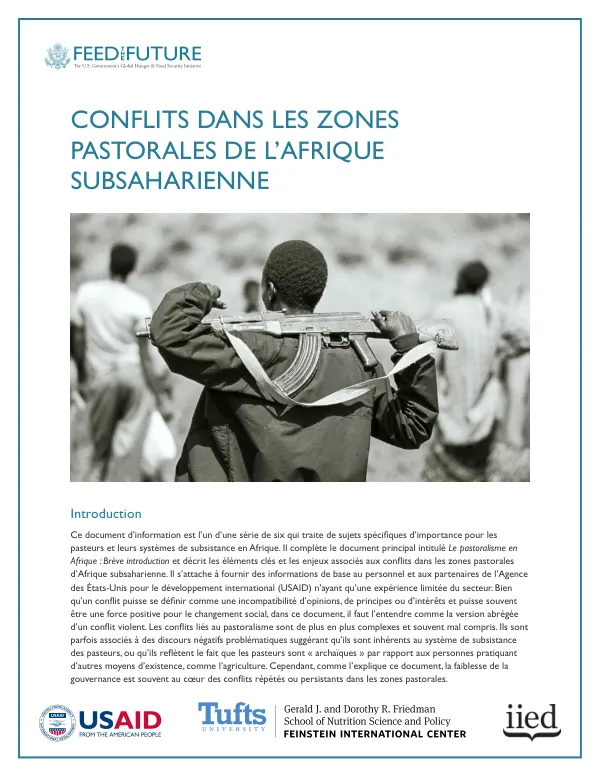
Conflict in Pastoralist Areas of Sub-Saharan Africa
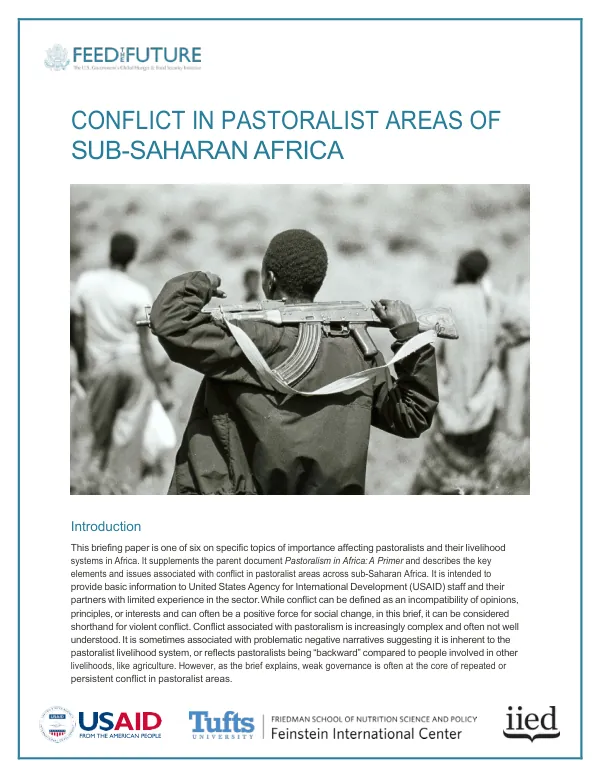
Conflict in pastoralist areas of sub-Saharan Africa is a complex and multifaceted issue.
2024 · 11 pages
Sign in to readA free account is required to download.
Abstract
Pastoralism is a livelihood system that has been practiced for centuries, and it is often associated with conflict, particularly between pastoralists and farmers. However, weak governance is often at the core of repeated or persistent conflict in pastoralist areas. Historically, it has been difficult to obtain accurate data on conflict in low-income countries, including those in Africa's drylands. This is due to remoteness, underreporting, sensitivity of the information, and context-specific variations in freedom of the press and media bias. Modern communications have reduced these constraints, but issues of data reliability and accuracy still remain. Two key sources of conflict data are the Uppsala Conflict Data Program (UCDP) and the Armed Conflict Location & Event Data (ACLED) collection. These sources provide valuable insights into trends and patterns of conflict in pastoralist areas. For example, UCDP data show that Ethiopia has 90 conflict stakeholders, including regional state actors, and that nonstate dyads or triads of conflict involve pastoralist ethnic groups or groups present in pastoralist areas. Current trends in conflict in pastoralist areas are mixed and complex, but with a general increase in conflict in Africa at the current time. Notably, when the State is involved, conflict events and associated deaths increase significantly. Examples of conflict in pastoralist areas include increased conflict between pastoralists and farmers in West Africa, declining violence with Fulani militias in the Sahel, and rising violence involving pastoralist militias in Kenya's North Rift region. Conflict in pastoralist areas has significant costs, including loss of life, increased morbidity, trauma, displacement, and impoverishment. It also constrains access to resources, such as pasture, water, markets, services, and social networks, and reduces social capital and cohesion. Conflict can also disrupt development opportunities, such as children's access to education, and regression of economic development. There are various types of conflict in pastoralist areas, often with multiple root causes and with perpetrators co-opted and linked into local, national, or regional politics associated with ethnic identity politics, access to resources, or religion. Three typologies of conflict can be considered: "traditional" pastoralist conflicts, herder-farmer conflicts, and conflicts driven by external factors such as politics, religion, or economic interests. In East Africa, traditional pastoralist conflicts, such as livestock raiding between neighboring pastoralist/agropastoralist tribes or clans, are common. These conflicts were originally linked with acquiring livestock to pay for marriage, as a rite of passage into manhood, or as a response to hunger. Herder-farmer conflicts, on the other hand, are often driven by competition for resources, such as land and water. Overall, conflict in pastoralist areas of sub-Saharan Africa is a complex and multifaceted issue that requires a nuanced understanding of the underlying causes and dynamics. Addressing conflict in these areas will require a comprehensive approach that takes into account the social, economic, and environmental factors that contribute to conflict.