ENCOMPASS, LLC
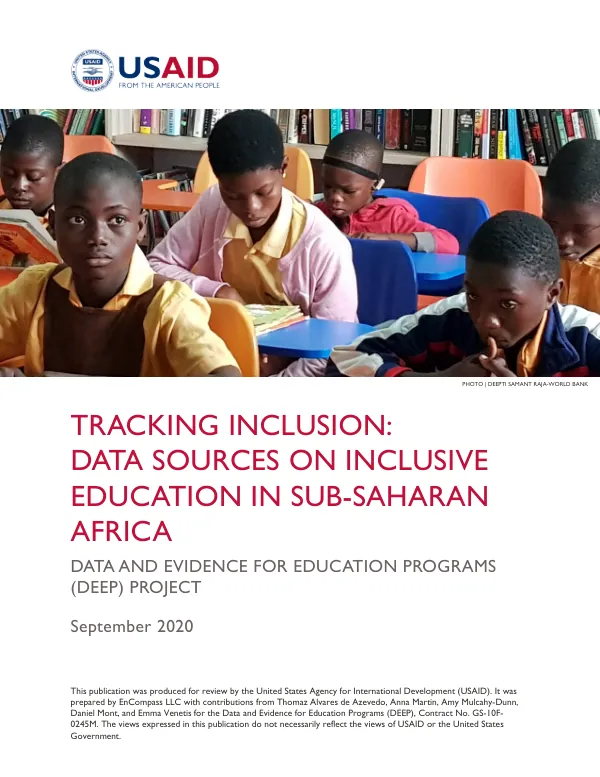
Tracking Inclusion: Data Sources in Sub-Saharan Africa
The concept of "leave no one behind" is at the heart of the 2030 Agenda for the Sustainable Development Goals (SDGs), aiming to eradicate all types of disadvantage throughout the world.
2020 · 40 pages
Sign in to readA free account is required to download.
Abstract
People with disabilities face a multitude of physical, attitudinal, and institutional barriers that put them at high risk of being left behind. A growing body of evidence points to those with disabilities being disproportionately poorer, less educated, and less able to secure a livelihood. Assessing the need for interventions, designing policies, and evaluating their impact requires high-quality data. The United Nations Statistical Commission formed a city group on disability statistics in 2002, known as The Washington Group, to develop high-quality, internationally comparable measures of disability for quantitative analysis. The first product of The Washington Group was a set of six questions, known as the Washington Group Short Set (WGSS), for identifying people with disabilities. This set of questions has been widely adopted and used in various data collection efforts, including censuses, surveys, and administrative data. The Data and Evidence for Education Programs (DEEP) project aims to provide high-quality data and evidence to support education programs in Sub-Saharan Africa. The project focuses on inclusive education, with a particular emphasis on data sources regarding disability status and inclusive education. The report reviews available data sources, including census data, survey data, and administrative data, to provide insights into the challenges faced by learners with disabilities in Sub-Saharan Africa. The report highlights the importance of high-quality data in assessing the need for interventions, designing policies, and evaluating their impact. It also emphasizes the need for internationally comparable measures of disability, which can be achieved through the use of standardized data collection tools, such as the WGSS. The report provides data tables with information on school attendance, out-of-school rates, school completion, mean years of school, and literacy rates for learners with disabilities across Sub-Saharan Africa. The challenges in using and analyzing disability data are reviewed in the report, including issues related to comparability, sample size, sampling frame, and data availability. The report also provides an explanation of how data were selected and used in this review, highlighting the importance of transparency and accountability in data collection and analysis. The findings of the report have significant implications for education policymakers and practitioners in Sub-Saharan Africa, highlighting the need for targeted interventions to support learners with disabilities and promote inclusive education.
Related documents