USAID DEC
Congressional Budget Justification—Foreign Operations, Fiscal Year 2016 (Appendix 2)
Sign inU.S. DEPARTMENT OF STATE/OES
Congressional Budget Justification—Foreign Operations, Fiscal Year 2016 (Appendix 2)
The Congressional Budget Justification for Foreign Operations in Fiscal Year 2016 outlines the Department of State and USAID's priorities for foreign assistance.
2016 · 711 pages
Sign in to readA free account is required to download.
Abstract
The document is organized into four sections: Foreign Assistance Priorities, Request by Functional Bureaus and Offices, Selected Key Issues, and Regional Perspectives. Foreign Assistance Priorities are a key component of the document, with several initiatives highlighted, including Feed the Future, the Global Climate Change Initiative, and the Global Health Initiative. These initiatives aim to address pressing global challenges, such as hunger, climate change, and infectious diseases. The document also emphasizes the importance of gender equality and women's empowerment in foreign assistance programs. The Request by Functional Bureaus and Offices section provides a detailed breakdown of the budget request by functional bureau and office. This section includes information on the budget for various programs and initiatives, including arms control, counterterrorism, democracy and human rights, energy resources, and global health. The section also includes information on the budget for USAID bureaus and offices, including the Bureau for Food Security, the Democracy, Conflict and Humanitarian Assistance bureau, and the Global Development bureau. The Selected Key Issues section highlights several key issues that are relevant to foreign assistance programs, including biodiversity, combating wildlife trafficking, countering violent extremism, basic education, and higher education. This section also includes information on global climate change initiatives, health programs, and microenterprise development. The Regional Perspectives section provides an overview of foreign assistance programs in various regions, including Africa, the Middle East, and Asia. This section includes information on country programs, regional initiatives, and budget allocations for each region. Overall, the Congressional Budget Justification for Foreign Operations in Fiscal Year 2016 provides a comprehensive overview of the Department of State and USAID's priorities and budget requests for foreign assistance programs. The document highlights the importance of addressing pressing global challenges and promoting economic growth, stability, and security in partner countries. The Feed the Future initiative is a key component of the Foreign Assistance Priorities section, with a budget request of $1.1 billion. This initiative aims to reduce hunger and poverty in developing countries by improving agricultural productivity and market access. The initiative focuses on several key areas, including agricultural productivity, market access, and nutrition. The Global Climate Change Initiative is another key component of the Foreign Assistance Priorities section, with a budget request of $1.3 billion. This initiative aims to address the impacts of climate change on developing countries, including sea-level rise, drought, and extreme weather events. The initiative focuses on several key areas, including adaptation, clean energy, and sustainable landscapes. The Global Health Initiative is also a key component of the Foreign Assistance Priorities section, with a budget request of $6.1 billion. This initiative aims to improve health outcomes in developing countries by strengthening health systems, improving access to health services, and addressing infectious diseases. The initiative focuses on several key areas, including family planning and reproductive health, global health security, and HIV/AIDS. The Bureau for Food Security is a key component of the USAID bureaus and offices section, with a budget request of $1.4 billion. This bureau aims to reduce hunger and poverty in developing countries by improving agricultural productivity and market access. The bureau focuses on several key areas, including agricultural productivity, market access, and nutrition. The Democracy, Conflict and Humanitarian Assistance bureau is another key component of the USAID bureaus and offices section, with a budget request of $1.1 billion. This bureau aims to promote democracy, stability, and human rights in developing countries by providing humanitarian assistance, supporting democratic institutions, and promoting economic growth. The bureau focuses on several key areas, including humanitarian assistance, democracy and governance, and economic growth. The Global Development bureau is also a key component of the USAID bureaus and offices section, with a budget request of $1.2 billion. This bureau aims to promote economic growth, stability, and human development in developing countries by improving access to education, health services, and economic opportunities. The bureau focuses on several key areas, including education, health, and economic growth.
Related documents
Documents in this collection
 2011
2011USAID DEC
U.S. Overseas Loans and Grants: Obligations and Loan Authorizations, July 1, 1945 – September 30, 2011
Open record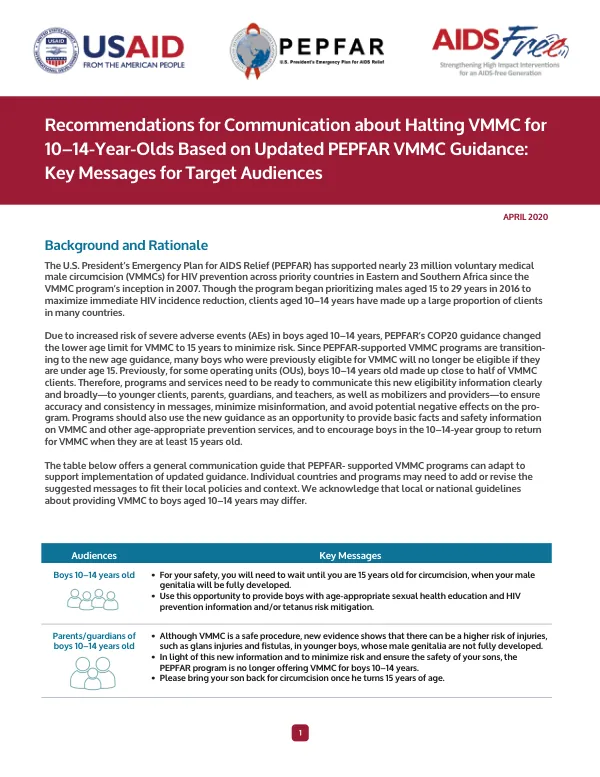 2020
2020USAID DEC
Recommendations for Communication about Halting VMMC for 10–14-Year-Olds Based on Updated PEPFAR VMMC Guidance: VMMC Key Messages for Target Audiences
Open record