HEALTH PARTNERS INTERNATIONAL
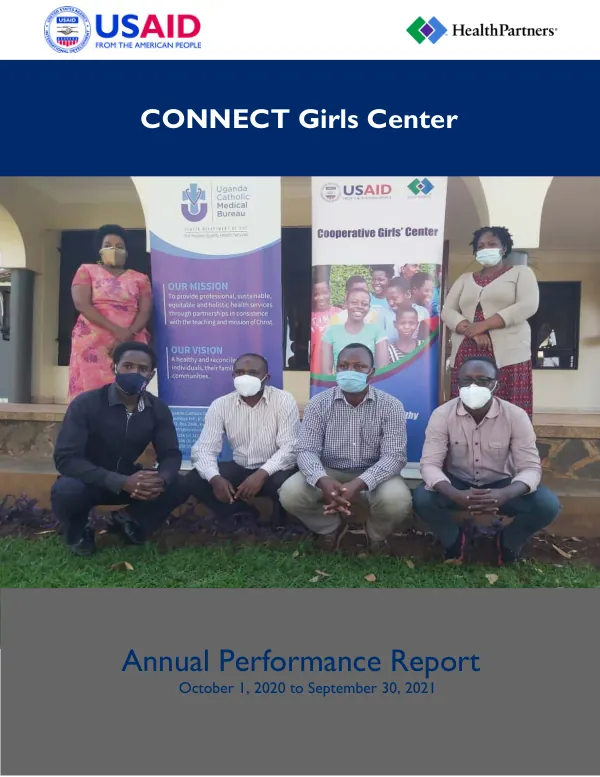
CONNECT Girls Center Semi-Annual Report October 2020 –March 2021
The CONNECT Girls Center is a cooperative development project that aims to build the capacity of local stakeholders to manage sustainable health cooperatives in Uganda and Kenya.
2021 · 28 pages
Sign in to readA free account is required to download.
Abstract
The project focuses on increasing access to care, improving quality, and strengthening the enabling environment while fostering socio-economic empowerment of girls and increasing access to design strategies and solutions. The project includes two main activities: Cooperative Training and Technical Assistance, which enhances the capacity of the informal sector to demand for and access quality health care by training care providers to offer cooperative health insurance and strengthening the sustainability and governance of new and existing health cooperatives. The second activity, Connecting Girls to Cooperatives and Cross Sector Networks, pilots Cooperative Youth Centers (CYC) to enable cooperatives to manage partnerships that link health care to life skills, economic empowerment, and leadership capacity strengthening. During the reporting period of October 2020 to March 2021, the impact of the coronavirus continued to be felt by the community and healthcare providers in Uganda. In response to continued demand for health insurance, HealthPartners Uganda resumed in-person capacity building following government Standard Operating Procedures. Virtual engagement continued for monthly provider and manager data review meetings. A strategy to increase data accuracy and use of data was piloted in December and scaled up in January. The ability to visit health facilities and midterm data collection led to important lessons and adjustments in strategies and priorities. Midterm assessment began in January, but the draft report is still lacking source data. A new Cooperative Youth Center (CYC) strategy was developed by cooperative Girls Center stakeholders in response to needs assessment results and lessons learned. With support from a consultant, gender mainstreaming training was conducted for district officials in the five districts where health cooperatives have been registered. Plans were developed to increase advocacy, awareness, and action by district leaders to empower women to have a voice and opportunity to serve in leadership positions. A new partnership with Canadian Development Fund (CDF) trainers led to two week-long mentorship training sessions, one for CYC members aged 15-24 and one for female board and health cooperative leaders from each region of Uganda. The National Health Insurance Scheme (NHIS) bill was passed by Parliament, and as a result of engagement with the Health Committee of Parliament in the previous reporting period, the committee report recommended cooperative health insurance as a sustainable model that empowers people to demand quality care. The bill awaits assent from the President. Meanwhile, HealthPartners (HPU) is working with the Ministry of Health (MOH) and Uganda Healthcare Federation (UHF) with areas for partnership including sharing success stories from cooperative members at village levels throughout the country to increase awareness and demand for health insurance. The Ministry of Trade, Industry, and Cooperatives (MTIC) increased support to health cooperatives in governance, member engagement, and compliance to MTIC requirements. While this is important for existing cooperatives, it also represents an investment in sustainability. MTIC is piloting and improving sessions, tools, and strategies that will need to be rapidly scaled up as health cooperatives and the need for regulation expand if included in the NHIS. MTIC audited cooperatives that were applying for permanent registration, led training for members of one health cooperative in member rights, roles, and responsibilities, and held stakeholder workshops to help members prepare for Annual General Meetings (AGMs). To comply with the non-governmental organization registration bureau and to strengthen partnerships at local levels, the project team visited districts where health facility staff were trained to offer cooperative insurance to sign formal Memorandums of Understanding (MOU). Out of 50 districts targeted, 22 MOUs were signed, 10 district officials were met and are reviewing MOUs, and 18 will be visited in the next period. Existing partnerships with MOH and MTIC created a soft ground for district engagements. The project team collaborated with USAID Washington, which provides clear direction, consistent support, and opportunities for shared learning with Cooperative Development Partners. The Monitoring and Evaluation (M&E) team participated in training on the new quarterly reporting template, which was submitted for the January-March reporting period. The project reports to USAID Uganda through the DevResults system and started sharing quarterly narrative reports to USAID Uganda as required by the system.