HEALTH PARTNERS INTERNATIONAL
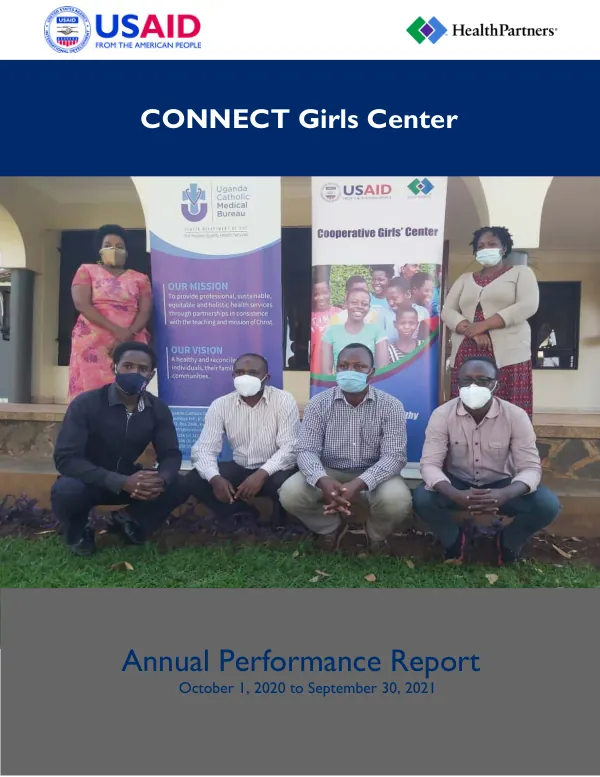
Annual Performance Report: October 1, 2020 to September 30, 2021
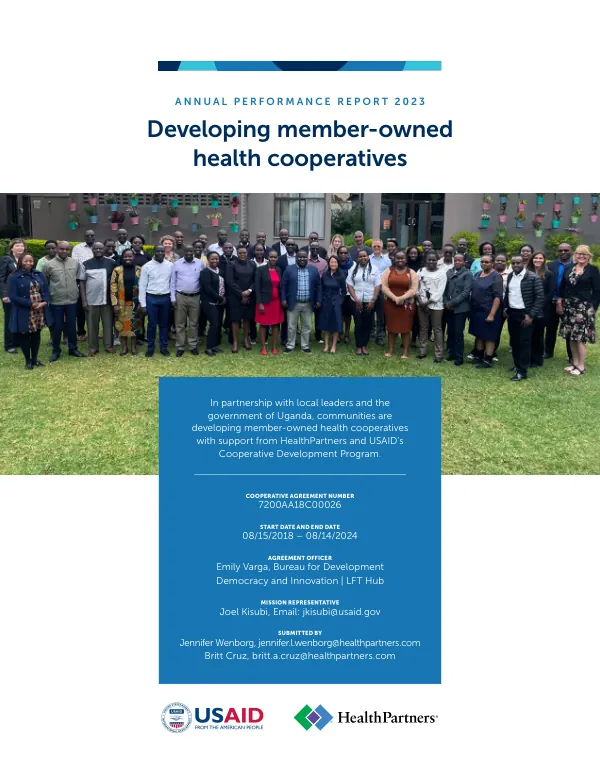
The Cooperative Girls Center initiative in Uganda aimed to improve the health and economic well-being of women and their families through cooperative health insurance.
2021 · 47 pages
Sign in to readA free account is required to download.
Abstract
The program, implemented by HealthPartners, received funding from the United States Agency for International Development (USAID) under Cooperative Agreement Number: 7200AA18CA00016. Improved Cooperative Business Performance was a key result of the program. Health cooperatives in Uganda registered a membership of 23,934, with 13,883 females and 15,009 males. Members received care valued at $80,839, which would have cost them out of pocket. The number of health cooperative providers reporting data every month increased from 35 to 43, and 43 providers received support through a combination of virtual and onsite training, mentorship, and partnership learning and support supervision. Cooperative care providers and health cooperative managers were guided to identify insurance management gaps, including the need to improve and maintain member identification systems and organized files. Uganda Catholic Medical Bureau (UCMB) and Uganda Protestant Medical Bureau (UPMB) trainers learned to train new cooperative care providers and provide technical advice through support supervision to increase cost recovery and membership. The program also focused on improving the Cooperative Enabling Environment. Health cooperatives in Uganda registered membership of 23,934, with 13,883 females and 15,009 males. Members received care valued at $80,839, which would have cost them out of pocket. The number of health cooperative providers reporting data every month increased from 35 to 43, and 43 providers received support through a combination of virtual and onsite training, mentorship, and partnership learning and support supervision. Cooperative Girl Centers learned to conduct needs assessments and applied partnership development skills to address those needs. Gender training helped district leaders apply gender mainstreaming to their action plans. Leadership training was provided for female cooperative leaders and Girls Center members. The Ministry of Trade, Industry and Cooperatives (MTIC) took the lead in health cooperative governance training. Elgon Community Health Cooperative (ECHC) and Hoima Catholic Diocese Health Cooperative (HCDHC) successfully completed the registration process with MTIC, while Kabale Diocese Health Cooperative (KDHC) planned to register before the end of 2021. Arch Diocese of Mbarara Health Cooperative (ADMHC) and West Ankole Diocese Health Cooperative (WADHC) successfully renewed their license for two years. The program's success was also reflected in the increased learning and replication of the model. Health cooperatives in Uganda registered a membership of 23,934, with 13,883 females and 15,009 males. Members received care valued at $80,839, which would have cost them out of pocket. The number of health cooperative providers reporting data every month increased from 35 to 43, and 43 providers received support through a combination of virtual and onsite training, mentorship, and partnership learning and support supervision.