USAID DEC
Conservacion para el Desarrollo y la Paz en el Piedemonte Amazonico del Departamento del Caquetá
Sign inUSAID
Conservacion para el Desarrollo y la Paz en el Piedemonte Amazonico del Departamento del Caquetá
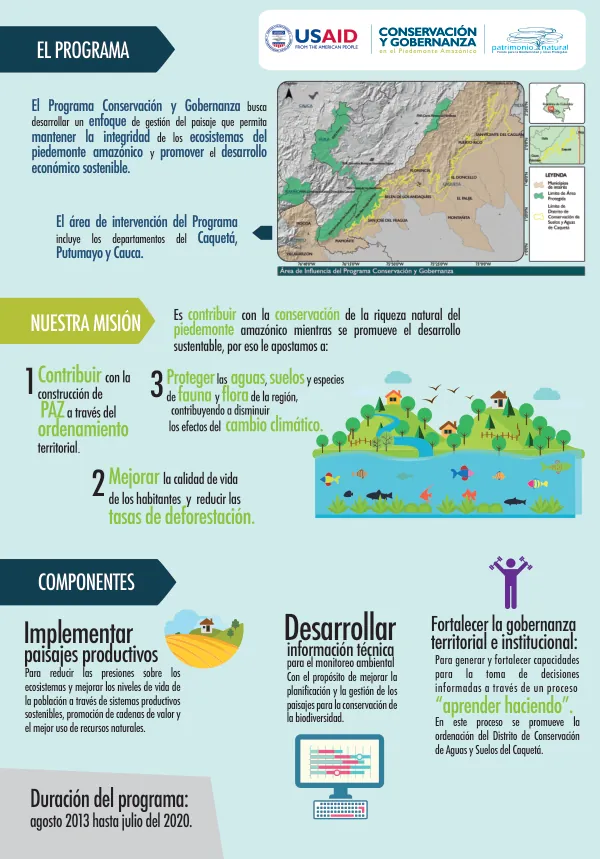
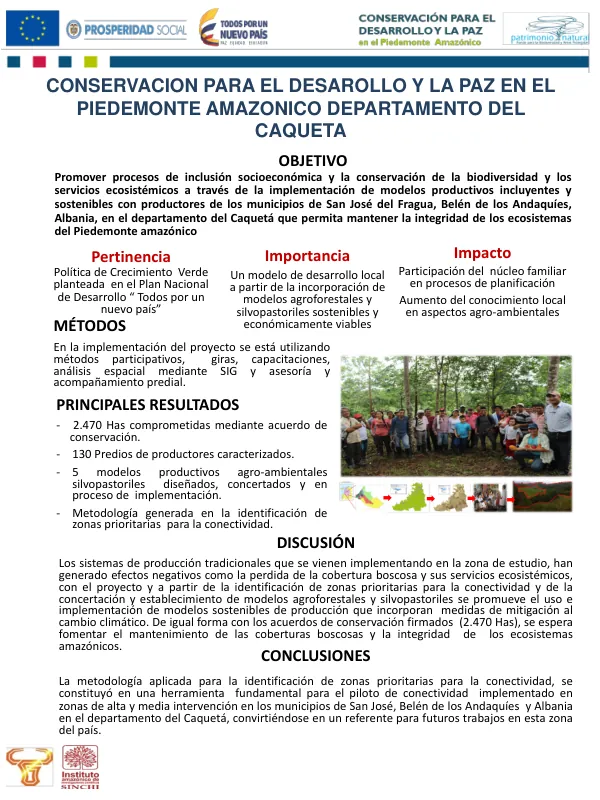
The conservation and development initiative in the Piedemonte Amazónico of the Caquetá department aims to promote socio-economic inclusion and biodiversity conservation through the implementation of inclusive and sustainable productive models with producers from the municipalities of San José del Fragua, Belén de los Andaquíes, and Albania.
2016 · 1 pages
Sign in to readA free account is required to download.
Abstract
This initiative is aligned with the Green Growth Policy outlined in the National Development Plan "Todos por un nuevo país". The importance of this model lies in its incorporation of agroforestry and silvopastoral systems that are both sustainable and economically viable. The project's impact is expected to be significant, with the participation of family nuclei in planning processes, increased local knowledge in agro-environmental aspects, and the promotion of sustainable land use practices. The project's methodology involves participatory approaches, field visits, capacity building, spatial analysis using Geographic Information Systems (SIG), and technical assistance and accompaniment. The project has committed 2,470 hectares through conservation agreements, characterized 130 producer plots, and designed five agro-ambiental and silvopastoral productive models that are being implemented. The traditional production systems implemented in the study area have generated negative effects, such as the loss of forest cover and its ecosystem services. However, the project aims to promote the use and implementation of sustainable production models that incorporate measures to mitigate climate change. The conservation agreements signed (2,470 hectares) are expected to foster the maintenance of forest cover and the integrity of Amazonian ecosystems. The methodology applied for the identification of priority areas for connectivity has been a fundamental tool for the connectivity pilot implemented in areas of high and medium intervention in the municipalities of San José, Belén de los Andaquíes, and Albania in the Caquetá department. This methodology has become a reference for future works in this region of the country.