USAID DEC
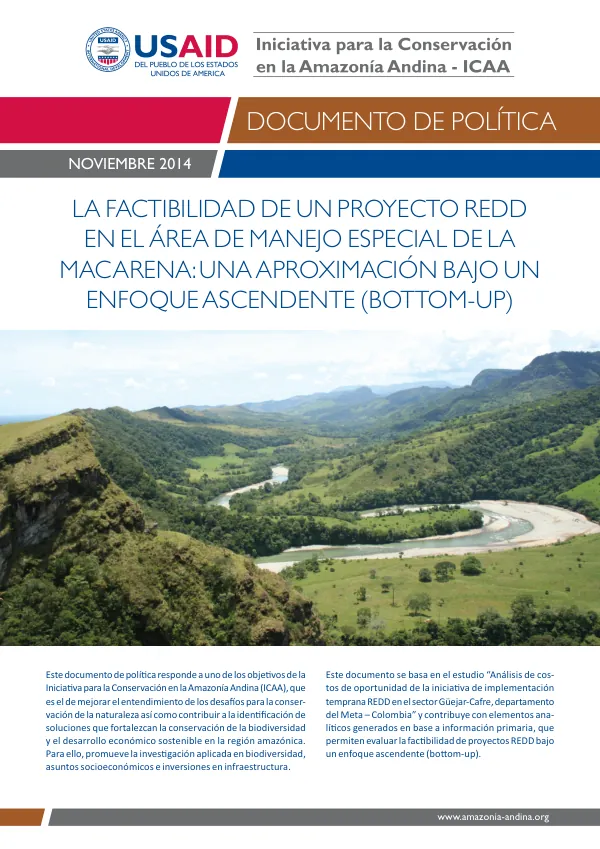
La factibilidad de un proyecto REDD en el Área de Manejo Especial de la Macarena: una aproximación bajo un enfoque ascendente (bottom-up)
Sign inUSAID DEC
La factibilidad de un proyecto REDD en el Área de Manejo Especial de la Macarena: una aproximación bajo un enfoque ascendente (bottom-up)
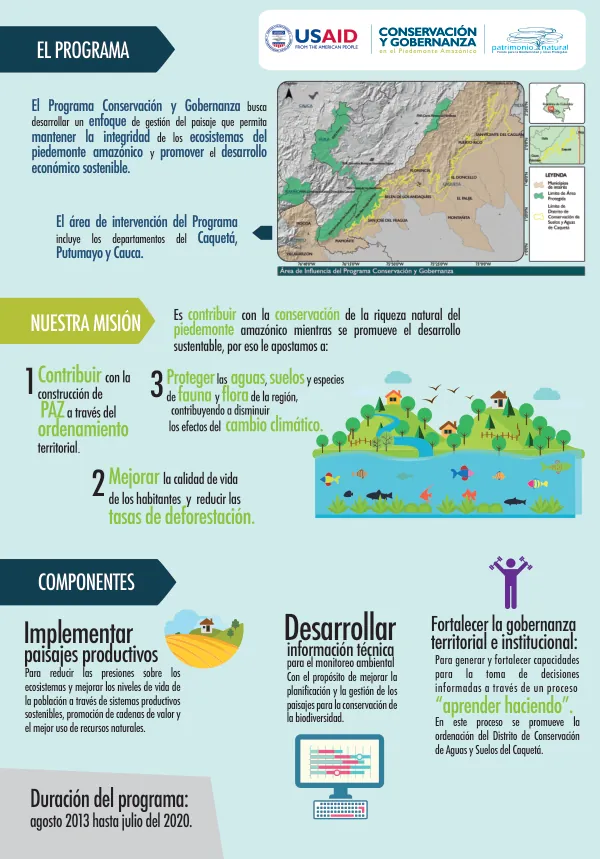
The Amazonian Andean region is characterized by high rates of deforestation and degradation of its ecosystems, which contribute significantly to greenhouse gas emissions.
2014 · 4 pages
Sign in to readA free account is required to download.
Abstract
The Reducción de Emisiones por Deforestación y Degradación de Bosques (REDD) mechanism has been promoted in countries with high deforestation rates, including Colombia, as a means of incentivizing the conservation of forests. The government of Colombia is currently designing a National REDD Strategy and implementing early initiatives, such as those being defined in the Área de Manejo Especial de la Macarena (AMEM). The AMEM is a unique corridor in Colombia that maintains connectivity between ecosystems associated with the Andean, Orinoco, and Amazon regions, ensuring the flow and replenishment of species and provision of various ecosystem services. However, the area is highly fragmented and experiences high rates of deforestation. A study on the analysis of opportunity costs of early implementation of REDD in the Güejar-Cafre sector, which is part of the AMEM, found that it is feasible to implement a REDD mechanism to cover the opportunity costs of reducing deforestation rates in this type of area. The study determined that the benefits generated by REDD projects could cover 100% of the opportunity costs of avoiding deforestation in the area of study, assuming a price of US$6 per ton of CO2e, a projected deforestation rate of 6,772 ha over 20 years, and a mean value of profitability of US$1,892/ha in present value. However, the excess generated would be insufficient to cover the costs of transaction and implementation of a REDD mechanism, and would only allow for the coverage of 20% of these costs. To cover the total costs of implementing the REDD initiative in the Güejar-Cafre sector, it would be necessary to cover 80% of the transaction and implementation costs with other sources of financing, which would represent 35% of the total costs (US$21,353,651). The development of activities that do not involve changes in land use or represent changes that generate net gains in terms of carbon sequestration is recommended to reduce the financing gap. The promotion of markets and the adoption of measures that encourage new, sustainable production models are also recommended. The activity with the greatest impact on the deterioration of tropical humid forests in the Güejar-Cafre and the AMEM in general is cattle ranching, due to its high demand for land and low levels of technological innovation. This activity generates environmental impacts and presents low levels of profitability that limit the generation of economic surpluses in the family nucleus. Therefore, it is recommended to adopt measures that promote new, sustainable production models and discourage the current model. The results of this study contribute to the evaluation of the feasibility of implementing a REDD project in the AMEM, providing analytical elements generated from primary information. The study found that the benefits generated by REDD projects could cover the opportunity costs of avoiding deforestation in the area of study, but the excess generated would be insufficient to cover the costs of transaction and implementation of a REDD mechanism. The study recommends the development of activities that do not involve changes in land use or represent changes that generate net gains in terms of carbon sequestration, and the adoption of measures that promote new, sustainable production models and discourage the current model.
Related documents