USAID DEC
Construcción de acción interinstitucional territorial para la prevención del reclutamiento y utilización de niños, niñas y adolescentes
Sign inORGANIZACIÓN INTERNACIONAL PARA LAS MIGRACIONES
Construcción de acción interinstitucional territorial para la prevención del reclutamiento y utilización de niños, niñas y adolescentes
The Comisión Intersectorial para la prevención del reclutamiento, utilización y violencia sexual contra niños, niñas y adolescentes por parte de grupos armados al margen de la ley y grupos de delincuencia organizada is a multi-stakeholder initiative composed of 23 national entities.
2013 · 22 pages
Sign in to readA free account is required to download.
Abstract
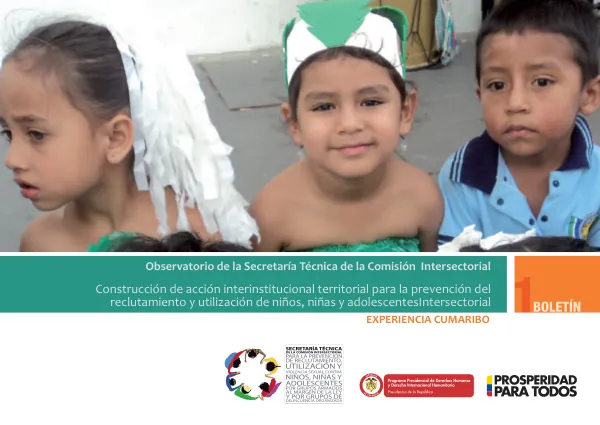
This effort represents the largest endeavor by the Colombian state to prevent, in a coordinated and inter-institutional manner, the occurrence of these three vulnerabilities that children, girls, and adolescents in Colombia face. The Programa Presidencial de Derechos Humanos y Derecho Internacional Humanitario has been exercising the Secretaría Técnica of this Commission since March 2012, as per Decree 0552. In its effort to strengthen the work of the Secretaría and its Observatorio, which began to take shape in 2011 with international cooperation, this first bulletin is presented with the support of the Organización Internacional para las Migraciones (OIM) and the Agencia para el Desarrollo Internacional de los Estados Unidos de América (USAID). The Observatorio de la Secretaría Técnica acts in synergy with the Observatorio de Derechos Humanos y DIH of the Programa Presidencial, with the mandate to generate information for decision-making by national entities that formulate and implement prevention actions. This information includes the analysis of risk factors associated with the recruitment and use of children in Colombia, as well as the actions effectively developed by the state to address these factors within the framework of the public policy of prevention, as outlined in Conpes 3673 of 2010. The experience of Acción Territorial developed and implemented in the first semester of 2013 in the municipality of Cumaribo, Vichada department, is presented as an exercise aimed at strengthening local capacity in preventing the recruitment and use of children, girls, and adolescents. This experience is the result of the commitment and joint work with the municipal administration. The methodology proposed in this exercise, in conjunction with subsequent developments that have arisen from its implementation in other spaces, enables the articulation of the state at all levels to address prevention in a holistic manner, contributing to mitigating the risk factors associated with this problem and allowing for progress towards true protection environments for children and girls in Colombia. The policy of prevention of recruitment and use aims to, among other key actions, strengthen the capacity of response of territories to guarantee the rights of children, girls, and adolescents, promote integral protection actions, and act on concrete cases of threat. To this end, three routes for prevention have been defined. Prevención Temprana refers to situations in which the state, society, and family, under the principle of corresponsability, adopt all necessary measures to guarantee the exercise and protection of the rights of children, girls, and adolescents, with the aim of minimizing or confronting the factors that potentiate their vulnerability to different violations of the rights of children, girls, and adolescents. Prevención Urgente acts on direct or collective threats proffered by the action of the Grupo armado organizado al margen de la ley (GAOML) and Grupo delictivo organizado (GDO), and aims to reinforce and/or configure protective family, community, and institutional networks in the face of the collective threat of recruitment and/or use of NNA, and to encourage the construction or strengthening of protective environments for children and girls. The Observatorio de la Secretaría Técnica has consolidated itself with the aim of documenting the dynamics of the factors of risk and the actions of prevention, as well as the results of the implementation of the policy of prevention of recruitment and use, with the aim of informing decision-making and contributing to the improvement of the policy of prevention. The experience of Acción Territorial in Cumaribo has shown that the methodology proposed can be effective in strengthening local capacity in preventing the recruitment and use of children, girls, and adolescents. This experience has also highlighted the importance of the articulation of the state at all levels to address prevention in a holistic manner, contributing to mitigating the risk factors associated with this problem and allowing for progress towards true protection environments for children and girls in Colombia.
Related documents
Documents in this collection
 2011
2011USAID DEC
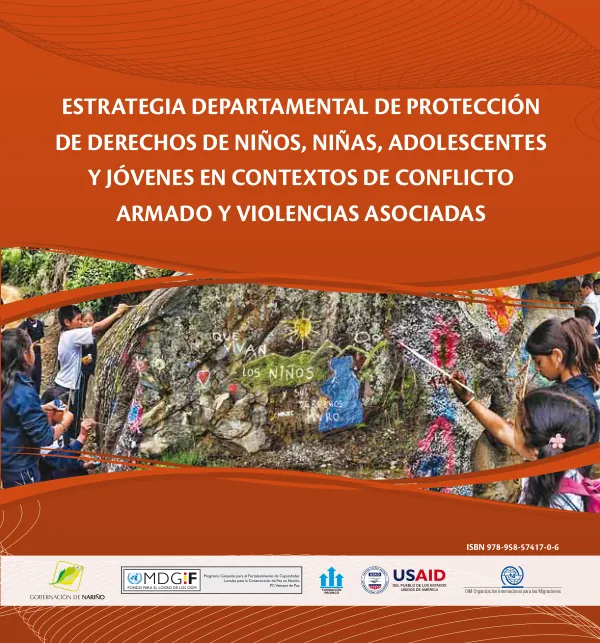
Estrategia Departamental de Protección de Derechos de Niños, Niñas, Adolescentes y Jóvenes en Contextos de Conflicto Armado y Violencias Asociadas
Open record 2014
2014USAID DEC