USAID DEC
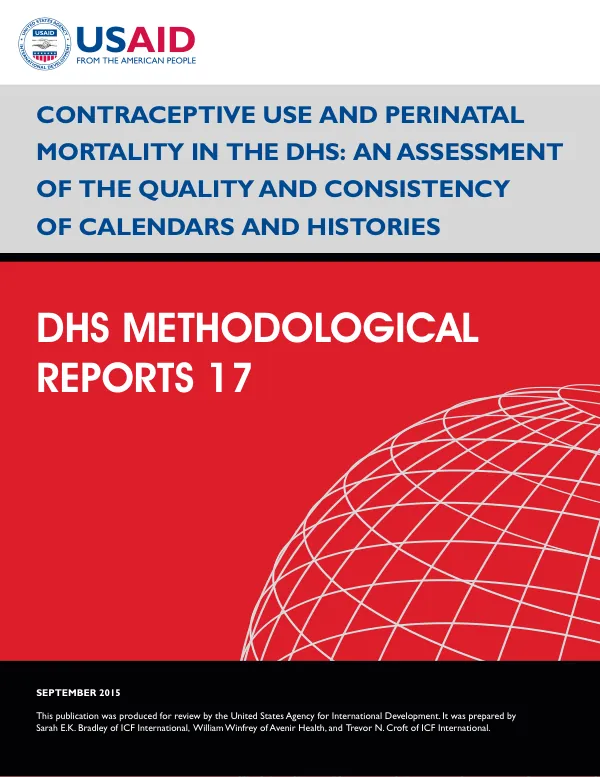
Contraceptive Use and Perinatal Mortality in the DHS: An Assessment of the Quality and Consistency of Calendars and Histories
Sign inAVENIR HEALTH
Contraceptive Use and Perinatal Mortality in the DHS: An Assessment of the Quality and Consistency of Calendars and Histories
Contraceptive use and perinatal mortality in the DHS: An assessment of the quality and consistency of calendars and histories is a report that evaluates the quality and consistency of data collected on contraceptive use and perinatal mortality in the Demographic and Health Surveys (DHS) program.
2015 · 118 pages
Sign in to readA free account is required to download.
Abstract
The report focuses on the assessment of pregnancy and birth histories, as well as the quality and consistency of contraceptive use data in DHS calendars. The report begins with an introduction that provides background information on the DHS program and the importance of assessing the quality and consistency of data collected on contraceptive use and perinatal mortality. The authors note that the DHS program is a critical source of data for monitoring and evaluating population, health, and nutrition programs, and that the quality and consistency of the data are essential for making informed decisions. Chapter 1 of the report provides an overview of the DHS program and the data collection instruments used to collect data on contraceptive use and perinatal mortality. The authors discuss the survey instruments used to collect data on pregnancy and birth histories, as well as the data and methods used to assess the quality and consistency of the data. Chapter 2 of the report focuses on assessing the quality of perinatal mortality data from pregnancy and birth histories. The authors discuss the background and definitions of perinatal mortality, as well as the survey instruments used to collect data on pregnancy and birth histories. The authors present results from a comparison of perinatal mortality rates collected with pregnancy histories versus birth histories, and discuss the implications of the findings. Chapter 3 of the report assesses the quality and consistency of contraceptive use data in DHS calendars. The authors discuss the background and data and methods used to assess the quality and consistency of the data, and present results from a comparison of contraceptive use data collected with calendars versus previous surveys. The authors discuss the implications of the findings and provide recommendations for improving the quality and consistency of the data. The report concludes with a summary of the key findings and recommendations for improving the quality and consistency of data collected on contraceptive use and perinatal mortality in the DHS program. The authors note that the findings of the report have important implications for the design and implementation of population, health, and nutrition programs, and that the recommendations provided in the report can help to improve the quality and consistency of the data collected in the DHS program. The report includes a number of tables and figures that provide additional information on the data and findings presented in the report. The tables and figures include comparisons of perinatal mortality rates collected with pregnancy histories versus birth histories, as well as comparisons of contraceptive use data collected with calendars versus previous surveys. Overall, the report provides a comprehensive assessment of the quality and consistency of data collected on contraceptive use and perinatal mortality in the DHS program, and provides recommendations for improving the quality and consistency of the data. The report is an important resource for researchers, policymakers, and program managers who are interested in understanding the quality and consistency of data collected on contraceptive use and perinatal mortality in the DHS program.
Related documents