USAID DEC
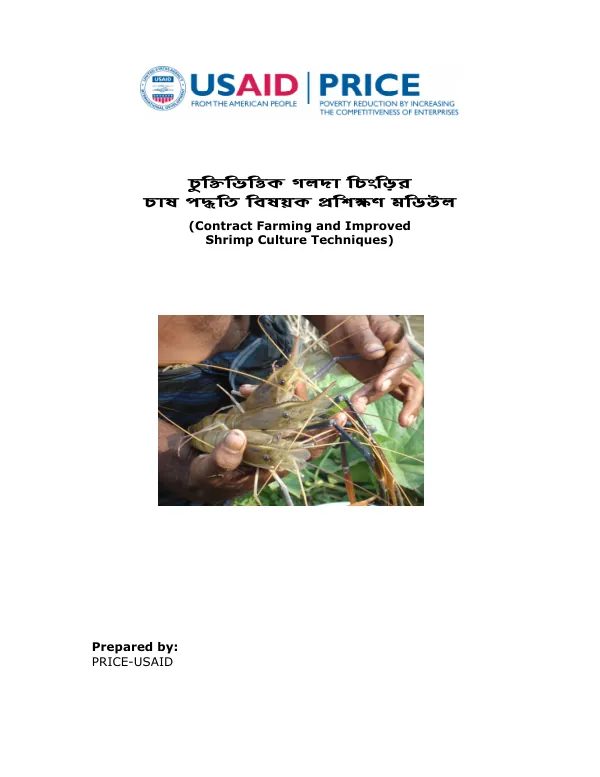
Contract Farming and Improved Shrimp Culture Techniques
The contract farming and improved shrimp culture techniques document, prepared by PRICE-USAID, outlines the objectives and methodologies for implementing these interventions.
40 pages
Sign in to readA free account is required to download.
Abstract
The document highlights the importance of contract farming and improved shrimp culture techniques in enhancing food security and income for small-scale farmers. The document outlines the objectives of the project, which include improving the productivity and income of small-scale farmers through contract farming and improved shrimp culture techniques. The project aims to achieve this objective by providing training and support to farmers, improving access to markets, and enhancing the quality of shrimp culture. The document also outlines the methodologies to be used in implementing the project, including the establishment of demonstration plots, farmer training programs, and market linkage facilitation. The project will also conduct regular monitoring and evaluation to assess the impact of the interventions. The geographic focus of the project is Rwanda, with a specific emphasis on the Eastern Province. The project will target small-scale farmers, with a focus on women-headed households. The project will also engage with local communities and stakeholders to ensure the sustainability and scalability of the interventions. The document outlines the timeframes for implementing the project, which includes a one-year period for establishing demonstration plots and conducting farmer training programs. The project will also conduct regular monitoring and evaluation to assess the impact of the interventions. The document highlights the importance of contract farming and improved shrimp culture techniques in enhancing food security and income for small-scale farmers. The project aims to achieve this objective by providing training and support to farmers, improving access to markets, and enhancing the quality of shrimp culture. The document outlines the implementation details for the project, including the establishment of demonstration plots, farmer training programs, and market linkage facilitation. The project will also conduct regular monitoring and evaluation to assess the impact of the interventions. The document highlights the importance of contract farming and improved shrimp culture techniques in enhancing food security and income for small