USAID DEC
Convergence of Nutrition Interventions: Coverage and Convergence of MCDP II Interventions
Sign inINTERNATIONAL FOOD AND POLICY RESEARCH INSTITUTE
Convergence of Nutrition Interventions: Coverage and Convergence of MCDP II Interventions
The convergence of interventions is crucial for improving child stunting due to the multifaceted nature of child malnutrition.
2021 · 11 pages
Sign in to readA free account is required to download.
Abstract
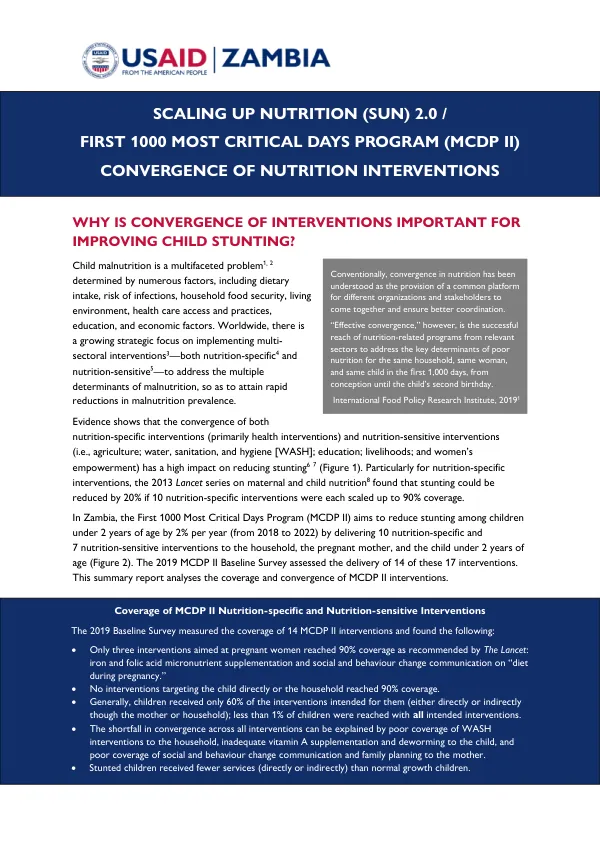
This problem is determined by numerous factors, including dietary intake, risk of infections, household food security, living environment, health care access and practices, education, and economic factors. A growing strategic focus exists on implementing multi-sectoral interventions to address the multiple determinants of malnutrition. Evidence indicates that the convergence of both nutrition-specific interventions and nutrition-sensitive interventions has a high impact on reducing stunting. Nutrition-specific interventions primarily address the immediate determinants of fetal and child nutrition and development, such as adequate food and nutrient intake, feeding, caregiving, and parenting practices, and low burden of infectious diseases. Examples of nutrition-specific interventions include adolescent, preconception, and maternal health and nutrition; maternal micronutrient supplementation; promotion of optimal breastfeeding; and disease prevention and management. Nutrition-sensitive interventions, on the other hand, address the underlying determinants of fetal and child nutrition and development, such as food security, adequate caregiving resources, and access to health services and a safe and hygienic environment. Examples of nutrition-sensitive interventions include agriculture and food security, social safety nets, early child development, maternal mental health, women's empowerment, child protection, schooling, WASH, and health and family planning services. The First 1000 Most Critical Days Program (MCDP II) in Zambia aims to reduce stunting among children under 2 years of age by 2% per year from 2018 to 2022 by delivering 10 nutrition-specific and 7 nutrition-sensitive interventions to the household, the pregnant mother, and the child under 2 years of age. The 2019 MCDP II Baseline Survey assessed the delivery of 14 of these 17 interventions and found that only three interventions aimed at pregnant women reached 90% coverage as recommended by The Lancet. The survey also found that no interventions targeting the child directly or the household reached 90% coverage, and generally, children received only 60% of the interventions intended for them. The shortfall in convergence across all interventions can be explained by poor coverage of WASH interventions to the household, inadequate vitamin A supplementation and deworming to the child, and poor coverage of social and behavior change communication and family planning to the mother. The coverage of nutrition-specific interventions to children under 2 years of age was very low, with only 9.9% of children receiving all nutrition-specific interventions intended for them. The low rate observed is because only a small proportion of mothers (12.7%) received all seven services meant for them, although a moderate proportion of children (59.4%) received the services meant for them.
Related documents