MART PROJECT
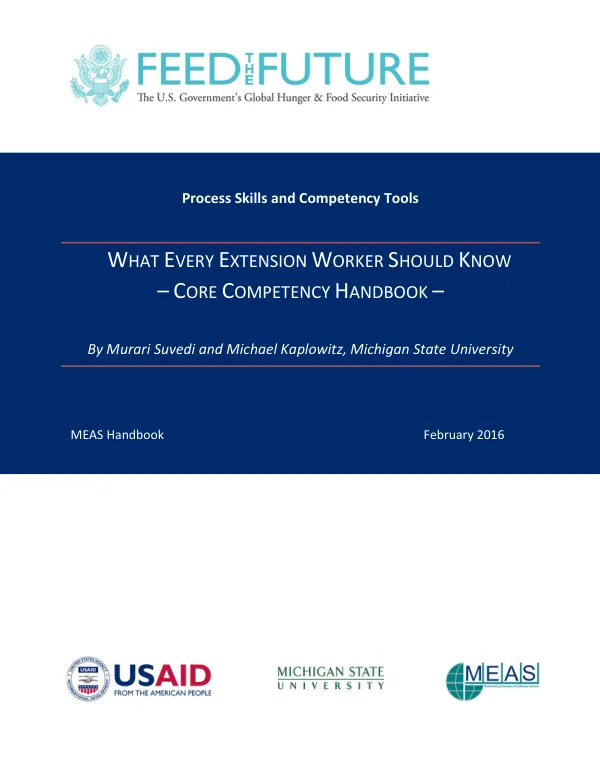
Core Competency Handbook for Extension Staff
The Core Competency Handbook for Extension Staff is a comprehensive guide designed to support front-line extension staff in their day-to-day work.
2016 · 188 pages
Sign in to readA free account is required to download.
Abstract
The handbook offers a set of tools for effective communication, program planning, and evaluation, with the goal of empowering extension personnel through in-service training opportunities and continuing education programming. Agricultural extension and advisory services are transitioning from a focus on technology transfer to a focus on facilitating a range of interventions in complex contexts. Today's extension professionals must have an understanding of the communities they work in and possess adequate knowledge and skill in participatory tools and techniques for planning, implementation, and evaluation of extension programs. Good communication skills are critical in all aspects of their work. The handbook is grounded in communication, education, rural sociology, and applied development science, and is designed to provide a simple yet comprehensive guide for extension workers that focuses on process skills and competencies. The intended audiences of this handbook include governmental agriculture, fisheries, natural resources, and community development ministry officials; governmental and non-governmental extension district/regional managers; extension-related faculty and their students; and field-level agents. The handbook is divided into several chapters, including an introduction to the history of extension services, agricultural development and the role of extension, working in the community, the extension worker, core competencies of extension workers, planning an extension program, and program planning in extension. Each chapter provides a detailed overview of the key concepts and tools necessary for effective extension work. The handbook emphasizes the importance of process skills and competencies, such as communication, adult education, and participatory planning, in facilitating agricultural development and improving agricultural productivity. It also highlights the need for extension workers to have a deep understanding of the communities they work in and to possess adequate knowledge and skill in participatory tools and techniques. The handbook was developed with the support of the Modernizing Extension and Advisory Services project (MEAS), funded by the U.S. Agency for International Development (USAID). Several people contributed to the preparation of this publication, including Dr. Sejuti Das Gupta, Mr. Ramjee Ghimire, Ms. Hannah Livuza, Dr. Austen Moore, and Andrea Bohn, among others. The handbook provides a valuable resource for extension workers, trainers, and educators, and is intended to support the development of effective extension programs that promote agricultural development and improve the lives of farmers and rural communities.
Related documents