JSI RESEARCH & TRAINING INSTITUTE, INC
Adaptive Learning Guide: An Overview
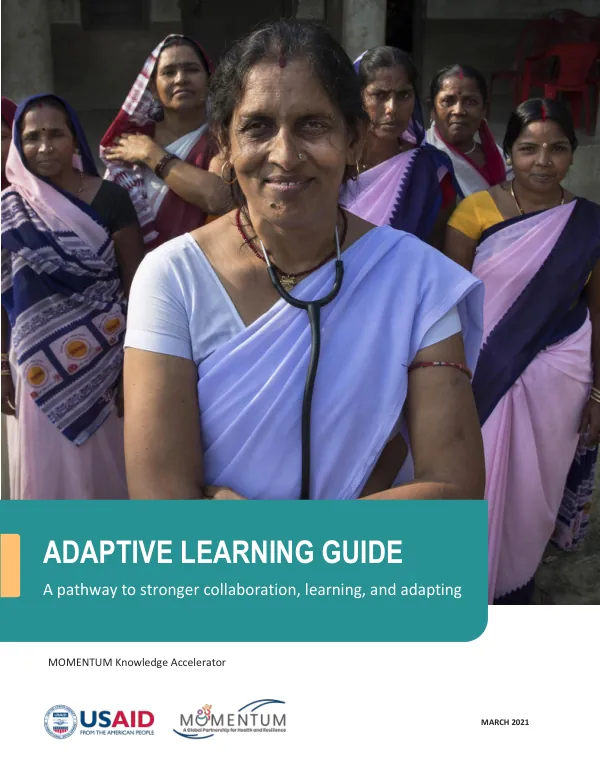
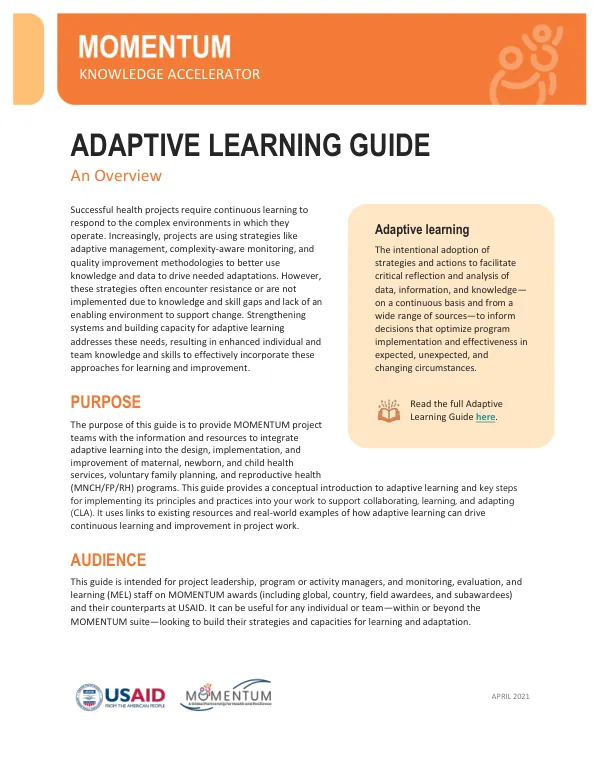
The Adaptive Learning Guide is a resource designed to support the integration of adaptive learning into the design, implementation, and improvement of maternal, newborn, and child health services, voluntary family planning, and reproductive health programs.
2021 · 2 pages
Sign in to readA free account is required to download.
Abstract
The guide is intended for project leadership, program or activity managers, and monitoring, evaluation, and learning staff on MOMENTUM awards, as well as their counterparts at USAID. Adaptive learning is defined as the intentional adoption of strategies and actions to facilitate critical reflection and analysis of data, information, and knowledge on a continuous basis and from a wide range of sources to inform decisions that optimize program implementation and effectiveness in expected, unexpected, and changing circumstances. This approach is essential for responding to the complex environments in which health projects operate. The guide is structured into nine units, each focusing on a specific aspect of adaptive learning. Unit 1 provides an overview of the guide's structure and introduces the six processes essential for integrating adaptive learning into project work. Unit 2 defines adaptive learning and describes how it accelerates improved performance and project outcomes. Unit 3 assesses existing strengths and gaps for adaptive learning, drawing from existing readiness assessments to help users identify areas where work is needed to integrate adaptive learning into their work. Unit 4 modifies the environment to integrate or strengthen adaptive learning, identifying internal and external factors within the organizational environment and culture that can facilitate or hinder the integration of adaptive learning. Unit 5 builds a team primed to use adaptive learning in their work, discussing how to prepare and continuously support teams to integrate adaptive learning into their work, including the role of team leadership and using champions to reinforce adaptive learning. Unit 6 integrates adaptive learning into project design, implementation, and improvement, identifying strategies and resources to integrate adaptive learning into project design, implementation, and improvement. Unit 7 focuses on monitoring, evaluating, and learning of adaptive learning, choosing the right indicators or tools to measure adaptive learning in project work and integrating them into existing MEL systems to monitor progress, evaluate opportunities for growth, and communicate lessons learned. Unit 8 institutionalizes adaptive learning as the norm, understanding the need to institutionalize adaptive learning principles and practices and specific strategies for doing so. Unit 9 communicates about adaptive learning, focusing on tools to develop a communications strategy that informs internal and external audiences about the role and results of adaptive learning in program design, implementation, and improvement. The guide is a valuable resource for anyone looking to build their strategies and capacities for learning and adaptation in the context of maternal, newborn, and child health services, voluntary family planning, and reproductive health programs.