UNITED NATIONS ENVIRONMENTAL PROGRAMME , NAIROBI
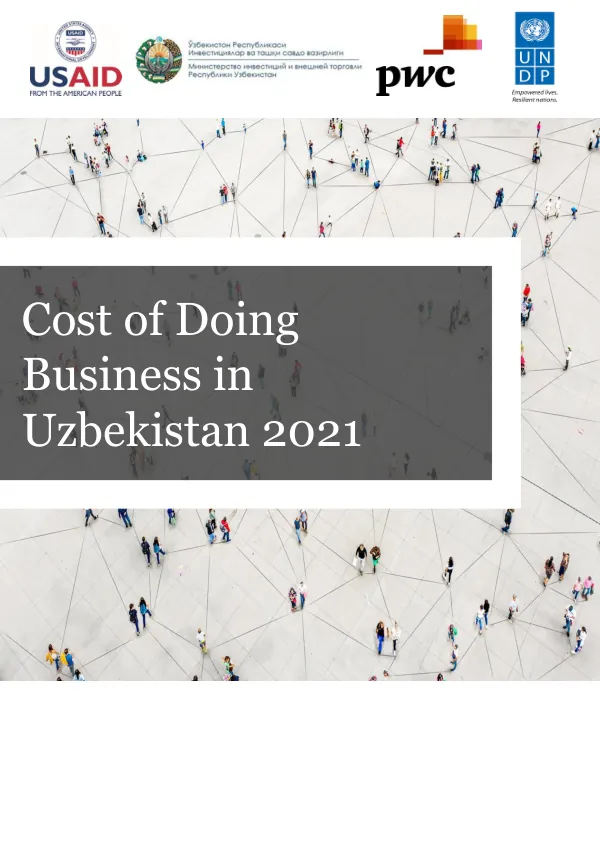
Cost of Doing Business in Uzbekistan 2021
The Republic of Uzbekistan has implemented a comprehensive set of measures aimed at improving the overall business environment.
2021 · 204 pages
Sign in to readA free account is required to download.
Abstract
These measures include lifting bureaucratic and administrative burdens, cutting costs for obtaining licenses and permits, and simplifying licensing procedures. The government has also taken steps to further improve the investment climate in the country and make reforms irreversible. The cost of doing business in Uzbekistan is a critical factor in determining the country's competitiveness and attractiveness to foreign investors. The government has made significant progress in reducing the domination of state-owned monopolies in the economy, improving public procurement processes, and enhancing intellectual property rights. However, challenges remain, including a restrictive regulatory environment and a lack of competition or access to market. The cost of starting a new business in Uzbekistan includes enterprise registration, labor costs, taxes and tax exemptions, licensing, foreign trade procedures, customs payments and preferences, business services, logistics, and other types of business information. The process of starting a new business involves registering a company, obtaining necessary licenses and permits, and complying with labor laws and regulations. The labor market in Uzbekistan is characterized by a high level of informality, with many workers employed in the informal sector. The government has implemented policies aimed at reducing informality and increasing labor market participation, including the introduction of a minimum wage and improved social protection programs. Taxes and dues in Uzbekistan include corporate income tax, value-added tax, and customs duties. The government has introduced tax incentives and preferences to encourage foreign investment and economic growth. Foreign trade procedures involve obtaining necessary licenses and permits, complying with customs regulations, and meeting international trade standards. The business services sector in Uzbekistan includes financial services, banking services, lending and leasing, microcredit and microleasing, money transfers, insurance, stock market and securities, legal support, resolution of economic disputes, state duties for notary services, consulting, property assessment, logistics, passenger transportation, telecommunications services, global satellite communications services, cellular communications and internet, delivery and postal services, information and advertising services. The social and household services sector in Uzbekistan includes professional development, education, healthcare, and social protection programs. The government has implemented policies aimed at improving access to education and healthcare, including the introduction of free education and healthcare services for all citizens. The regions of Uzbekistan are characterized by varying levels of economic development, with some regions experiencing rapid growth and others facing challenges related to poverty and unemployment. The government has implemented policies aimed at promoting regional development, including the introduction of special economic zones and investment incentives. The Ministry of Investments and Foreign Trade of the Republic of Uzbekistan has implemented a range of initiatives aimed at improving the business environment and promoting foreign investment. These initiatives include the introduction of a new investment law, the establishment of a one-stop shop for foreign investors, and the implementation of a range of tax incentives and preferences. The government of Uzbekistan has made significant progress in improving the business environment and promoting foreign investment. However, challenges remain, including a restrictive regulatory environment and a lack of competition or access to market. The government continues to implement policies aimed at improving the business environment and promoting economic growth, including the introduction of a new investment law and the establishment of special economic zones.