USAID DEC
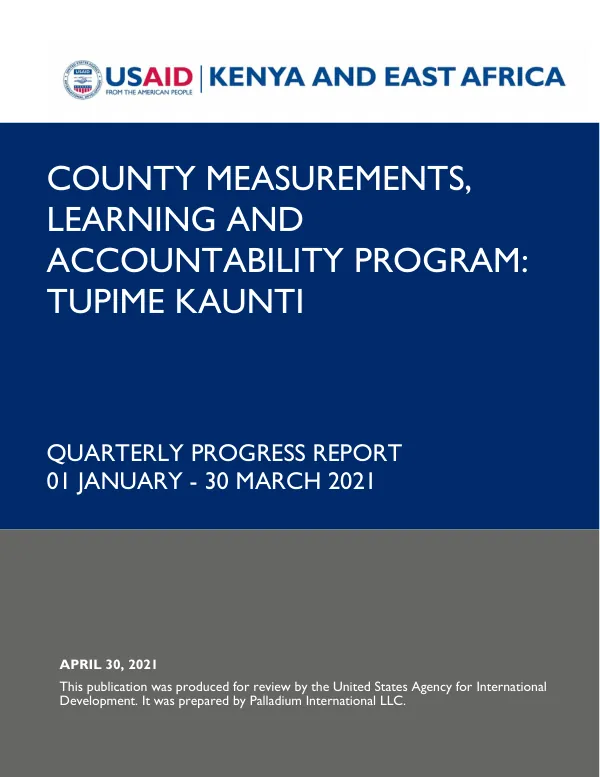
County Measurements, Learning and Accountability Program: Tupime Kaunti Quarterly Progress Report Quarterly 01 Jan- 31 March 2021
Sign inPALLADIUM INTERNATIONAL, LLC
County Measurements, Learning and Accountability Program: Tupime Kaunti Quarterly Progress Report Quarterly 01 Jan- 31 March 2021
The County Measurements, Learning and Accountability Program: Tupime Kaunti began in 2021 with funding from USAID's Kenya and East Africa office.
2021 · 58 pages
Sign in to readA free account is required to download.
Abstract
The program aimed to improve health outcomes in 12 focus counties, including Migori, Kisumu, and Turkana. Key achievements during the first quarter of 2021 included the establishment of a County TWG, which met regularly to discuss program progress and challenges. The TWG also conducted stakeholder forums to engage with local leaders and communities. The program implemented various interventions to improve health outcomes, including the development of information products, such as dashboards and reports, to track progress and identify areas for improvement. For example, the program developed a Power-BI dashboard to monitor malaria cases and a CAPR dashboard to track maternal mortality rates. The program also conducted data quality assessments to ensure that data was accurate and reliable. The program made significant progress in reducing malaria cases, with a 27% decrease in outpatient suspected malaria cases in Kisumu County and a 25% decrease in outpatient confirmed malaria cases in the same county. The program also improved maternal health outcomes, with a 15% increase in skilled birth deliveries in Nakuru County and a 12% decrease in maternal mortality rates in Migori County. The program faced several challenges during the first quarter, including delays in data reporting and limited access to health facilities in some counties. However, the program implemented various strategies to address these challenges, including providing technical assistance to health facilities and conducting training sessions for health workers. The program also made progress in implementing the USAID Forward strategy, which aims to improve the efficiency and effectiveness of USAID programs. The program established a sustainability and exit strategy, which included plans for transitioning program activities to local partners and ensuring that program benefits were sustained after the program ended. The program's financial status was also reviewed during the first quarter, with a cash flow chart showing a steady increase in program expenditures. The program's overall financial status summary showed a balance of $1.2 million as of March 31, 2021. The program's work plan status showed that 75% of planned activities had been completed, with the remaining 25% scheduled for completion in the second quarter. The program's links with other USAID programs were also reviewed during the first quarter, with a progress report showing that the program had established partnerships with several other USAID programs, including the PEPFAR COP 20 program. The program's links with government agencies were also reviewed, with a report showing that the program had established partnerships with several government agencies, including the Ministry of Health and the Council of Governors. The program's success stories were also highlighted during the first quarter, with a report showing that the program had achieved significant improvements in health outcomes in several counties. The report highlighted the program's achievements in reducing malaria cases, improving maternal health outcomes, and increasing access to health services. Overall, the County Measurements, Learning and Accountability Program: Tupime Kaunti made significant progress during the first quarter of 2021, with achievements in improving health outcomes, implementing the USAID Forward strategy, and establishing partnerships with other USAID programs and government agencies. However, the program faced several challenges, including delays in data reporting and limited access to health facilities in some counties. The program implemented various strategies to address these challenges and is expected to continue making progress in the second quarter.
Related documents