USAID DEC
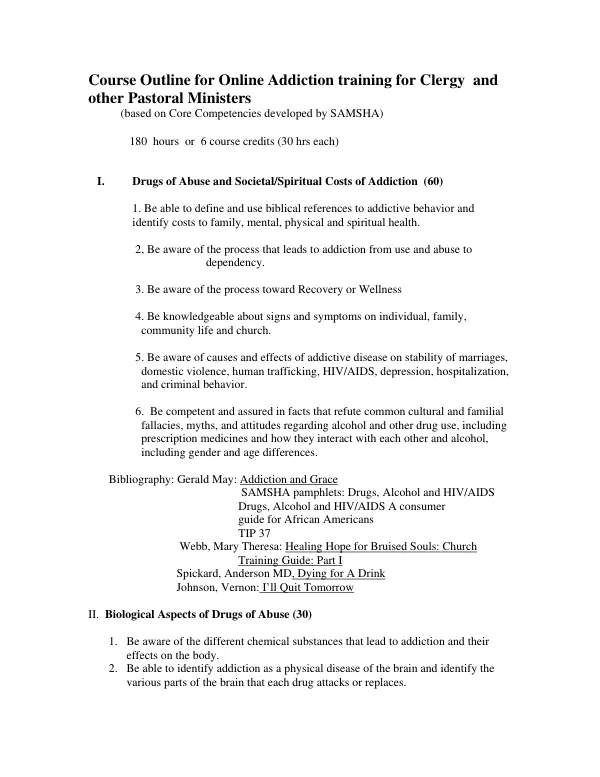
Course Outline for Online Addiction Training for Clergy and other Pastoral Ministers
Sign inUSAID DEC
Course Outline for Online Addiction Training for Clergy and other Pastoral Ministers
The online addiction training for clergy and other pastoral ministers is a comprehensive 180-hour program based on the core competencies developed by the Substance Abuse and Mental Health Services Administration (SAMSHA).
2011 · 4 pages
Sign in to readA free account is required to download.
Abstract
The program is designed to equip participants with the knowledge, skills, and strategies necessary to effectively address addiction and support individuals and families affected by it. The program consists of four main components: Drugs of Abuse and Societal/Spiritual Costs of Addiction, Biological Aspects of Drugs of Abuse, Psychological Aspects of Abusers and Family Members, and Recovery Support. Each component is designed to provide a deeper understanding of the complexities of addiction and the role of spirituality in recovery. The first component, Drugs of Abuse and Societal/Spiritual Costs of Addiction, covers the biblical references to addictive behavior, the costs of addiction to family, mental, physical, and spiritual health, and the process of addiction from use and abuse to dependency. Participants will also learn about the signs and symptoms of addiction, its causes and effects on stability of marriages, domestic violence, human trafficking, HIV/AIDS, depression, hospitalization, and criminal behavior. The second component, Biological Aspects of Drugs of Abuse, explores the different chemical substances that lead to addiction and their effects on the body. Participants will learn about the brain's role in addiction, the various parts of the brain that each drug attacks or replaces, and the difference between will and willingness in the progression of the disease and recovery. The third component, Psychological Aspects of Abusers and Family Members, examines the defenses used by addicts, particularly denial and projection, and the distortions in thinking of an individual affected by addiction. Participants will learn how to communicate an appropriate level of concern and caring for addicts and their family members, deflect and overcome anger and resistance, and help family members identify roles and overcome enabling behaviors. The fourth component, Recovery Support, focuses on the 12-step recovery process, its origins, and its relationship to Scripture, Christian traditions, and spiritual development. Participants will learn how to differentiate between self-help support groups, Bible study and prayer groups, and self-help recovery groups, and how to plant the first AA or NA meeting in their church and attend community open 12-step meetings. In addition to these four components, the program also includes a Community Resources component, which provides information on local groups, addiction counselors, and treatment resources, and encourages participants to host a Recovery Sunday and welcome individuals who have recently entered into a recovery process into their congregation. The program utilizes a variety of resources, including SAMSHA pamphlets, books, and videos, as well as Power Point presentations and other materials. Participants will also have access to a range of additional resources, including pamphlets on topics such as sex, alcohol, and HIV/AIDS, as well as a collection of 12-step pamphlets from Hazelden. Overall, the online addiction training for clergy and other pastoral ministers is a comprehensive and well-rounded program that provides participants with the knowledge, skills, and strategies necessary to effectively address addiction and support individuals and families affected by it.