USAID DEC
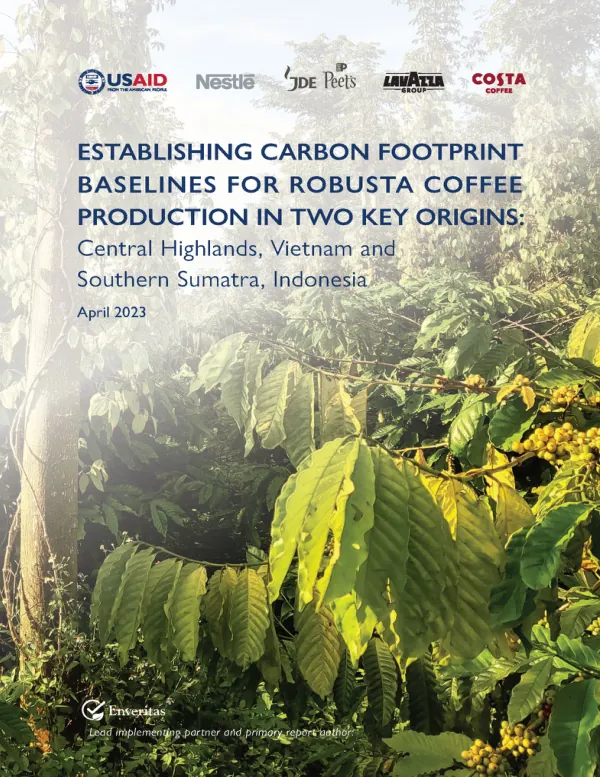
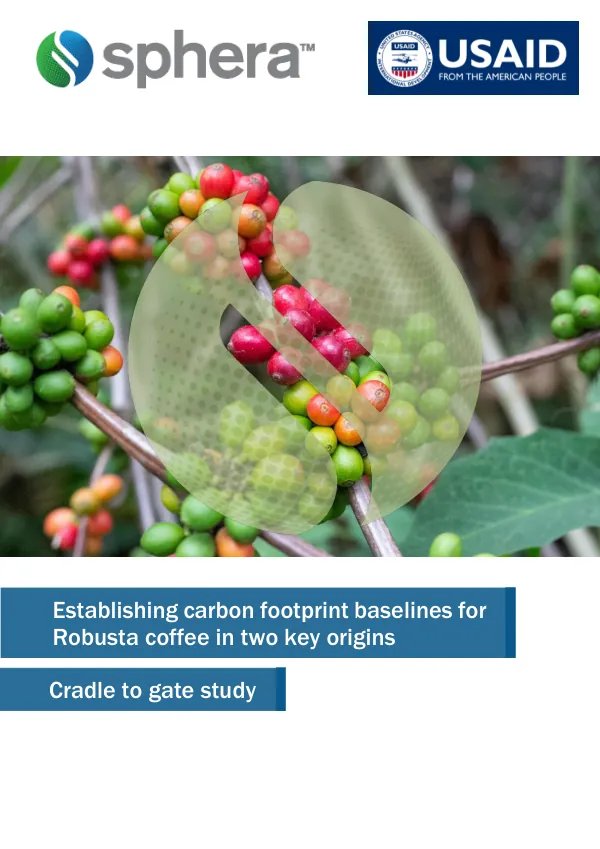
Cradle to gate study for establishing carbon footprint baselines for Robusta coffee in two key origins
Sign inPACT
Cradle to gate study for establishing carbon footprint baselines for Robusta coffee in two key origins
The cradle to gate study for establishing carbon footprint baselines for Robusta coffee in two key origins, Indonesia and Vietnam, was conducted by Sphera Solutions, Inc.
2023 · 45 pages
Sign in to readA free account is required to download.
Abstract
on behalf of Pact. Inc. – USAID Green Invest Asia. The study aimed to quantify the greenhouse gas emissions associated with the production of Robusta coffee in these two countries. The study employed Sphera's Lean AgModel, which is a life cycle assessment (LCA) tool used to estimate the environmental impacts of agricultural products. The system boundaries of the study included all stages of coffee production, from land preparation to harvesting, processing, and transportation. The study focused on two key origins: Indonesia and Vietnam, which are among the largest producers of Robusta coffee. The study collected data on various inputs and activities involved in coffee production, including yields, product characteristics, and allocation of coffee beans, mineral fertilizers, organic fertilizers, active ingredients, irrigation, diesel consumption, field work, land use change, soil erosion, transports, processing of harvested coffee cherry, and residue treatment methods applied by farmers. The data was compiled using Sphera's data compilation approach, which involves gathering and processing data from various sources, including farm surveys, literature reviews, and industry reports. The study calculated the carbon footprint of Robusta coffee production in Indonesia and Vietnam using the LCA methodology. The results showed that the carbon footprint of Robusta coffee production in Indonesia was significantly higher than in Vietnam. The study also conducted scenario analyses to evaluate the impact of different factors on the carbon footprint, including irrigation, processing, and allocation. The results of the study indicated that irrigation was a significant contributor to the carbon footprint of Robusta coffee production in both countries. The study also found that the use of organic fertilizers and the adoption of sustainable agricultural practices could reduce the carbon footprint of coffee production. The study concluded that the carbon footprint of Robusta coffee production in Indonesia and Vietnam could be reduced through the implementation of sustainable agricultural practices and the use of renewable energy sources. The study also provided additional results on acidification potential, eutrophication potential, and water use for both countries. The results showed that the acidification potential and eutrophication potential of Robusta coffee production in Indonesia and Vietnam were relatively low compared to other agricultural products. However, the study recommended that farmers and producers take steps to reduce the water use associated with coffee production, particularly in areas where water scarcity is a concern. Overall, the study provided valuable insights into the carbon footprint of Robusta coffee production in Indonesia and Vietnam and highlighted the importance of sustainable agricultural practices in reducing greenhouse gas emissions associated with coffee production.