PATH
Declaration on Scaling Up Treatment of Diarrhea and Pneumonia
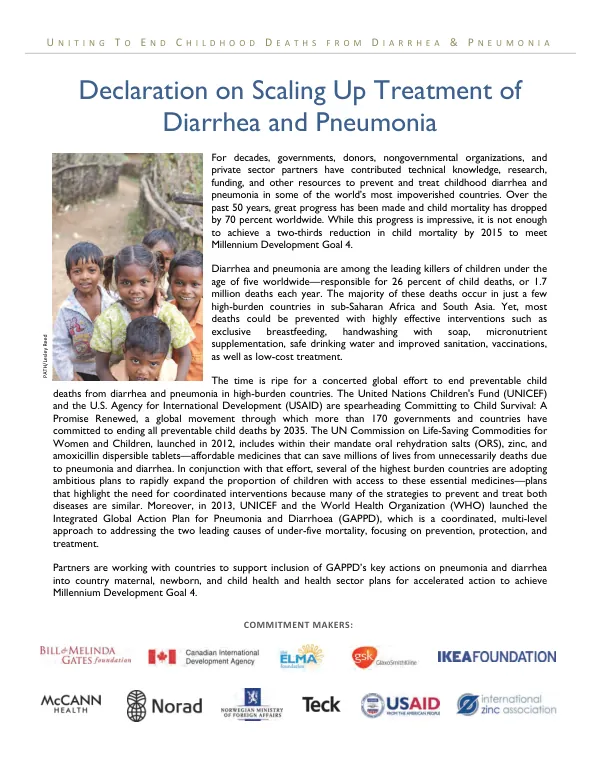
The Declaration on Scaling Up Treatment of Diarrhea and Pneumonia was signed by governments, donors, nongovernmental organizations, and private sector partners to prevent and treat childhood diarrhea and pneumonia in high-burden countries.
2013 · 3 pages
Sign in to readA free account is required to download.
Abstract
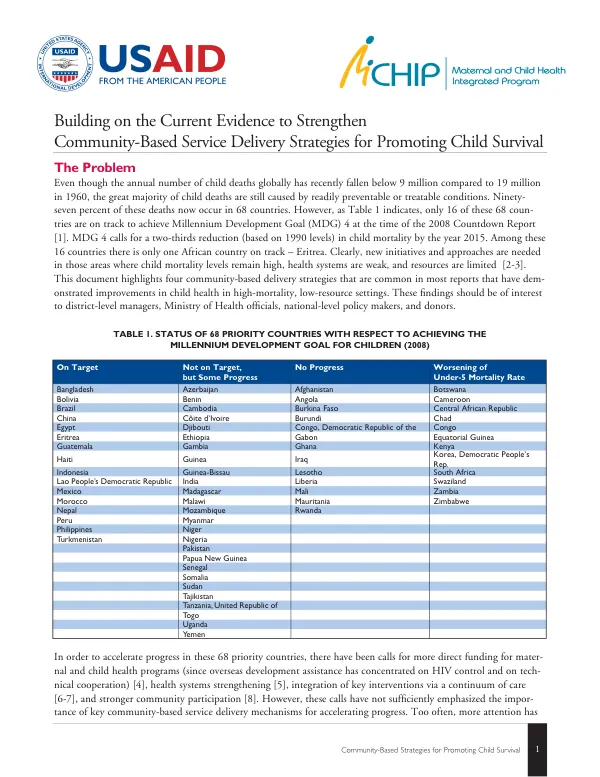
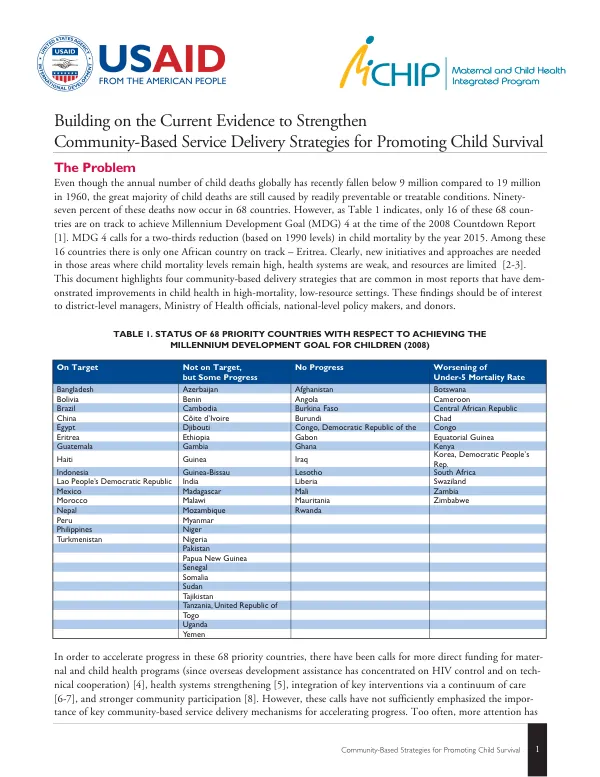
The initiative aims to reduce child mortality from these diseases, which are responsible for 26% of child deaths worldwide, or 1.7 million deaths annually. The Declaration emphasizes the need for a global effort to end preventable child deaths from diarrhea and pneumonia. It highlights the effectiveness of interventions such as exclusive breastfeeding, handwashing with soap, micronutrient supplementation, and low-cost treatment. The initiative also focuses on scaling up the use of affordable medicines, including oral rehydration salts (ORS), zinc, and amoxicillin dispersible tablets. The Integrated Global Action Plan for Pneumonia and Diarrhea (GAPP) was launched by UNICEF and the World Health Organization (WHO) in 2013. The plan aims to address the two leading causes of under-five mortality through prevention, protection, and treatment. Partners are working with countries to include GAPP's key actions on pneumonia and diarrhea into country maternal, newborn, and child health and sector plans for accelerated action to achieve Millennium Development Goal 4. The initiative has received commitments from various partners, including the Bill & Melinda Gates Foundation, PATH, Foreign Affairs, and Development Canada, GlaxoSmithKline, and the U.S. Agency for International Development (USAID). These partners have pledged to contribute direct financial or resource support to scale up ORS and zinc, and/or access to and rational use of amoxicillin in high-burden countries. The initiative aims to save children's lives by working together to scale up the use of effective treatments for diarrhea and pneumonia. Partners will contribute to demand creation, improve access to affordable and high-quality ORS and zinc products, and support the creation of national plans to maximize impact. The initiative also aims to enhance collaboration and evaluation of programs to improve the use of treatments.
Related documents