USAID. MISSION TO INDONESIA
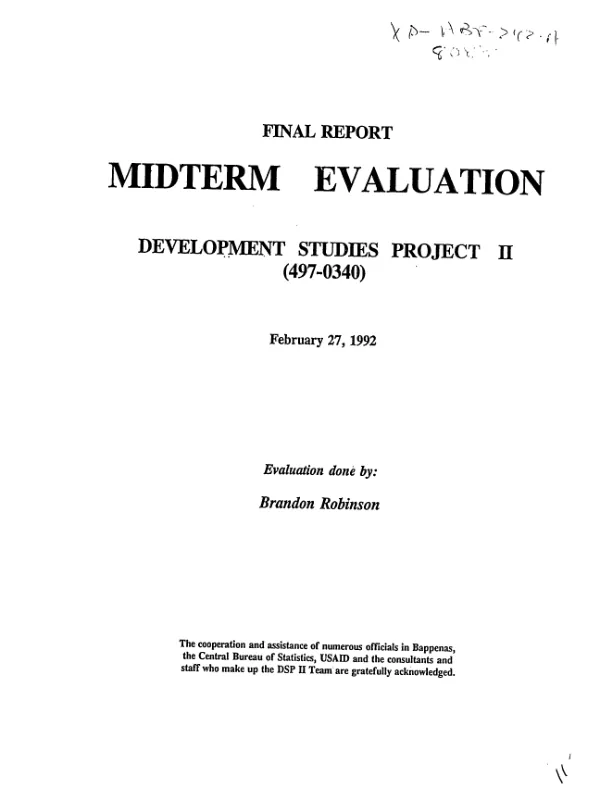
Development studies project
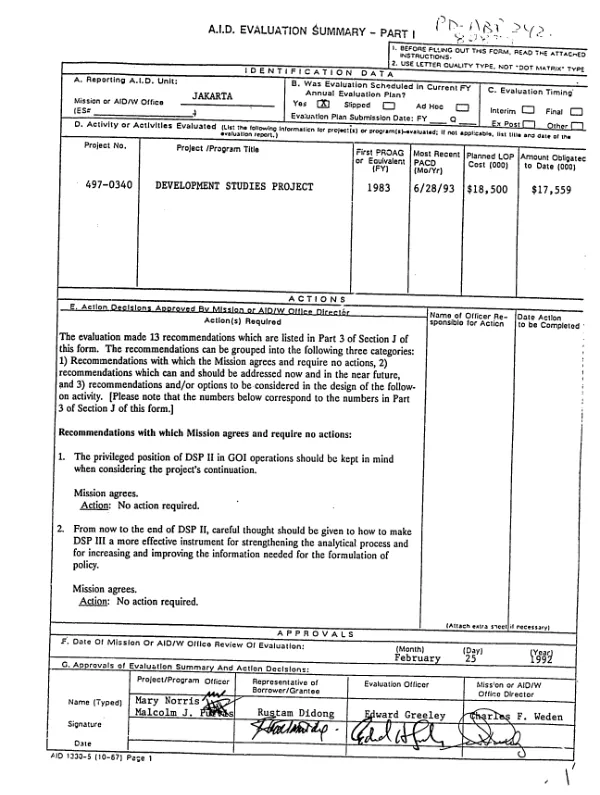
Summarizes midterm evaluation (XD-ABF-242-A) of a project to strengthen the analysis of policy and program issues related to Indonesia"s economic development.
1992
Sign in to readA free account is required to download.
Abstract
The evaluation covered the period 3/89-1/92. The project has been an unusually effective foreign assistance instrument, with potentially significant multiplier effects. It has helped the Bureau of Statistics (BPS) and the National Development Planning Agency (BAPPENAS) to, respectively, develop data collection and tabulation capabilities (especially regarding large and medium industry) and design and execute policy-oriented analysis and research. The TA is excellent in every respect, the leadership first-rate, and the mix of resident advisors and short-term consultants is now satisfactory. Fifty-two sound analytical studies with considerable policymaking value have been carried out. Some have been collaborative, but a significant number have been conducted solely by advisors and do not contribute to institutionalization of research and analysis capacities within BAPPENAS. For their part, BAPPENAS officials have conflicting views about the extent to which research and analysis should be carried out within the agency. The provision of personal computers to BPS and BAPPENAS has been fruitful. The BPS has used them to decentralize data processing tasks to the provinces. The following lessons were learned. (1) Large TA projects should carefully weigh the trade-off between short-term outputs and long-term capacity building. (2) The effectiveness of policy-related TA depends largely on trust. The establishment of trusting relationships requires time, the proper mix of short- and long-term advisors, quality assistance, and in some cases, confidentiality of policy dialogue. (3) In assessing the feasibility of project objectives (particularly those concerning institutional and staff development), a full appreciation of the recipient institution"s responsibilities and its staff"s workload and capabilities is needed. The evaluation made no firm recommendation regarding a follow-on project. The Mission will consider the possibility and design of a follow-on in light of the coming (3/93) change in government. The Mission also notes that the evaluation summary did not fully capture what was presented in the full text, and adds a lesson learned of its own: do not allow evaluators to make 16 findings and 13 recommendations when many of these could be consolidated into themes which are operationally more useful.