USAID
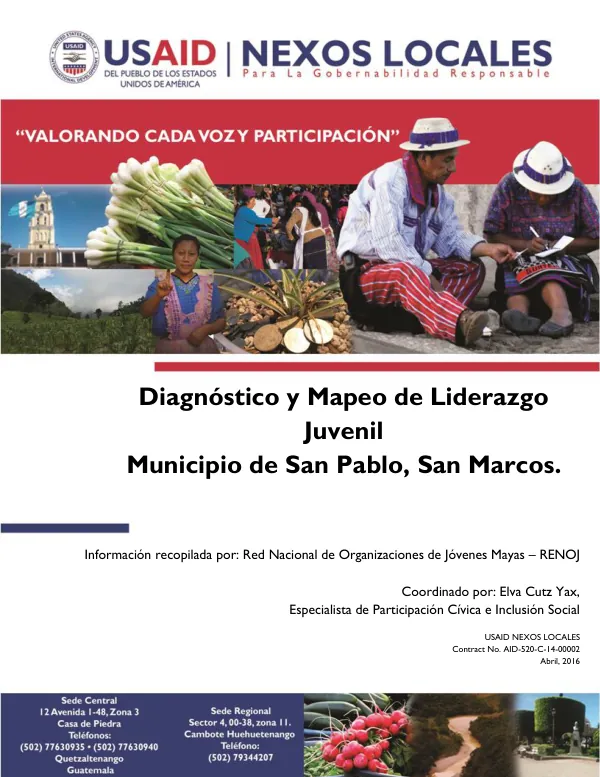
Diagnóstico y Mapeo de Liderazgo Juvenil: San Pablo
The Diagnóstico y Mapeo de Liderazgo Juvenil in San Pablo, San Marcos, was conducted by the Red Nacional de Organizaciones de Jóvenes Mayas – RENOJ, in coordination with Elva Cutz Yax, Especialista de Participación Cívica e Inclusión Social.
2016 · 35 pages
Sign in to readA free account is required to download.
Abstract
The study was funded by USAID NEXOS LOCALES, Contract No. AID-520-C-14-00002, in April 2016. The municipality of San Pablo is located in the western highlands of Guatemala, and the study aimed to understand the leadership and participation of young people in the community. The research methodology involved individual and collective interviews with young people, as well as interviews with municipal authorities. The study also included a mapping of organizations with a focus on youth development. The study found that the youth population in San Pablo is characterized by limited participation in civic activities, with only 12% of respondents reporting participation in community events. The majority of young people (60%) reported having migrated to other countries, primarily to the United States, in search of employment opportunities. Remittances from these migrant workers are a significant source of income for many families in the municipality. The study also highlighted the challenges faced by young people with disabilities, who reported facing significant barriers to participation in community activities. Similarly, young people from the LGBTQ+ community reported facing stigma and discrimination, which limited their opportunities for participation. The study identified several key areas for improvement, including the need for greater investment in youth development programs, improved access to education and employment opportunities, and increased participation of young people in decision-making processes at the municipal level. The study also mapped the existing organizations and initiatives focused on youth development in the municipality, highlighting the need for greater coordination and collaboration among these organizations to better support the needs of young people. The study's findings have important implications for policymakers and practitioners working to support the development of young people in San Pablo and beyond. By understanding the challenges and opportunities facing young people in the municipality, stakeholders can develop targeted interventions to address these issues and promote greater participation and leadership among young people. The study's methodology involved a combination of quantitative and qualitative data collection methods, including surveys, interviews, and focus groups. The study's findings are based on data collected from a sample of 150 young people, aged 15-29, who were selected through a random sampling process. The study's results are presented in a series of tables and figures, which provide a detailed overview of the study's findings. The study's conclusions are based on a thorough analysis of the data, and highlight the need for greater investment in youth development programs, improved access to education and employment opportunities, and increased participation of young people in decision-making processes at the municipal level. Overall, the Diagnóstico y Mapeo de Liderazgo Juvenil in San Pablo provides a comprehensive understanding of the challenges and opportunities facing young people in the municipality, and highlights the need for targeted interventions to promote greater participation and leadership among young people.
Related documents