DELOITTE CONSULTING, LLP
Dispute Settlement Mechanisms for Electricity Sector Disputes
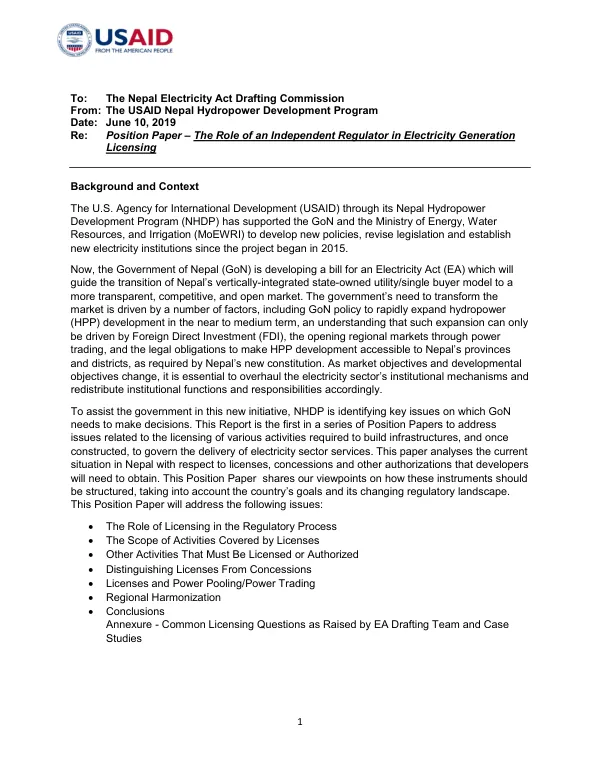
The Nepal Electricity Act Drafting Committee has been presented with a position paper by the USAID Nepal Hydropower Development Program, outlining the importance of effective dispute settlement mechanisms in the electricity sector.
2019 · 8 pages
Sign in to readA free account is required to download.
Abstract
The paper highlights the need for a more transparent, competitive, and open market in Nepal, driven by factors such as the rapid expansion of hydropower development, the need to attract foreign direct investment, and the requirement to make hydropower accessible to all Nepali citizens. The paper identifies various approaches employed in South Asia, South and North America, the United Kingdom, and East Africa to settle disputes in the electricity sector. It notes that foreign investors often cite the disadvantages of settling disputes in local courts, including slow and inefficient processes, unknown procedural rules, and the use of an unknown language. Countries that eliminate these risks by settling disputes in a non-judicial forum encourage foreign direct investment. The paper highlights the two-tier process used in leading international practices to settle disputes in the electricity sector. In the first tier, the regulator oversees an amicable settlement process or a quasi-judicial process designed to ensure the natural rights of all parties. In the second tier, an unsatisfied party may file an appeal to a non-judicial tribunal, which is an independent body with sector expertise and the power to review and overrule decisions of the regulator. The paper notes that Nepal does not follow leading international practices in its appeal process, instead requiring appeals to be lodged at the High Court of Patan. This approach places investors back in the middle of "local law risks." The paper recommends that Nepal adopt a more effective appeal process, such as the one used in the United States, where appeals from the Federal Energy Regulatory Commission can be filed with an ad hoc arbitration panel. The paper also highlights the experience of India with the Appellate Tribunal for Electricity (APTEL), which has been successful in clearing cases at a higher rate than any other courts in India. APTEL has a strong leadership and expertise in dealing with energy sector cases, and its procedures are guided by the principles of natural justice. The paper also examines the experience of Tanzania with the Fair Competition Tribunal (FCT), which is a specialized tribunal that hears appeals from regulatory bodies, including the Energy and Water Utilities Regulatory Authority. The FCT has a Chairman and six Members, and its judgment is final. The paper concludes by emphasizing the importance of effective dispute settlement mechanisms in the electricity sector, and recommends that Nepal adopt a more transparent, competitive, and open market, with a more effective appeal process.
Related documents