UNIVERSITY OF ARIZONA. COLLEGE OF AGRICULTURE. OFC. OF ARID LANDS STUDIES
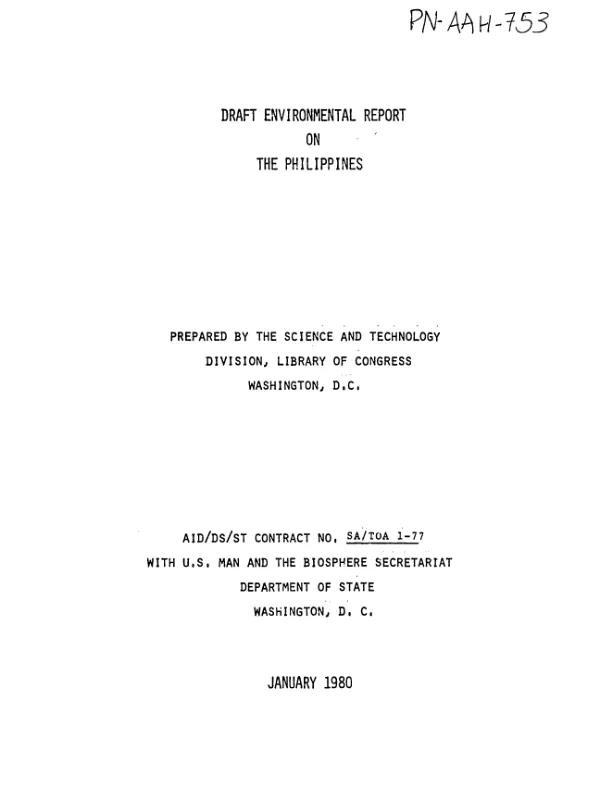
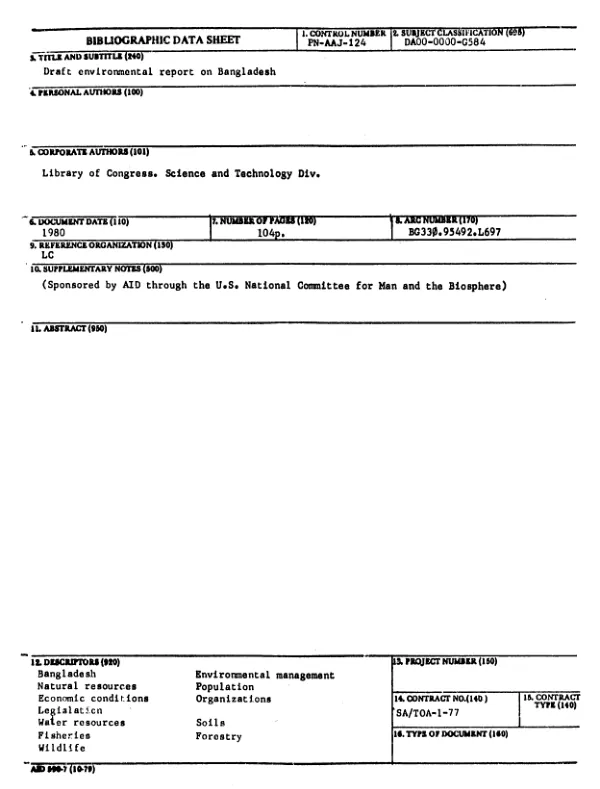
Draft Environmental Report on Yemen (Yemen Arab Republic)
The Yemen Arab Republic is one of the least developed countries in the world.
Speece, Mark W. · 1970
Sign in to readA free account is required to download.
Abstract
Lacking substantial mineral resources, its primary resources are its limited agricultural and rangelands of which only 8% are definitely cultivable. This draft report presents a profile of the country"s natural and environmental resources in order to identify major environmental problems. After an introduction outlining Yemen"s geographical, climatic, and demographic characteristics, the country"s natural resources of water, minerals, soils, vegetation/rangelands, and fauna are described, along with a note on parks, protected areas, and reserves. A review of Yemen"s environmental problems -- which the Government is only now beginning to recognize -- reveals that they are generally related to water or agriculture. Five major problems are noted. (1) The pollution of drinking water is serious in both rural and urban areas. Existing wells are shallow and therefore easily contaminated, a situation compounded by the lack of waste disposal systems. (2) Since most of Yemen suffers from scant rainfall and little surface water, groundwater is the major source of water for household use. Increases in this use and in groundwater irrigation are rapidly lowering the water table in many regions. (3) Soil erosion, always a problem in wadi areas, is now spreading to highland agricultural areas. The depletion of plant cover in range and woodlands has also accelerated erosion in nonagricultural areas. (4) Soil salinization is a problem in Tihama, where irrigation with groundwater is increasing. (5) Other difficulties that are not yet considered critical include spreading sand dunes in Tihama, overgrazing and depletion of range plant cover, soil depletion, and problems associated with rapid industrialization. Appended is a 180-item bibliography of German, French, Italian, and English sources covering general information (1872-1978); geology, minerals, and soils (1888-1977); flora and fauna (1834-1955); water resources and management (1925-77); land use and agriculture (1953-78); public health and nutrition (1932-72); social aspects (1939-79); and development (1964-79). A 27-item (1939-80) list of references cited is also included.