MERCY CORPS INTERNATIONAL
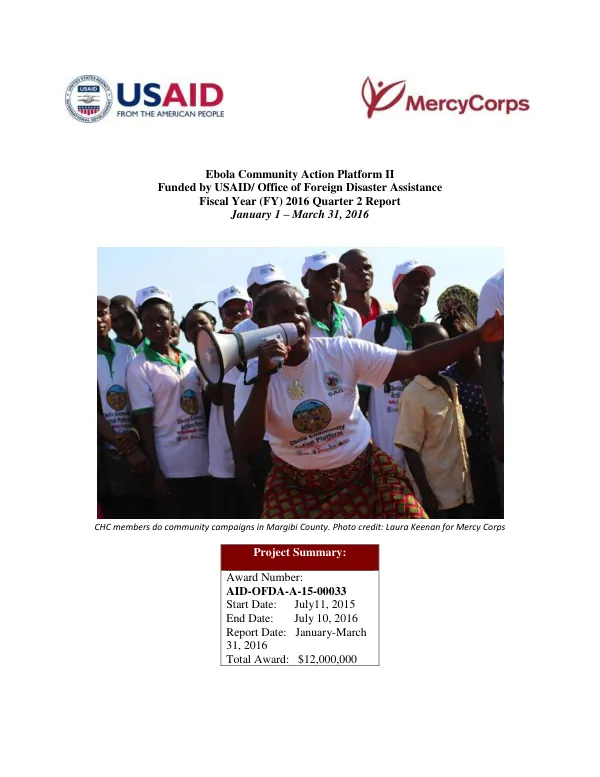
Ebola Community Action Platform II FY16 Q3 Quarterly Report April-June 2016
The Ebola Virus Disease (EVD) epidemic in West Africa began in March 2014, affecting nearly 29,000 people and resulting in over 11,000 deaths in the region by mid-year 2016.
2016 · 31 pages
Sign in to readA free account is required to download.
Abstract
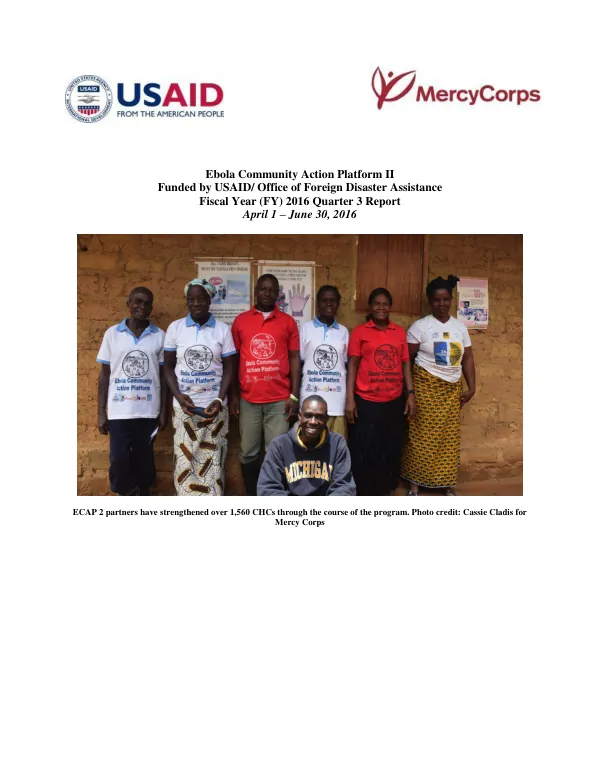
Although the epidemic has been declared officially over by the World Health Organization, Ebola remains a threat to the region, with recurrent emergences of the virus in the three most-affected countries. The Ebola Community Action Platform (ECAP) 2 program is a follow-on to the successful Office of Foreign Disaster Assistance (OFDA)-funded ECAP program, which enhanced awareness and uptake of behaviors that reduced EVD transmission across Liberia. ECAP 2 employs a sub-granting methodology to establish partnerships with local and international NGOs and media outlets to implement the program throughout the country. The program aims to support civil society organizations, local media, and community structures to build preparedness at the grassroots level against a possible future outbreak of EVD and other high-risk diseases with similar symptoms. During the fourth and final quarter of program implementation, ECAP 2 met or exceeded most of its work plan objectives and targets. Implementing partners worked in 1,599 communities with a cumulative population of 1,021,475 direct and indirect beneficiaries to strengthen Community Health Committees (CHCs) and support outreach that increases resilience against EVD and other high-risk diseases. The primary focus during the final quarter was on rolling out the Community Health Risk Reduction Plan (CHRRP) to every CHC, developing and printing a Community Health Toolkit for every CHC and the Ministry of Health's Community Services and Health Promotion Divisions, and preparing CHCs for ongoing sustainability. ECAP 2's implementing partners have reported significant progress in strengthening health systems to minimize the impact of future EVD outbreaks. A total of 1,566 CHCs were operating at a functional level, with 92% engaged in the government health system. Additionally, 1,524 communities developed Community Health Risk Reduction Plans (CHRRPs), and 64% of individuals surveyed utilized target health education and message practices. The program's Communication Specialist continued to mentor partners on media outreach and worked with them to develop materials that market them as a capable network and resource for further emergency/development work in Liberia. ECAP 2's Health Advisor attended all Ministry of Health Health Promotion and Incidence Management System (IMS) meetings and served as a conduit of information to the Community Health Services Division about problems at clinics, both at the facility and staff levels. An independent evaluation expert was contracted to assess two ECAP 2 program topics that were considered to have significant learning opportunities: the extent to which sustainable CHCs have been developed and strengthened in ECAP communities, and the impact of the support and coordinating approach used by Mercy Corps in program design and implementation. The program's implementing partners have reported ritual killings in some areas of the country, but working with traditional leaders has minimized the security risk for staff. Travel problems persist, but partners have adapted to situations rapidly and have remitted program data despite poor infrastructure. ECAP 2's attention continues to be focused on strengthening health systems to minimize the impact of future EVD outbreaks, and the program has made significant progress in achieving its objectives and targets.
Related documents