GOVERNMENT OF LIBERIA
Ebola Community Action Platform II FY16 Q2 Quarterly Report January-March 2016
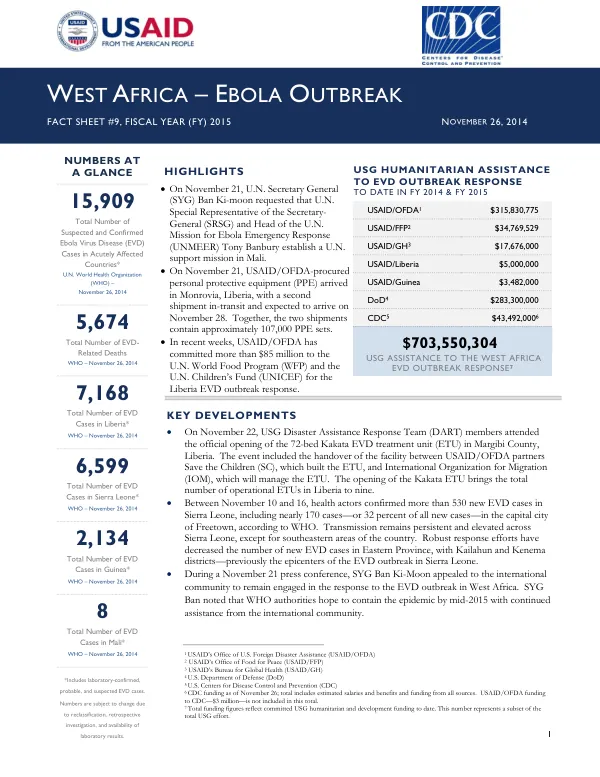
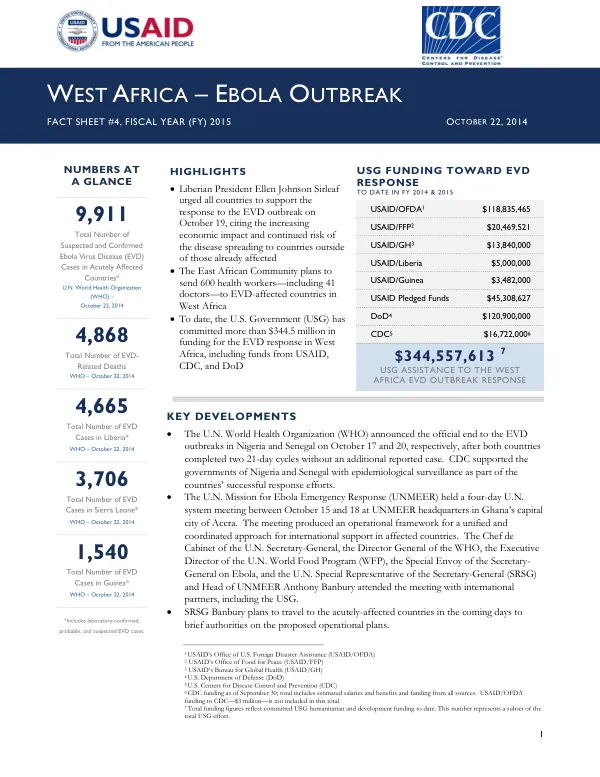
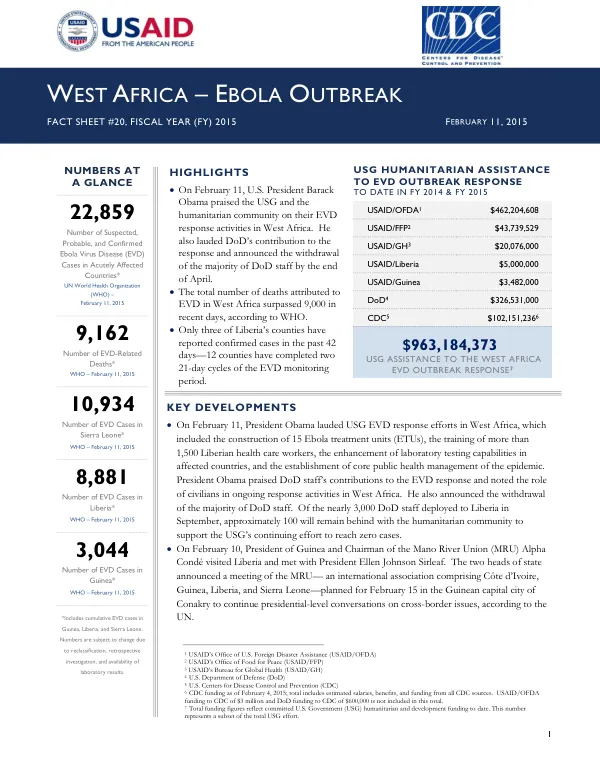
The Ebola Virus Disease (EVD) epidemic in West Africa began in March 2014, resulting in 28,616 confirmed cases and 11,310 lives lost by April 10, 2016.
2016 · 55 pages
Sign in to readA free account is required to download.
Abstract
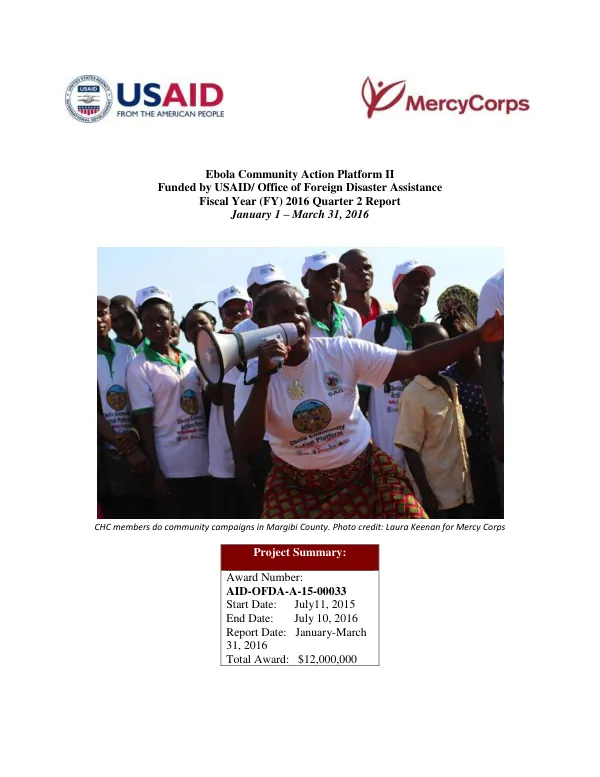
Although the epidemic is officially over, Ebola remains a threat to the region, with recurrent emergences of the virus in the three affected countries. The Ebola Community Action Platform (ECAP) 2 program is a follow-on to the successful Office of Foreign Disaster Assistance (OFDA)-funded ECAP program, which enhanced awareness and uptake of behaviors that reduced EVD transmission across Liberia. ECAP 2 employs a sub-granting methodology to establish partnerships with local and international NGOs and media outlets, who then implement the program throughout the country. The program's primary focus is on building preparedness at the grassroots level against a possible future outbreak of EVD and other diseases with similar symptoms. ECAP 2's implementing partners worked in over 1,600 communities with a cumulative population of 899,357 beneficiaries during the reporting period of January through March 2016. The primary focus during this quarter was on training and mentoring Community Health Committee (CHC) members on their roles and responsibilities, facilitating CHC outreach activities for community residents, reinforcing CHC understanding and uptake of effective communication methods, and supporting CHCs to establish mutually respectful and accountable relationships with clinics and health professionals. Additionally, ECAP 2's Subaward & Compliance technical staff worked with partners to build their capacity in financial management and grant compliance, and the Monitoring Evaluation Research Learning (MERL) team continued gathering data for use in the learning system. An EVD outbreak occurred in Guinea near the Liberian border in March, resulting in 5 deaths and 10 suspected cases. In response, ECAP 2 initiated a limited 30-day emergency response along Liberia's border with Guinea on March 24, deploying five community radio stations and two ECAP 2 implementing partner organizations to broadcast Ebola prevention and surveillance messaging and conduct radio talk shows in the border region. The emergency response was designed to mobilize the most vulnerable border communities to heighten surveillance and preventive behaviors. ECAP 2's Health Advisor attended all MoH Health Promotion and Incidence Management System (IMS) meetings and developed the Community Health Risk Reduction Plan (CHRRP) and its roll-out to implementing partners. The program continues to coordinate, collaborate, and provide direct program feedback about health issues and concerns to the MoH directors, and acts as an information and communication conduit/facilitator for the Platform, the communities, the MoH, and other public health actors. The cumulative period targeted for ECAP 2's beneficiaries is 1,500,000, with 750,000 beneficiaries targeted through CHCs and 750,000 beneficiaries targeted through mass media. The reporting period reached 1,867,477 beneficiaries, with 287,123 direct beneficiaries (number of attendees at specific events) at the end of this quarter. The sector-level beneficiaries for the health sector are 899,357, with 51% of individuals surveyed utilizing target health education and message practices. The security context and situation overview indicate that an Ebola outbreak occurred in Guinea near the Liberian border in March, resulting in 5 deaths and 10 suspected cases. Mercy Corps was specifically asked to respond in the three counties bordering Guinea with community mobilization to reinforce EVD prevention and surveillance messaging. The emergency response was coordinated through ECAP 2 and deployed the two NGO implementing partners and 5 radio stations in the Guinea border counties, Bong and Nimba, to reach the most at-risk communities with EVD awareness campaigns. The outbreaks underscore the importance of continued vigilance for suspected cases and long-term adoption of Ebola preventive behaviors. Health experts believe outbreaks may be correlated to persistence of the virus among Ebola Survivors, which would indicate sustained risks of EVD transmission.