USAID DEC
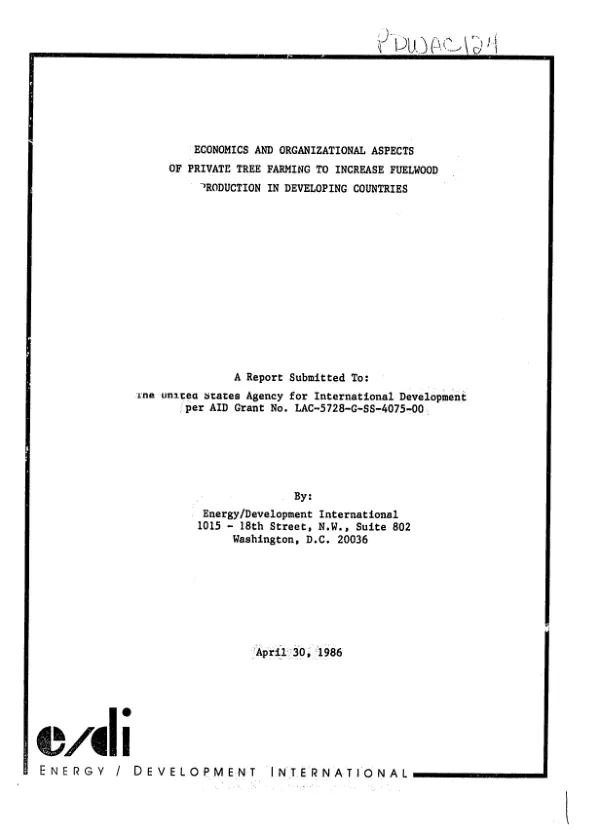
Economics and organizational aspects of private tree farming to increase fuelwood production in developing countries
Sign inENERGY/DEVELOPMENT INTERNATIONAL
Economics and organizational aspects of private tree farming to increase fuelwood production in developing countries
Tree farming is being increasingly emphasized by Third World governments and donor organizations alike as a way to supplement fuel supplies and add to farmer income.
1986
Sign in to readA free account is required to download.
Abstract
This study compares tree farming programs in six countries (the Philippines, Indonesia, Bangladesh, Thailand, Haiti, and the Gujarat, Kashmir, and Maharashtra regions of India), using interviews with tree farmers, middlemen, and government/donor agency officials to learn about tree farming practices, costs, marketing, and income generation in each area. Findings include the following. (1) Tree planting and management decisions are based mainly on the cash value of the crop, even by farmers who consume much more of their crop than they sell. (2) Tree farming development projects seldom include market development components. (3) First time tree farmers tend to be wealthy farmers who stand to make a good profit on the first crop of poles. (4) Smaller landholders may risk tree farming when good profits have been demonstrated, but usually cannot demand the same high prices they have heard about. (5) In areas where tree farming is well established, farmers plant several tree species and produce several products. A final section discusses the influence these findings should have on the design of future tree farming projects.
Connected topics